


Categorías
Artículos

The Woman, a gift of God to the humanity

He who, at present, is Saint John Paul II, considers central, in his writings, the role of God’s Word as an anthropological foundation of the woman dignity. In order to have a clear and coherent vision of what, in his time, the Pope said about women, it is necessary to refer to his writings and, among others, to Mulieris Dignitatem, Redemptoris Mater and the Letter to the Women.
This interest in the women is related to his predilection for Mary, the perfect woman, the mother woman, the virgin woman, the woman of anytime. For him, the women are part of the living structure of Christianity and he affirms that femininity belongs to the constitutive patrimony of the humanity and the Church itself.

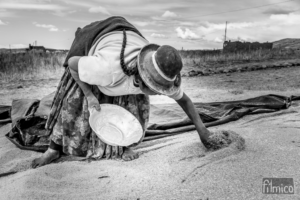
He highlights that the set of feminine gifts: understanding, compassion, intuition, capacity for suffering… are manifestations of the Spirit. They are not extraordinary gifts embodied in extraordinary women, but gifts lived by simple women incarnating them in their everyday life experience.

The peasant woman, the business woman, the political woman, the mother woman, the teacher woman, the consecrated woman, the woman… has conquered in the world an influence, a weight and a power never achieved until now. Because of that, at the present time, when humanity is undergoing such a profound transformation, the women filled by the spirit of the Gospel, provide their invaluable contribution.

The decadence of values, permissiveness, relativism and generalized violence, have dimmed the horizon and indeed it is the woman that is called to  turn on the lights of hope and to be a lamp in the heart of her home, whether it be family, conventual, or social.

Throughout the centuries we come across women of faith, hope and deep love for their people, Ruth, Rebecca, Esther, Martha, Mary, Magdalena, the woman that had the privilege to receive the first embrace of the Resurrection; but the list is long, because there is also the nowadays woman who dares to raise her voice against violence, the woman that lovingly carries the burden of her home, the woman that cries before the corpse of her son vilely murdered by a violence whose background is the sin of the easy money, the abusive power of persons that have ceased to be human and have become beasts fiercer than the ravenous wolf that one day domesticated, through his prayer and humility, the meek and humble Francis of Assis.

“A woman is to be found at the center of this salvific event. The self-revelation of God, who is the inscrutable unity of the Trinity, is outlined in the Annunciation at Nazareth. «Behold, you will conceive in your womb and bear a son, and you shall call his name Jesus. He will be great, and will be called the Son of the Most High» – «How shall this be, since I have no husband?» – «The Holy Spirit will come upon you, and the power of the Most High will overshadow you; therefore the child to be born will be called holy, the Son of God… For with God nothing will be impossible» (cf. MD 3).

The greatest recognition to the woman was made by Christ on the cross when he said: “Woman, this man is now your son” (Jn 19,26). What a greatness, what a message to the woman, the person able to devote herself without expecting anything in return. Mary, you are the prototype of a woman mother, virgin, consecrated, humble, faithful and of a deep faith.

Today, March the 8th, is the recognition day for the human being that, paradoxically, seems so fragile but is the rock upon which everyone leans and is to withstand the ferocious blows of humanity without mercy that is exploiting, enslaving and violating the sacredness of her dignity.

The woman from the east and the west, from the north and the south; the woman who, regardless of her skin color, always has a white soul, pure intentions and holding her heart in her hands offers it through the tenderness of her words and, the understanding of a gaze raised to heaven praying “Your will be done”, according to the example of Mary, the always virgin mother.

Congratulations to all the women of the world, having peace in their soul and prayer in their heart!

Hna. MARTHA GALVIS MARTÍNEZ, TC

Categorías
Artículos

Lent of charity

On Saturday of the IV week in Ordinary time, we finished reading and proclaiming the Letter to the Hebrews that I have read, reflected on and meditated many times. But since “the Word of God is always alive and active…” (Heb 4,12), that day I was “more incisively” touched by this recommendation of the author of the Letter: “But don’t forget to help others and to share your possessions with them. This too is like offering a sacrifice that pleases God” (Heb 13:16).

I immediately remembered another recommendation from the Old Testament: “I do want mercy and not sacrifice, knowledge of God, more than burnt offerings” (Hos 6,6).

Thinking again about that, being Lent at hand, I told myself: “Isn’t that, perhaps, the best program to prepare myself for Easter?” And well convinced that it is so, I shared that with the sisters.

But the «short and fundamental Lent program» is not only that. Among proposals and invitations to connect online for retreats, talks and colloquia received from everywhere, there is also the Message of Pope Francis that, in this year 2021, being still the pandemic its backdrop, focuses on the theological virtues. Using his clear and engaging, stimulating and encouraging language, he describes what today, as yesterday, is essential in our Christian life. While I was reading it, I was practically underlining everything! But, in a special way the following passages:

As a preamble, he reminds us that «… The Lenten journey, like the entire pilgrimage of the Christian life, is even now illumined by the light of the resurrection, which inspires the thoughts, attitudes and decisions of the followers of Christ” and, the Popes continues “Fasting, prayer and almsgiving, as preached by Jesus (cf. Mt 6:1-18), enable and express our conversion. The path of poverty and self-denial (fasting), concern and loving care for the poor (almsgiving), and childlike dialogue with the Father (prayer) make it possible for us to live lives of sincere faith, living hope and effective charity.

The theological virtue of «faith calls us to accept the truth and testify to it before God and all our brothers and sisters”. This truth is “Christ himself that, by taking on our humanity, […] made himself the way that leads to the fullness of life”. It is because of that that “fasting, experienced as a form of self-denial, helps those who undertake it in simplicity of heart to rediscover God’s gift and to recognize that, created in his image and likeness, we find our fulfilment in him […] those who fast make themselves poor with the poor

«Hope is like living water enabling us to continue our journey”. In this time of pandemic, it may appear challenging to speak of hope, says the Pope. But no, “Lent is precisely the season of hope, when we turn back to God who patiently continues to care for his creation which we have often mistreated (cf. LS 32-33; 43-44).

During Lent, let us be more attentive to saying words of encouragement, that comfort, that strengthen, that console, that stimulate ’instead of‘ words that humble, that sadden, that irritate, that despise ’(FT 223). Through recollection and silent prayer, hope is given to us as inspiration and interior light, illuminating the challenges and choices we face in our mission”.

«Love is the highest expression of our faith and hope”. Whoever lives love, “rejoices in seeing others grow” and suffers when others are anguished, lonely, sick, homeless, despised or in need. To experience Lent with love – in the present moment – means caring for those who suffer or feel abandoned and fearful because of the Covid-19 pandemic.

Pope Francis concludes his message by recalling that “every moment of our lives is a time for believing, hoping and loving. The call to experience Lent as a journey of conversion, prayer and sharing of our goods, helps us – as communities and as individuals – to revive the faith that comes from the living Christ, the hope inspired by the breath of the Holy Spirit and the love flowing from the merciful heart of the Father”.

Continuing my reflection, I turned my gaze to Francis of Assis and Father Luis Amigó. In the writings of the Poverello in the words he addressed to “all the faithful” we read: “All who love the Lord with their whole heart, their whole soul and mind, and with their strength, and love their neighbor as themselves, and who despise the tendency in their humanity to sin, receive the Body and Blood of our Lord Jesus Christ and bring forth from within themselves fruits worthy of true penance. How happy and blessed are these men and women when they do these things, and persevere in doing them because “the Spirit of the Lord will rest upon them,” and the Lord will make “His home and dwelling place with them. They are the children of the Heavenly Father whose works they do. They are the spouses, brothers and mothers of Our Lord Jesus Christ” (LetF. 1,1).

The first thing that Francis underlines is love and he subscribes it for those who take this text as the basis of the Order of Penance, whose commitment to conversion entails renunciations as well as the distinctive of a penitential habit; a life centered on our own conversion as a path of union with God and growing love to the brothers to whom it offers the “fruits worthy of penance”, that are nothing else than the works of mercy, concrete actions of charity. We remind that they are:

CORPORAL WORKS OF MERCY
1. Feed the hungry
2. Give drink to the thirsty
3. Shelter the homeless
4. Clothe the naked
5. Visit the sick
6. Visit the imprisoners
7. Bury the dead


SPIRITUAL WORKS OF MERCY
1. Instruct the ignorant
2. Counsel the doubtful
3. Admonish the sinner
4. Forgive offenses
5. Comfort the afflicted
6. Patiently suffer the defects of others
7. Pray to God for the living and the dead


Reading them again, we focus on the work carried out by the whole Church: Diocese, Religious Orders, Institutes of Consecrated Life, Societies of Apostolic Life, Associations, Brotherhoods, NGOs, and a long etcetera. They stay on the frontiers, where the poor and people in need are.

And Father Luis, in his time language, what does he tell us about penance? In his writings there are 242 quotations about that. He, who impressed on the Capuchin Tertiary Brothers and Sisters a franciscan-capuchin character of penance, contemplation, minority and fraternity, considers that Saint Francis is the perfect model of penance for all the times (cf. OCLA 1288, 1294, 1295), that the cross, penance and mortification have their reason of being in the imitation of Christ (cf. OCLA 397, 840, 1196, 1201, 1204, 1211, 1505) and that sacrifices, as well as any other form of penance, are based on charity (cf. OCLA 1055, 1062, 1719, 1806). And our Founder lived what he says in his writings, and in the Positio Super Virtutibus, all that is declared by the witnesses in the ordinary and apostolic process of his canonization.

I invite myself and I invite you to live a Lent of charity.

Hna. MARÍA DESAMPARADOS ALEJOS MORÁN, TC

Categorías
Artículos

Let’s celebrate, thanking and honouring

Next March 22nd we celebrate the World Water Day and on April 22nd the World Earth Day, two vital elements in our existence.

About them, we can find writings of any kind presenting us a wide range of concepts, realities, evaluations and challenges. In this context I ask myself: what could be said that has not yet been said? And it comes to my mind to accentuate the way we approach, contemplate and act before the water and the earth.

The Bible, in the first chapter of the book of Genesis, tells us how was formed each element of Creation, but in verses 9 and 10 of the aforementioned chapter, it speaks specifically about the earth and the waters: “God said: ‘Let the waters under heaven come together into a single mass, and let dry land appear.’ And so it was. God called the dry land «earth» and the mass of waters «seas,» and God saw that it was good”; the text ends with a very significant expression «God saw that he was good.» We find this phrase at the conclusion of each creative act and refers about the relationship between what was created and its Creator; that means that all things are good because their Creator is good and his goodness is materialized in each creature hence, everything is marked with a sell: «Be good» and that is its essence.

Similarly, in each creature we can contemplate the goodness and what is good and transport ourselves to its origin, that is to God; so it was understood by Saint Francis of Assis, world patron of ecology, who was calling all that exists “brother”, “sister”, because they come from the same hands and the same love. Also the first inhabitants of the earth understood it in this way; in their world view we find a great cultural richness showing us how they were conceiving and were relating to the environment and we discover a common denominator: between the first inhabitants (indigenous peoples) and the earth there is a relationship of symbiosis, filial union, unity and not domination. The earth is a collective resource and it has not an individual value; they generally feel that they are children of the earth and they refer to it naming it as mother.

But today, what does it remain of all that for us, inhabitants of the 21st century? We should become aware of how we look at and we relate to the environment because we are far from that fraternal gaze and we have learned to look at things, people and realities from a utilitarian and commercial perspective, to dominate, hoard and exploit, thinking selfishly and always looking for our own benefit; progress, industries, consumerism and pollution leave traces of pain and death in each living being, putting aside the value of care, respect, ecological solidarity and / or universal brotherhood.

Pope Francis in the encyclical Laudato Sí tells us that: “Fresh drinking water is an issue of primary importance, since it is indispensable for human life and for supporting terrestrial and aquatic ecosystems” (cf. LS 28). And he advises us that “in many places demand exceeds the sustainable supply, with dramatic consequences in the short and long term … large sectors of the population have no access to safe drinking water or experience droughts which impede agricultural production. Some countries have areas rich in water while others endure drastic scarcity (cf. LS 28). He also expresses his worry for “the quality of water available to the poor that causes many deaths and diseases related with the contamination” (cf. LS 29). In a similar way, another threat against the water and the earth, is the tendency to privatize this resource, turning it into a commodity subject to the laws of the market (cf LS 30).

But, let’s look again at the first inhabitants, and I am not referring to peoples no longer existing, but to those who remain stable in a more natural state and struggle to conserve their land and customs; those who live in harmony with their environment and in common territories, teach us the sacredness of nature, its relationship with the life and how to survive. They invite us to approach the water and the earth with a humble and contemplative attitude; only doing so, we may, as disciples, learn, from their richness some aspects very necessary for our daily life such as the role of the flowing water to fertilize, clean and collaborate with other elements to become food, medicine and blessing and, from the earth, the solidity, its capacity to contain, shelter, protect, provide, exchange, transform and give generously.

The pandemic generated by Covid 19 has been a wake-up call and an opportunity to reflect on the value of life, relationships, nature and healthy customs. Let us ask ourselves: how can we thank the Creator Father for the water and the earth? How can we honor his existence? Which actions should we implement for the fraternal and respectful use of these two elements?

Hna. BILMA NARCISA FREIRE CHAMORRO TC

Categorías
Últimas Noticias

Pope Francis’ visit to Iraq: an embrace and a testimony

On March 5th, Pope Francis travelled to Iraq, cradle of the civilization arisen between the rivers Tigris and Euphrates, Abraham’s land of origin and significant place for the three great monotheistic religions: Judaism, Christianity and Islam.

In the year 2000, Pope John Paul II had planned to visit this country, but its authorities did not allow him and he had to suspend this trip; so Pope Francis has been the first Pontiff to travel to Iraq. He undertook his journey defining himself as a “pilgrim and penitent” aiming to bring to this people, who have suffered so much, the message of hope and brotherhood springing from the Gospel and to meet the martyred Church of this country.

The trip, prepared in every detail, took place in an environment that, humanly speaking, we would define as unfavorable, due to the health situation that imposed restrictions on the participation of the people, but God’s Providence allowed everything to happen without incident and the visit left an indelible mark, not only on Christians but on the entire Iraqi community.

In this country where several religions coexist and that has been the scene of various conflicts, one of the aspects the Pope insisted on a lot, is the need of reconciliation and peace. Comparing the mosaic of religious confessions that characterizes this country with a carpet whose beauty is reflected by the interlacing threads of different colors (carpets are a typical handicraft of this area of ​​the Middle East), the Holy Father reaffirmed that «the various components ethnic and religious can find the way of reconciliation and peaceful coexistence and collaboration” only if they have a strong willingness to dialogue.

In the Eucharistic celebration in the Chaldean rite that the Pope presided in the Cathedral of Baghdad, he commented the text of the Beatitudes and made clear that  Christians are called to work for peace together with believers of other religions, sowing seeds of reconciliation and fraternal coexistence in order to revive hope. And he entrusted this task above all, to the young people continually tested in their patience by all they have lived and live in their land so that, together with the elderly, they may cultivate the goodness and give hope to the Iraqi people; they should do it day after day because “the world changes with the witness of each moment” embodying Jesus’ wisdom.

Fixing our gaze on Pope Francis’ visit to Iraq, we cannot fail to value his ability to integrate his message  into the country’s cultural reality and to underline the aspects that unite rather than those that separate. The reference to the carpet craftsmanship and the wisdom cultivation that characterize the Iraqi people, as well as the celebration in the Chaldean rite that he presided, perhaps without understanding gestures and words but valuing them, are a warm embrace and a significant testimony to the world. The country’s authorities have already received the message and, as a first gesture, in memory of the historic meeting between Pope Francis and Ayatollah Ali al Sistani, one of the main Shiite religious leaders, they have declared March 6th as the National Day of Tolerance and Coexistence.

The Iraqi land is a little bit the motherland of all our cultures… May our globalized world, where, too often, differences are at the origin of conflicts, learn from this historical event a great life lesson still valid for all.

.

Categorías
Últimas Noticias

In memory of the victims of Covid-19

In the month of March 2020, just one year ago, all over the world people began to hear speaking about Coronavirus. Until then, the information about that had been that the virus was spreading in China and there were also some cases in Europe, but no one could imagine that Covid-19 was going to cause a pandemic that would condition and transform life worldwide.

Italy was one of the first countries very affected by the disease, because the number of infections and the aggressiveness of the virus, that every day was claiming a higher number of victims. The Italian Government immediately ordered drastic measures, imposing complete lockdown, creating online platforms for work and school classes, investing money in health care and research to combat the infection and its consequences and searching out how to contain the economic damage caused by some of these measures. However, the country lived all that like a «nightmare»; towns and villages were wrapped in a great silence, broken only by the sirens of the ambulances taking to the hospitals the most seriously ill persons and people remained locked in their homes, mourning their loved ones transported in complete solitude to the cemetery in Army trucks and disoriented by the often contradictory news that were circulating.

The experience was so strong and dramatic that Italian Government instituted, for March 18 of each year, the National Day in memory of the Coronavirus victims, in order to maintain and renew the memory of all the people who died because of this pandemic; this day will be held for the first time this year 2021.

We consider significant to report about this initiative through our page because, as we know, the Coronavirus infection continues spreading throughout the world and it is still strong the wave of pain and death that plagues humanity and has affected also our Religious family of Capuchin Tertiary Sisters. In the months of July and August 2020 and more recently in January 2021, still respecting the strict sanitary measures imposed in these cases, we gave the final greeting to the first sisters of the Congregation who died of Coronavirus in Colombia and in Spain. Moreover, since the beginning of the pandemic, several sisters have been infected in various countries like, in addition to those already mentioned, in El Salvador, Guatemala, Costa Rica, Poland, Slovakia … We have also accompanied the sorrow of many sisters for the death of their parents, brothers, relatives. And the number of people affected somehow by the pandemic is still increasing if we think about many friends, benefactors, collaborators of our works, known people with whom we shared life … We like to sympathize with the grief of all those who read these lines, be they near or far, known or unknown by us. Suffering makes us more brothers.

In this month «anniversary of the beginning of the pandemic», we invite all of you to remember the people victims of the virus who left us and, in tune with the Lenten season, to rekindle our commitment to prayer begging from God the end of this pandemic and his help to live it as an experience of growth in faith and purification of everything that prevents us from understanding and living the true meaning of our life that, in the mysterious plan of God, is born again and acquires new strength when it crosses the valley of pain and darkness .

Categorías
Últimas Noticias

25 years of the Capuchin Tertiary Sisters presence in South Korea

On March 25th, our presence in South Korea turns 25 years. The sanitary restrictions do not allow to celebrate this anniversary in-person, but we cannot let this date pass, without inviting the sisters and friends who will read this news, to join the Congregation in tanking  God for all that we have lived in this place, geographically very far from where most of our communities are.

This new foundation in Korea arose as a response to the desire to strengthen our presence in Asia, where we were already in the Philippines and, at the same time, to get closer to China, the country where our Sisters developed their mission for 20 years (1929 – 1949), being expelled by the political situation of the country adverse to the Church.

Promoters of this foundation in Korea were Sr.  Mª Elena Echavarren Sorbet, General Superior at that time, and her Council. On her first trip to Seoul, Sr. Mª Elena, through the aid and orientation of other religious congregations, could know something about this country and the demands of a missionary presence; she also met Bishop William McNaughton, an American Maryknoll missionary, who declared that he was ready to welcome the Sisters in his Diocese of Inchón.

About in the middle of March 1996, the four sisters designated for the foundation in Korea,  traveled to Seoul, each of them coming from other missions “ad gentes”: Martha Patricia Ramírez Vergara, Colombian, missionary in Benin, Ángela María Martínez Sierra, Colombian, missionary in the Philippines, Carmen Margarita Avendaño Cubillos, Colombian, missionary in Tanzania and Cecilia Pasquini, Italian, missionary in Tanzania. And on March 25th, with a simple and intimate Eucharist, the community set out its experience in this country of the Far East, rich in cultural and religious traditions where, however, Christians and even more Catholics, were a significant minority.

During the first six months of their staying in Korea, in order to receive Korean classes at an university in Seoul, the sisters lived in different religious communities of this city: Srs. Martha Patricia and Ángela María in a house of the Conceptionist Missionary Sisters of Teaching and Srs. Carmen Margarita and Cecilia with the Daughters of Mary Help of Christians (Salesianas). Later, they were able to live together in a small apartment that the Sisters of the Korean Martyrs made freely available to them until, in June 1998, they moved to Bucheón, in the Diocese of Inchón, where they began their mission. The first years were characterized by the strong demand for the language study and the process of integration into a totally new social and cultural reality, but the missionary illusion of each one and their openness to God’s grace that makes everything possible, allowed them to carry on everything with enthusiasm and even humor.

25 years have passed and the presence of the Capuchin Tertiary Sisters in Korea has grown;  at present  the sisters provide their service of evangelization and attention to the needs of the place in a kindergarten in Bucheón and in a protection home for girls in Jeonju. The witness of  life of the sisters has attracted to our Congregation some young Korean women and currently we have a perpetual professed Korean sister and others in the process of formation.

We thank God for our walk in the Korean land and we invoke his blessing that will enable us to continue making present the charism of our capuchin tertiary life with enthusiasm and fidelity.

Categorías
Últimas Noticias

Sister Lucila Muñoz Duque: a century of life

On March 3, just a few days ago, our Sr. Lucila Muñoz Duque, born in Medellín-Colombia, was celebrating 100 years of existence.

For this reason, the sisters of the Province «Our Lady of Divine Providence» to which she belongs, made a beautiful video that we share on the congregational website, thanking God for the life of this sister to whom God has allowed to reach this age enjoying a great quality of life, with an enormous lucidity that is perfectly appreciated in the history, in the events and experiences that she herself shares with us. In addition, other sisters who have lived or are living with her at this time, give testimony of the many values ​​and gifts with which the Lord clothed her and that she knew how to cultivate and put at the service of others, of her fidelity and dedication to God in the Congregation, of her know-how …

CONGRATULATIONS, Sister Lucila !. All your sisters from the Congregation join you in your prayer, grateful to the Father for the immense gift of life. May He continue to bless you.