Categorías
Artículos

Let us love him, let us really love him

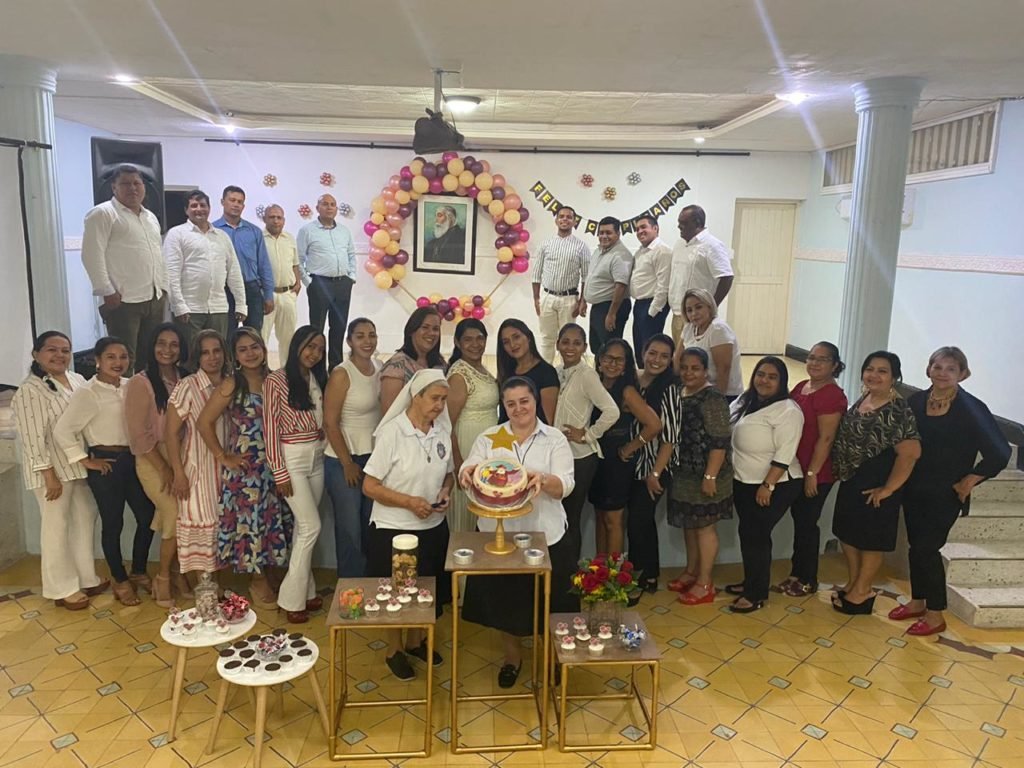
With these words, that actually are an invitation, the protagonist of this article, our sr. Rita White Arango, concludes the video we present, (it has been prepared by sr. Iria Natalia Ágreda Abreu in collaboration with other sisters), in which we have collected some “brushstrokes” of the life of sr. Rita who, at present the oldest sister of our Congregation, who, on June 27th, will be 109 years old.

Our written words are poor compared with the testimonies of the sisters who liked to share something about what sr. Rita has been for them and for the Congregation; so, grateful to the Lord for Rita’s long life, we’ll let the images and voices resonate and enter into our hearts.

Rita White Arango, that when she joined the religious life received the name of Hna. Pilar de Jesús de Manizales, is one of the fruits of the love of Mr. Enrique White and Mrs. Elisa Arango, that, by the Lord’s grace, on June 27th 1912, in Manizales (Caldas – Colombia), brought to the world this great woman. She was baptized on July 3rd of the same year. Rita’s parents gave her a good human and Christian formation and her education was fundamentally forged by reading and understanding texts that gave her an admirable intellectual baggage, at that time.

In 1932, Rita applied to join our Congregation of Capuchin Tertiary Sisters of the Holy Family and on July 2nd she began her postulancy in Yarumal (Antioquia) and on March 29th 1933, in the same house, she continued her formation in the novitiate. He made his First Profession on March 25th 1934, on the feast day we celebrate the mystery of the Annunciation and the beautiful act of God’s love that liked to take a body and become part of the humanity. Rita, has always been able to configure herself to her Lord throughout her whole life spent in love and dedication for the others. On January 22nd, 1939, she made her Perpetual Profession in Yarumal, offering all herself to the Lord for the service of his Kingdom of love, within our religious Family …

Sr. Rita spent most of her life as an educator, always striving to show to the children and young people, the face of Jesus the Master who accompanies and teaches God’s love to the others… She was a well-loved woman leaving in her students a deep trace of love for the Eucharist, the Virgin Mary, the Word of God as well as many values through which she was wonderfully forming her students in the academic, scientific and spiritual dimension, preparing them to serve the society and the Church in different ways.

In Rita’s personal life, the prayer, the accompaniment of good spiritual directors, the tenacity in whatever she intended to be and to do … helped her to be fervent, honest, patient, generous, constant, with sense of responsibility, prudent, available, cheerful and organized; she was adorned with a formidable memory that she has kept until not long time ago. Rita has been and is a woman of faith and dialogue; she was passionate about reading and she read with predilection the dwellings of Santa Teresa and was able to supernaturalize what is ordinary with religious mastery.

Since 1934 to 1967, our sister served in different communities in Colombia and in 1967, she went to Venezuela, at that time Province «Saint Francis», and she stayed there until 1991 when she went back again to Colombia, to her Province » Saint Joseph».

Rita held various services of responsibility in some institutions, such as director of different colleges, treasurer and administrator. She was also superior in various communities and novice mistress and she was always striving to give glory to God through all her being and doing.

Even when her responsibilities were consisting only in being the door keeper or in other offices in the library and today, as an aged sister member of the community “Our Lady of Montiel”, belonging to the Province “Our Lady of Divine Providence”, Sr. Rita has always been happy and smiling, revealing the living God whom she loves so much …

We like to end this article going back to its beginning, praying to the Lord to teach us to love Him, to truly love Him, as our sister invited us. That is what she tried to do throughout her long existence.

Happy birthday, Sr. Rita!

Categorías
Artículos

A man committed to accompany and to train lay people: Luis Amigó and Ferrer

As human beings we discover that we cannot walk alone and we need the others to grow humanly and spiritually. Because of that, as Pope Francis reminds us, we need to scrutinize the paths of accompaniment and formation, promoting processes leading to encourage growth in the Christian life (cf. EG 169).

The task of accompaniment and formation of lay people, may lead us to the temptation to look at the panorama with uncertainty and hopelessness but, Luis Amigó’s experience in this mission fills us with confidence, hope, and enthusiasm.

But, how did Luis Amigó carry out this mission? Let’s discover his pursuits, successes and limitations in this task, but, above all, his enthusiasm, perseverance and trust in God and inlay people that are responsible for their own process and committed to share the richness of Jesus Christ in their lives.

The human and spiritual vision of Father Luis takes its origin in a concept centered on the dignity of a person able to allow himself to be transformed and to transform the Church and the world he inhabits. We cannot forget that Luis Amigó, during his youth, was formed in some movements integrated into the secular Catholic spirituality and committed himself in a religious and social promotion of people, namely, the School of Christ and the Congregation of San Felipe Neri; that strongly affected his apostolate of accompaniment and formation of the laity, which generates a personal and social transformation. He so  refers it in his writings: the Third Order is a Lord’s deed innovating the Church and completely transforming the society (cf. OCLA 1016-1017).

On the other hand, «man is created at image and likeness of God» (Gn 1,27) and so he owns the dignity of being son of God (cf. OCLA 1323); because of that, it is always necessary to work for the integral formation of the person. His formative accompaniment to lay people, more than a scientific, psychological or educational theory consists in a lifestyle expressed in a particular way of being, staying and evangelizing, striving to incarnate in his person and to instill in the life of the Christian, their baptismal obligation. For this reason, Father Luis frequently insisted on the wealth, nobility and dignity honoring and distinguishing us the Christians, who have been made children of God and heirs of his glory (cf. OCLA 1329).

The apostolate with the lay people was always present in the life of Fr. Luis, when he was still a simple Capuchin as well as when he was a bishop; he was well rooted in everyday life and was allowing himself to be enlightened by the human pedagogy that Jesus uses with his disciples: respect for the dignity of the person, listening to reality, use of a known, familiar and contextualized language, reading and interpretation of the Scriptures, closeness and affection for people.

Since his youth, he assumed accompaniment as something constantly present in his multiple formative activities, mainly in the congregations of the Venerable Third Order, the Daughters of Mary and the Luises (cf. OCLA 50). His concern for the formation of the young people of both associations was oriented towards the Christian life (cf. OCLA 2170) through an accompaniment that emerges as an imperative in the process of personal growth of the members of the groups and a human and spiritual wisdom integrated in the reality of his time, employed in daily life and proved by a true and convincing witness of Christian life.

The culminating moment of this apostolic service, occurred at the beginning of his priestly ministry, when he was appointed as Commissar of the Venerable Third Order, on October 20th, 1881 and entrusted with all the necessary faculties… (cf. OCLA 60-62). The footnote n. 39 referred to of OCLA 61, collects the opinion of Fr. Melchor de Benisa OFMCap regarding Father Luis’ apostolate in this area: “He had a great skill and a clinical eye in recognizing people who wished to enter the order and he was recommending to them no to make policy but, rather, to be extremely seraphic, as they were the right arm of the parish priest…”. He was interested about the formation of the Third Order members because he wanted to lead them to God, since his life witness and that is what his brothers acknowledged when they declared: “They were respecting him as a holy man and following his instructions with diligence and joy».

Father Luis promoted a formation that would affect the spiritual fervor of the members of those groups of the Third Order that «were rapidly spreading during the first years of the restoration and, in the year 1893 reached an amount of 17,864 Tertiaries, dependent on the Capuchin province of Toledo of which the Servant of God was one of the provincial Councilor » (cf. OCLA footnote n. 40).

Luis Amigó worked tirelessly in the progress and propagation of the Third Order, which was attended by a huge crowd of faithful; the organization of the groups strongly contributing to their growth, in such a way that, they became a considerable number of brothers and sisters… and that brought to mind the need to go on founding new congregations (cf. OCLA 61). He was also encouraging the members of the Third Order to participate in congresses as training opportunities as well as in other celebrations (cf. OCLA 2449).

During his episcopal ministry he wrote letters, circulars and apostolic exhortations requesting his priests, among others, to accompany and to form the Christian life of the lay people, with apostolic zeal and a tireless evangelical activity (cf. OCLA 1137). All that expresses his concern for the formation in the spiritual life and his commitment with great zeal and interest for the salvation of souls and to make known and loved by all Jesus Christ (cf. OCLA 1142-1143) as well as the tireless work and the restoration of the society turned away from Jesus Christ. In order to reach this aim, he was asking lay people of both sexes to work hard since, usually, persons pay more attention to them, that to the priests (cf. OCLA 1147), he was considering himself a collaborator of Jesus the Good Shepherd to attract the “lost sheep” into the fold, leading them to the field of the Church where they can be satisfied with the Jesus Christ’s doctrine (cf. OCLA 1136). He was as well caring about the formation of Christian families as a support and sustainer of society, fixing their eyes on the model of the Family of Nazareth (cf. OCLA 1102-1103) and paying attention to the reality interpreting it in the light of the faith and discerning his decisions about economic, social, moral and spiritual difficulties that society was experiencing (cf. OCLA 297 and 1054). He promoted also the advancement of science, whose source and origin is God, as a means of progress for peoples (cf. OCLA 936), the building of the peace and justice emanating from God’s mercy (cf. OCLA 656-657) and the construction of a more humane society where the graces and favors received from God should be used for the benefit of others, considered neighbor and brother (cf. OCLA 1051). These and many other concerns, made Luis Amigó a man committed to accompany and train well immersed in the Christian, social, political, economic reality and in the transformation of the society founded on charity and on Jesus Christ’s doctrine.

In addition to all that, we could say that Luis Amigó was a man able to glimpse the important role of the laity in the Church and in the society and to appreciate the need of walking together in synodality in order to build the God’s Kingdom and that is what the Church remembers us at the present time.  In his writings he reflects this idea saying that” lay people are obliged to work, each one in his own sphere of activity, in spreading the faith and making Jesus Christ and his holy doctrine, known to men” (cf. OCLA 1147); through these words, he put into evidence the great importance of the secular apostolate We know that, his relationship with them was favored by a join active and responsible participation in events, celebrations and organized activities, both in the spiritual and civil fields.

Today we, the Capuchin Tertiary Sisters, feel urged to share with the lay people the gift of our Charism (cf. Const. 63), a gift of the Spirit for the whole Church and for the extension of the Kingdom, to promote since the novelty of the Holy Spirit and of Father Luis a formative accompaniment as a processual and integral dynamic, using the pedagogy of Christ the Good Shepherd, an feature speaking us of the profound experience of Jesus caring for each one of his sheep, to seek paths that open us to a new mentality, to walk alongside the lay people and to promote different ways of being and staying moved to compassion by mercy, no-appropriation and inclusion.

Sr. MARÍA ANABELLE CÉSPEDES MORALES, TC

Categorías
Artículos

«Help yourself and heaven will help you»: A self-sustainable formation

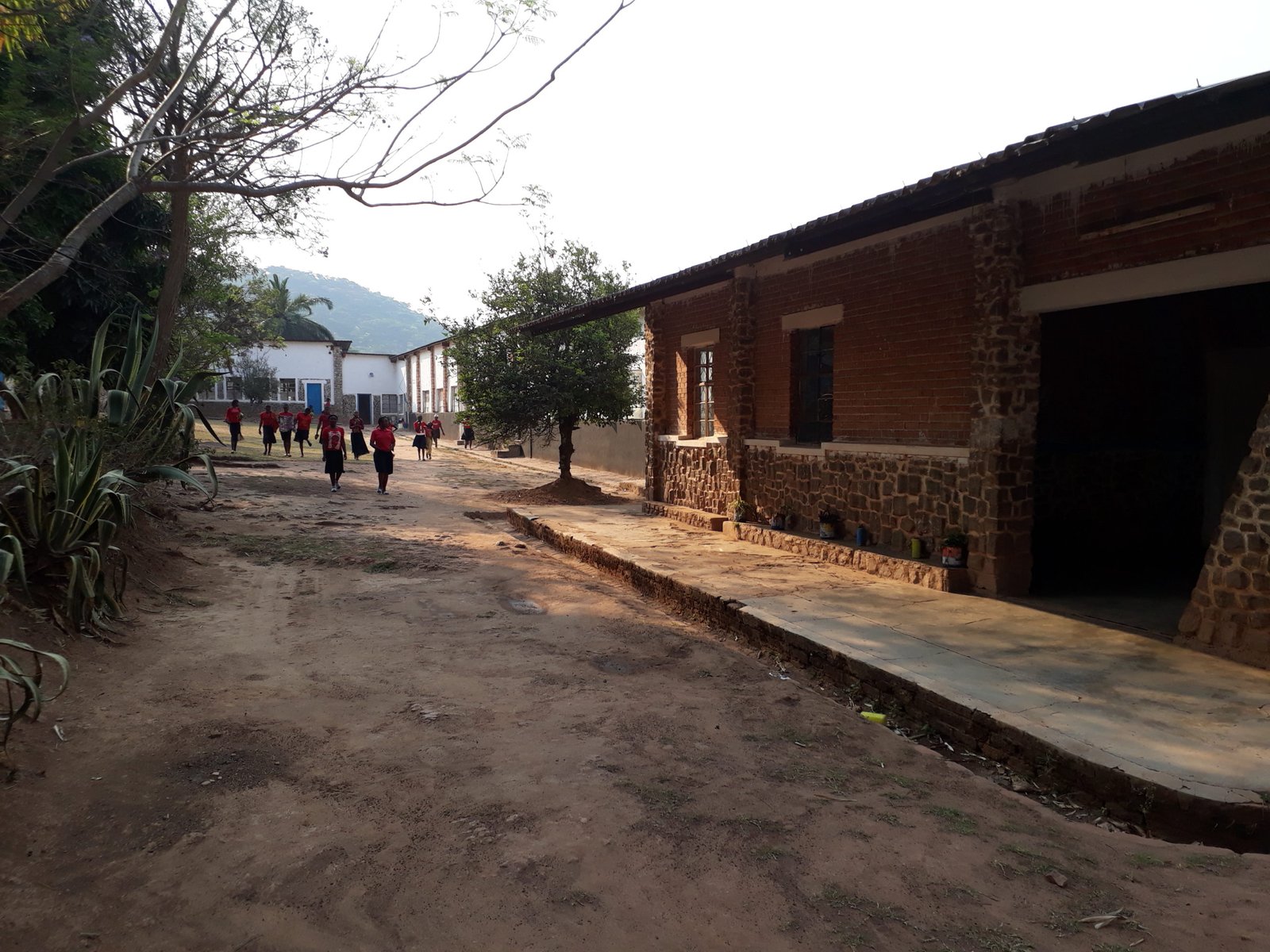
Since the beginning of our congregational presence in the Democratic Republic of Congo, in 1971, and specifically in the Mission of Kansenia, one of the priority was the creation of a “foyer” (school-home).  The name of this «foyer», unchanged in the time, is “Kinzala”, which can be translated as “a home that never dries up”.

Accepting the invitation of our Founder, Father Luis Amigó, to be always open to the signs of the times in order to respond to the real needs of the people we want to serve, the sisters who started our mission in Africa, having discovered the precarious situation of the young women training,  they launched the foyer project, still existing after 50 years.

The Kinzala foyer aims to an integral promotion of the women, offering to the young women a platform where they themselves are the main agent of their formation, through an active participation in the organized activities and deploying their gifts in a society, as persons  created in the image of God and having the right to receive an appropriate education.

In life, all that is important has a high price. Education is one of the important dimensions of each person and the education received by a young women in Kinzala foyer requires a responsible work at all levels, since it does not provides only content, but consists in a training for life.

Many of the young women accessing to the Foyer come from villages quite far from the Mission and do not have sufficient resources to pay the expenses of the boarding school. That is why, “yesterday and today”, the foyer struggles to be self-sustainable, creating self-training and learning strategies, which, at the same time, are a financial support putting into practice the comprehensive education we talked about before.

As Fr. Juan Antonio Vives, TC emphasizes in his book «A man who trusted in God» when he speaks about  the Amigonian method in educating people according to  Jesus style, the young person «is certainly the main agent of his education. Many educational actions fail when the student is not given the time to value and long for them. Even the best measure may become pernicious and paternalistic, if the student is not in the position to receive it. In education, it is not enough that the educator want to do what is good: it is necessary that the boy or girl like and accept that same thing as good. Luis Amigó gives a great value to the ​​moments of reflection on the student part. He knows that only he who becomes aware of his situation, is able to make a free decision to change ”.

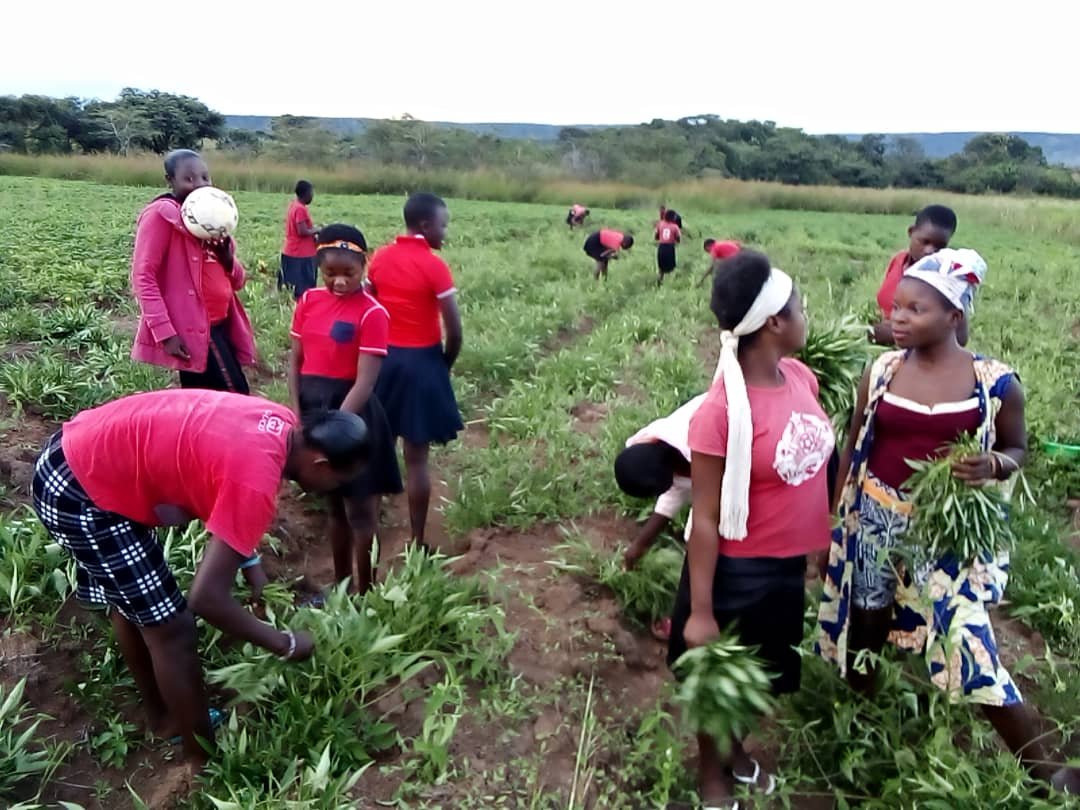
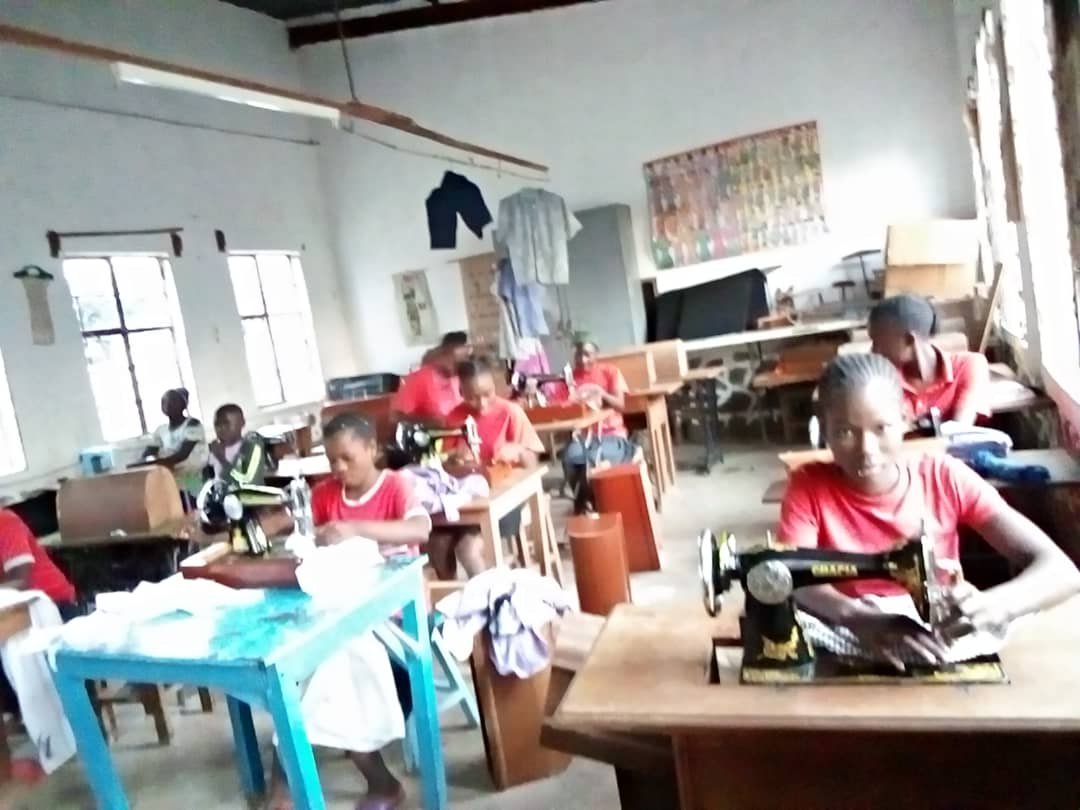
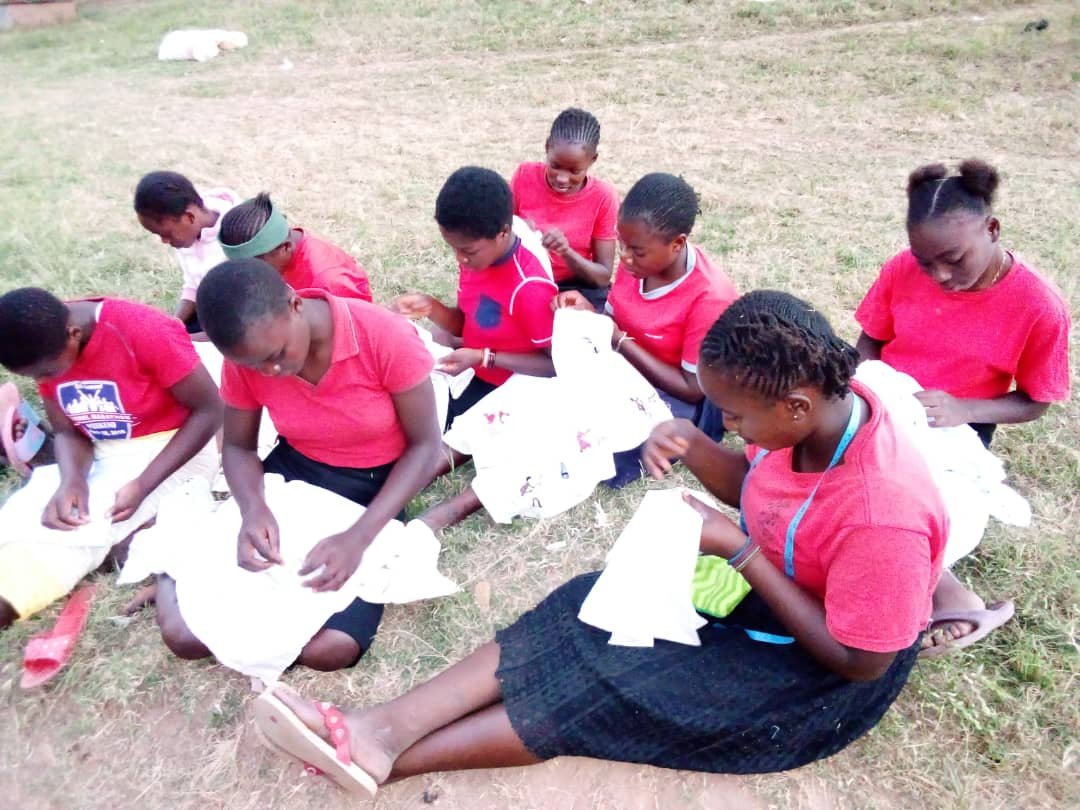
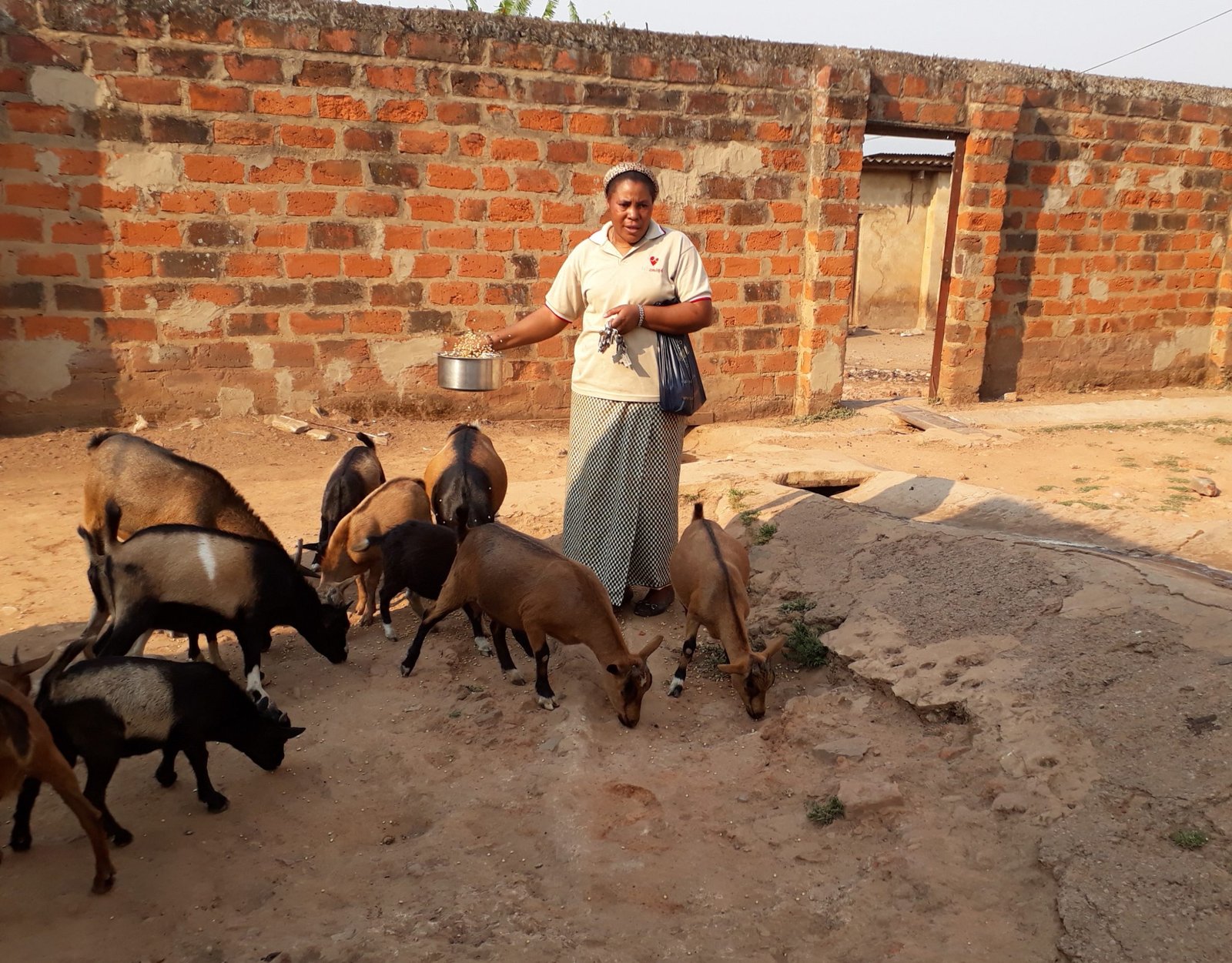
In the Kinzala foyer we have encourages the young woman to be the main agent of their training and, in addition to the literacy or basic general culture courses and secondary school studies, we initiate some of the young women in practical domestic economy. There are spaces to learn sewing and embroider and in a good extension of land belonging to the Foyer they cultivate (corn, beans, peanuts …) and raise animals (pigs, goats, chickens …), for their daily consumption  as well as means of financing support of the same  Foyer.

  • Literacy teaching and general culture. Although it is preferable that young women have finished primary school, we sometimes welcome some who are not able neither to read nor to write, since in many villages there are no schools. For those girls that become aware of the need to train themselves and show their will to learn, we provide an education appropriate for their reality and possibilities.
  • Agricultural work: Most of the girls cannot afford the boarding and school expenses in goods. For this reason, they cultivate the fields to cover their basic necessities; among others they cultivate corn, beans, peanuts and various kinds of vegetables that contribute to their daily diet.
  • Raising animals. The young women take turns in feeding the pigs, goats, chickens … and cleaning the rooms. The animals are consumed for food in the Foyer, but they are also a source of income because with the money they get from their sale they pay other common expenses, carry out different activities organized in support to the young girls’ own training and buy sewing materials. Everyone does it with enthusiasm and joy.
  • Sewing and embroidery workshops. Once they arrive to the Foyer, the young women that have not completed primary school are provided literacy and general culture courses, as we mentioned before, and also practical training; they learn to sew and embroider and that offers them the possibility to start a little trade that later will serve them in their origin places. The tablecloths, dresses, bags and whatever they produce, are for sale and what they get is an income for the Foyer and it contributes to buy new cloth and materials.

During all the years of its existence, a quite high number of young women have passed through the Kinzala foyer and they have learned from the life and for the life. The lack of financial resources has never restrained the desire to train themselves in order to help the others. These women have been responsible leaders in their villages and society; they have formed stable families and have shared with other women what they had learned with the sweat of their brow and through the work of their hands …That is for them a lived experience of self-sustainability that continues to help them to raise their families, putting into practice the popular adage: «Help yourself and the heaven will help you.»

Education is a right but, at the same time, it is a privilege to experiment that we ourselves are tracing our own learning path, valuing the training price. The person who strives to make his training possible is an entrepreneur and is able to adapt to the reality of society, always looking for alternatives allowing him to get out of many situations in which he feels abandoned to his destiny. To achieve that, in the Kinzala Foyer, awareness is a vital tool that helps the young woman to become aware of her reality and to involve herself participating fully in all the proposed activities.

We thank God who accompanies his sons and daughters at all times. All is grace!

VIRGINIE KAZADI TSHILANDA, TC

Categorías
Últimas Noticias

World Refugee Day 2021

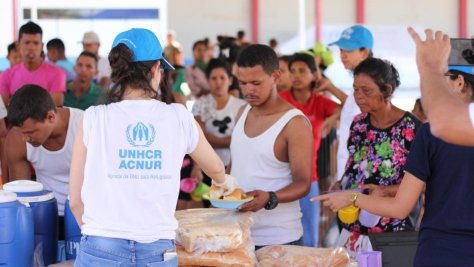
The World Refugee Day of this year 2021, that we’ll  celebrate on June 20th, and it has been organized by the UN Refugee Agency (UNHCR), focuses on the power of inclusion and has as its general theme: “Together we care, we learn and we shine ”.

We transcribe some points of the information brochure that they have prepared for this celebration:

“The shared experience of COVID-19 has showed us that we only succeed if we stand together. We have all had to do our part to keep each other safe and despite the challenges, refugees and displaced people have stepped up.

Given the chance, refugees will continue to contribute to a stronger, safer and more vibrant world. This year, we call for greater inclusion of refugees in health systems, schools and sport. Only by working together can we recover from the pandemic.

Together we heal. We heal together when we all get the care we need. The world can’t overcome COVID-19 if it overlooks refugees, because no one is safe until everyone is safe. We need to ensure that people forced to flee have access to vaccines, care, medicine and psychological support, like everyone else.

Together we learn. When we learn together we build a stronger community. We all benefit when everyone has access to education. We are calling for the creation of scholarships and education opportunities for displaced youth. We also call for greater access to digital education for refugee students.

Together we shine. We shine when we play together as a team. Sport is a great way to heal, develop and grow, especially for people fleeing conflict or persecution. We call for greater support to refugee sport programmes. We also encourage all sport fans to support the Refugee Olympic and Paralympic Teams that will compete in the Tokyo games

Categorías
Últimas Noticias

July the 3rd : Capuchin Family day

On July 3rd 1528, Pope Clement VII, through the bull “Religionis zelus”, approved the Capuchin Order, one of the reform sprout within the Family of the Friars Minor, on initiative of some brothers that desired to live more radically according to the origins of the Franciscan Fraternity, strengthening the life of contemplation, recuperating more austerity in the life of poverty and reaffirming the evangelizing mission through popular preaching and being present in frontier places. The origin of the Capuchin Order, as well as that of other orders and congregations, is undoubtedly related to the reform movement occurred in the Catholic Church in response to the provocation created by Christian communities that, under different but at the same time quite similar motivations, were separating from the Church of Rome and breaking their communion with the Pope.

Over the course of time, the Capuchins have become a numerous and significant Order in the Church and, since their origins in the 16th century, they have offered to the Church, significant models of holiness in the common and unpretentious life. Their presence in the midst of people through the ministry of preaching, confession and previously also as “beggars brothers”, chaplains in places of pain – hospitals, cemeteries, prisons – and their commitment in the accompaniment and spiritual formation of groups of lay people of the Third Franciscan Order (today Secular Franciscan Order), has contributed to the growth of the faith in many people and also to the foundation of some religious families inspired in the Franciscan-Capuchin spirituality, and, among them, the Capuchin Tertiary Sisters of the Holy Family.

Father Luis Amigó was an authentic Capuchin brother that kept his bond to his Order even as a Founder and Bishop and he liked that the two religious families he founded never lose the Franciscan-Capuchin spirit (cf. OCLA 1920) and be aggregated to the Capuchin Order (cf. Iriarte L., Historia de la Congregación,  pag. 53).

The Congregation of Capuchin Tertiary Sisters of the Holy Family was aggregated to the Order in 1905 by Father Luis Amigó’s expressed will and through this act, he liked to make it participate in the spiritual patrimony of his original religious Family and, at the same time, to enrich the Order with its specific charisma. We have to acknowledge that the Capuchin Brothers have played and do play an important role in the history of the Capuchin Tertiary Sisters, accompanying them in the Franciscan formation and opening and partaking with them the mission; at the same time, wherever this sharing is most cultivated, the beauty of the Capuchin charisma lived with its feminine and masculine features, is better perceived.

On July 3rd, the anniversary day of the canonical approval of the Capuchin Order, the entire Capuchin Family is called to celebrate with gratitude its presence in the Church, reaffirming its commitment of fidelity to the initial charisma enriched by the peculiarity of each congregation sprouted from an authentically capuchin heart.

In other years, on this date, took place meetings of members of Capuchin families that really strengthened the bonds of fraternity. This year, because of the pandemic, it will not be possible but nothing and no one can prevent us from living this Day with a special memory in our prayer, feeling that we are members of a larger family with whom we share spiritual gifts and fraternal affection.

Categorías
Últimas Noticias

Mary, help of christians, day of prayer for the Church in China

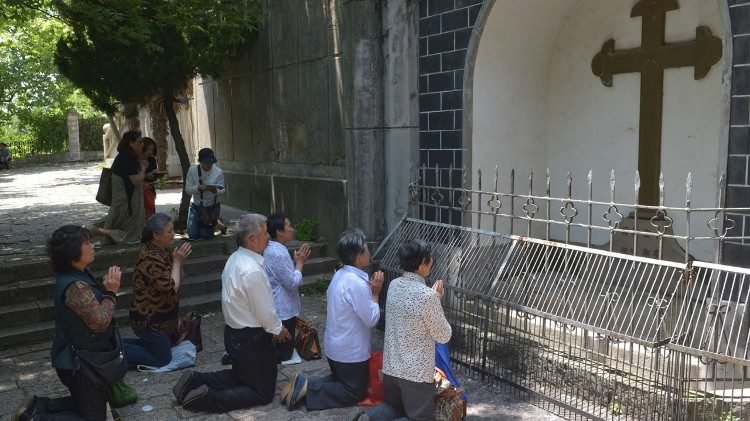
Pope Francis, during the prayer of Regina coeli, recalled that on May 24th, «the Catholic faithful in China will celebrate the feast of the Blessed Virgin Mary, Help of Christians and heavenly Patron of their great country».

This feast, established in 2007 by Benedict XVI, celebrates that  “The Mother of the Lord and of the Church is venerated with particular devotion in the Sheshan Shrine in Shanghai, and is invoked assiduously by Christian families, in the trials and hopes of daily life. How good and how necessary it is that the members of a family and of a Christian community are ever more united in love and in faith!” said Pope Francis. […] Therefore, I invite you to accompany with fervid prayer the Christian faithful in China, our dearest brothers and sisters, whom I hold in the depth of my heart. May the Holy Spirit, protagonist of the Church’s mission in the world, guide them and help them to be bearers of the happy message, witnesses of goodness and charity, and builders of justice and peace in their country”.

Since the Communists took power in China in 1949, the country has not maintained official diplomatic relations with the Holy See. Among the points of contention is the Chinese  demand that the Vatican must cut its contacts with Taiwan and, above all, the question of the appointment of bishops. In September 2018, the Holy See concluded a provisional agreement with Beijing, and through which Pope Francis lifted the excommunication of several bishops consecrated without his consent but recognized by the Chinese authorities. On its part, Beijing has recognized only a few of the so-called bishops of the underground Church. Of the current 101 Chinese bishops, 36 are underground bishops.

According to various reports, in China, in recent weeks, police arrested several members of the clergy and among them the Apostolic Prefect of Xinxiang, Archbishop Joseph Zhang Weizhu, 63 years old, seven priests and ten seminarians. Xinxiang Prefecture is not recognized by the Chinese authorities, so the activities of priests and laity related to it are considered criminal activities.

Mons.  Ludwig Schick, bishop of Bamberg, Germany, denounced that, on the part of the Chinese authorities, there is a determined effort to impede children and young people to approach religion: “In more and more places, the authorities systematically prohibit that the minors come into contact with religion. The prohibitions existing during a long time are now being applied at all levels in China». All religious symbols have been removed from Catholic orphanages, and more measures of the same kind have been taken in a leadership struggle

against religions, especially against Christian churches, but also against Muslims».

Translated from: OMPRESS-ROMA (24-05-21)