
Categorías
Artículos

«What we have seen and what we have heard» Living the joy of the gospel with a missionary heart

On the occasion of World Mission Day 2021, in which all Christians are invited to share “what we have seen and what we have heard”, I like to share my testimony; I will do it in a simple way and with a grateful heart for my vocation as a Capuchin Tertiary Sister of the Holy Family weaving  life with people of every race, language, people and nation, whom, thanks to the Good News of Jesus Christ, our Faith and Hope, I can truly call them sisters and brothers, pronouncing their names since a shared life and mission.
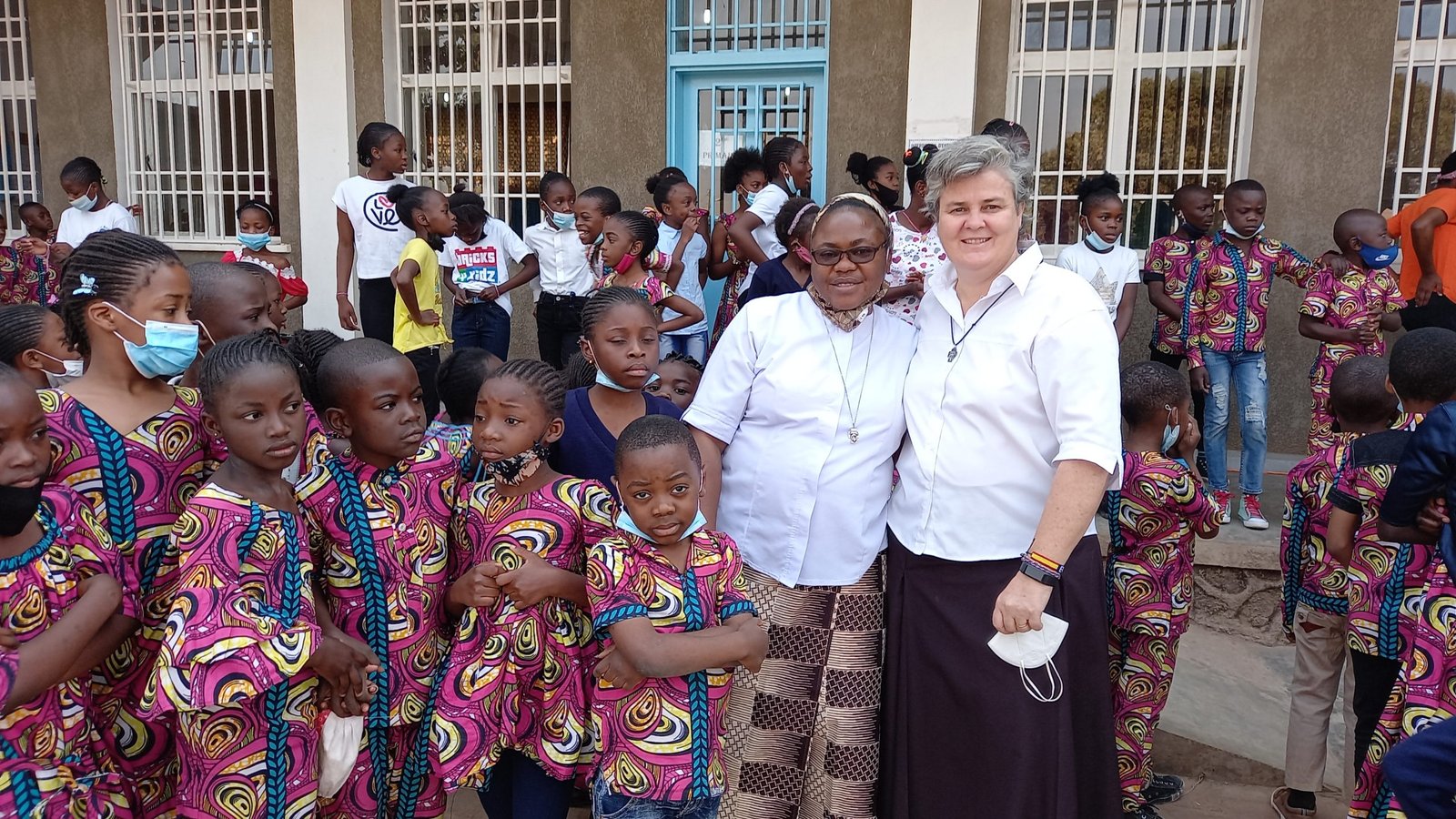
That is how I live the mission and the gift of fraternity that, like every gift I must accept and , acknowledge and also apply myself so that it may bear fruit in abundance; that is, for me, a path of purification and salvation that I am walking along little by little, with patience, wisdom and the mercy that Jesus has with me, expressing it through the concrete gestures of my Sisters and of many people who, even without knowing it, are helping me to grow and to mature as a consecrated woman.
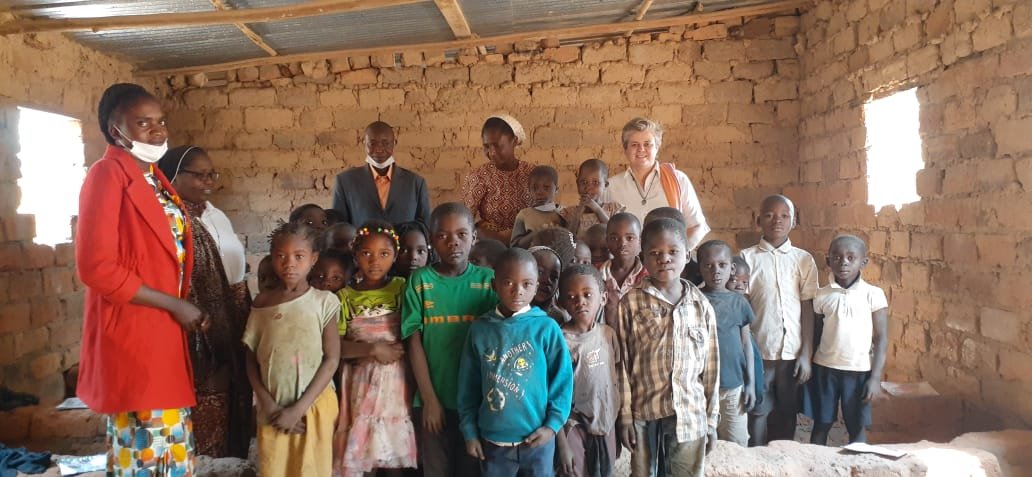
It is beautiful to see how, just when I experience my fragility as a foreigner, different, not knowing the language or the different and countless cultures in Africa, having a skin that gets burned, not enduring one day without eating, for example …, I meet people that take care of me, help and protect me with kindness. Also I receive from them a life lesson when, suffering my «impatience» originating from my own rhythms, way of thinking and seeing things, they are patient with me. As well, discernment helps me to move on from «mine» to «ours», freeing me from the arrogance of thinking that «mine is the best» and  that what is «mine … what I think, feel, believe, my culture… ” is not the best, but simply “mine”, and leading me to open myself to the richness of welcoming “what comes from the other” that many times is completely different, valid, enriching and leading me to the beautiful path of “ours”.
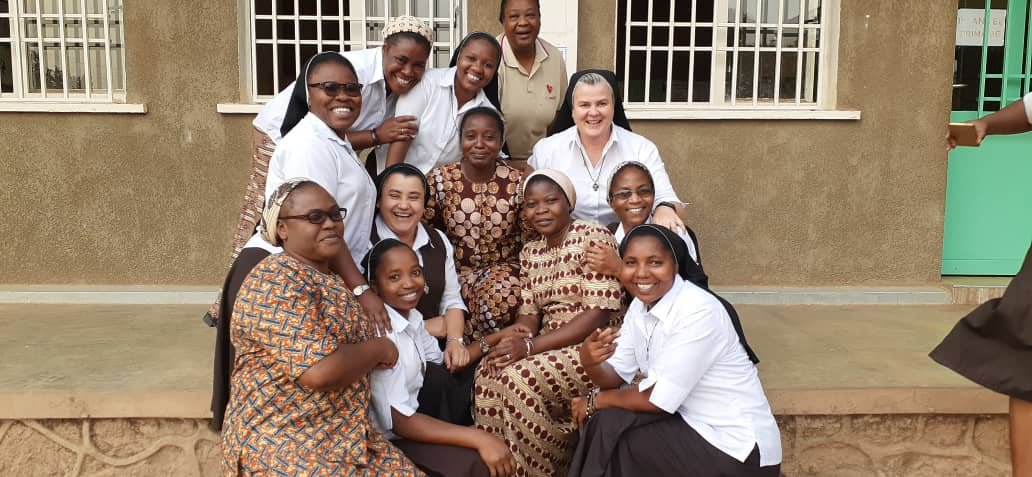
One of my faith certainties, according to what I have lived, is that God never allows himself to be won in generosity, He multiplies to unsuspected limits everything given with love. Thus, fraternity broadens and allows me to reach any of the thirteen communities that we have in Africa, D. R. of Congo, Benin, Tanzania and Equatorial Guinea, feeling at home, welcomed and loved by my sisters, enjoying and also searching out, all together and with lay people and beneficiaries, how to carry out our apostolic works sharing the mission and putting into practice a fraternal and fair economy in which all contribute and receive; through numerous projects we also receive a great help from our benefactors.
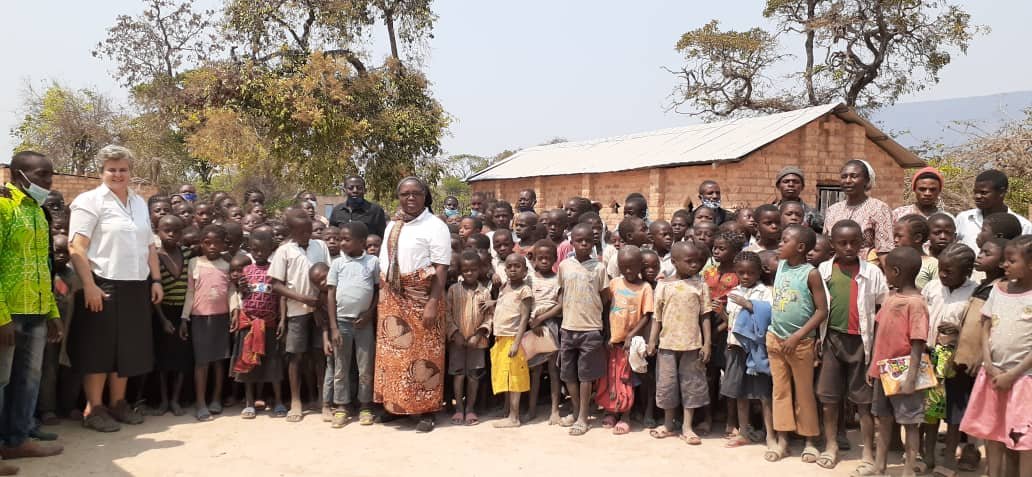
When I go to Rosario de Soano Home for young women with different abilities, in Morogoro  (Tanzania) and I knock on the door, I am welcomed with a wide smile by Magdalena, a girl living in this Home. When I arrive at Ntuntu (Singida – Tanzania), small groups of children of San Juan María Vianney Kindergarten coming from their scattered houses, appear among the trees, go to Mass early in the morning and then they accompany us on the way to the school. When I stroll about Kigamboni (Dar-es-Salaam, Tanzania) the children, youth and parents of Fray Luis Amigó Schools greet me with affection and without distinction of religion, Christian or Muslim. When I greet people in Kasungami, neighborhood of Lubumbashi (D. R. of Congo). I enjoy the family that God has given us: Maman Georgette, already old and alone, lives under the protection of the Sisters and always welcomes me, speaking to me in Swahili and French and thinking that I can  understand all that she says and without stopping her work, the children and young people of Hoy Family, the sick people of Saint Claire Health Center, the children of Montiel Kindergarten. And also it has been an experience of family to celebrate fifty years of presence in Kansenia (D. R. of Congo) and to welcome groups from distant parishes, coming walking during three days to participate in the fest, to visit with the group of novices the abandoned elderly  in Ouessè (Benin), the villages where the women’s cooperatives t are a source of life and development for the families and the malnourished children and sick people cared in Nikki, Cotonou, Gló and many other persons whose names I keep in my heart that I have meet in Evinayong, Equatorial Guinea …

Blessed be God for the gift of my family that, through its witnessing, made me growing in the faith in Jesus Christ and  allowed me to discover the importance of serving others, for my beloved Congregation, and for the service that I am currently rendering to my sisters and brothers. .

As our dear Father Luis Amigó said: «Let everything be for the love of God».

SR. EVA MARÍA SALVADOR ASPAS, TC
Categorías
Artículos

Luis Amigó, an inspiration for our time

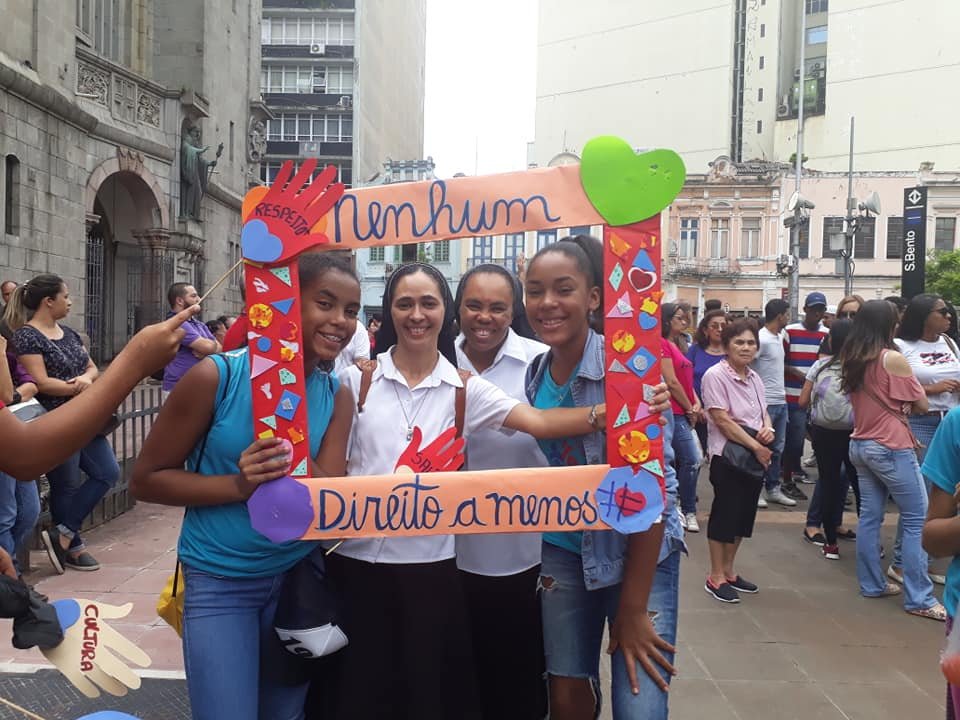
In the year 1948 the first Capuchin Tertiary Sisters arrived in Brazil from Colombia. Due to the audacity and courage of these sisters, the Franciscan-Amigonian seed arrived in Brazilian lands and since the essence of the Amigonian Pedagogy, we have been keeping our eyes and actions always focused on the needs surrounding us, trying to enable effective responses to promote and to defend the rights of all but especially of people in situations of greater vulnerability.

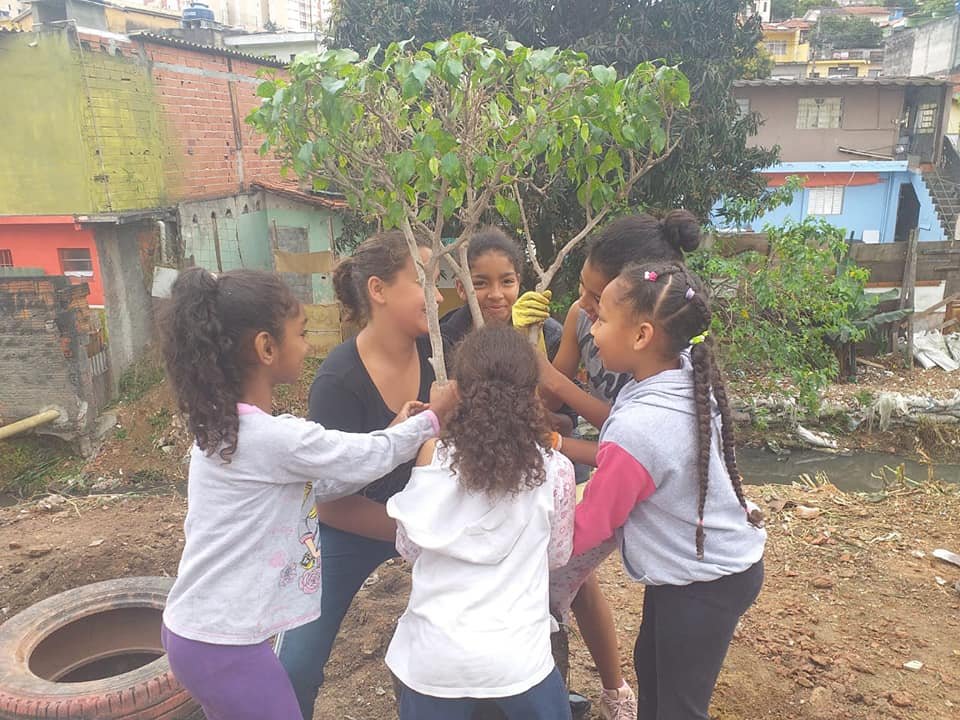
Through this article, we like to share how Luis Amigó has inspired our work at the Frei Luis Amigó Educational Center (CEFLA), located since 2003 in the west of the city of São Paulo. This Educational Center purpose of is to take good care of children and adolescents from 6 to 14 years old, that are living in situations of social vulnerability in the marginal neighborhoods. Along these 18 year, we have helped people to build many stories of promotion of the dignity of the human being. At present we offer our service to 120 children and adolescents belonging to 92 families. According to our Charism, we try to put into practice our preferential option for the poorest and most needy people, putting effort into creating a living space where it is possible to strengthen the process of humanization, integral formation, participation and citizenship. We develop actions and activities that generate the force of leadership and autonomy, and based on their interests, demands and potential. The activities aim to strengthen the sense of belonging, to fashion the identity, to transmit social and cultural codes; they are activities of citizen participation developing the perception of social, economic, cultural, environmental and political reality, the appropriation of the citizen rights, the recognition of duties, cosmovision and positioning in public space.

The mission carried out in this work is based on the Amigonian pedagogical proposal, through its principles and values that are at the basis of our actions. Following in the footsteps of our Father Founder, we assume love as the essence that mobilizes our practice, a love that generates spaces of trust, acceptance, mercy, accompaniment, respect and humanity, a love that allows us to respond today to the challenges presented to us by an increasingly individualistic and meaningless community.

Our attention to the signs of the times and to the new social scenario made us live again the experience of Luis Amigó, our Founder and of our first Sisters at the beginning of the history of the Congregation; since 1885 they showed a clear attitude of sensitivity, trust in Providence, great love, compassion and generosity. They took up love as a decision, to the point of sacrificing their own life to alleviate the pain and loneliness of the orphans victims of the cholera pandemic.

The year 2019 marks the beginning of a difficult and challenging times for all humanity; we had to adjust ourselves to a new normality created by the Covid-19 pandemic. This drastic social change affected our work, we had to innovate our responses and to adapt our project in order to continue accompanying the growth and needs of children, adolescents and their families.

Motivated by the strength, zeal and missionary ardor of our Charism, we continued to take care of our students, families and community, being instruments of peace and hope in the midst of the great pain they had to face at that moment and to fulfill our mission offering alternatives for all realities. Those who had the possibility, received remote attention through virtual meetings, that allowed us to enter into  their houses and not to lose our ties of union with them.  We also tried to accompany those who could not have access to digital media, through primers and different materials. We also visited, in their homes, the families living in the most vulnerable situations and, when needed, we referred them to psychologists and social workers as well to the Basic Health Unit (UBS). The Institution, sensitive to the needs of families, favored the comprehensive care , listening to their experienced reality through phone calls, face-to-face visits specially in urgent cases, delivery of baskets containing food, hygiene items, cleaning materials and medicines, virtual meetings for recreational activities, spirituality and listening spaces; we also referred to the protection network the more complex situations helping them to access to the health services, community awareness campaign about COVID-19 and to sign them up so that  everyone may have the right to vaccines and to the government financial support programs.

Specifically, the mission in this Project, puts into practice our Father Founder’s phrase: «In the union is the secret of strength» because the human quality of the care we offer is possible only thanks to the teamwork of educators and sisters, that contributes to transcend the difficulties and, day by day, it feeds the dream of collaborating in the humanization and promotion of our children and adolescents. Through a systematic training, the educators receive tools to know, deepen and apply the Amigonian Pedagogy proposal. Being an Amigonian educator is a demanding mission and because of that it is important to receive all the necessary elements to develop this profile.

The germination of the scattered seeds and the visibility of the fruits …

Through the following two testimonies, we present our appreciation and we offer some of the many fruits generated through our presence, always in communion with the community.

«CEFLA inspires me to be more supportive and careful in the small details that I would normally neglect. Since I am frequenting here since I was a little boy, it is quite familiar to the phrase» I give up my life for my sheep», and that caused in me a feeling of affection for what this phrases means, as well for what it represents for me. The experience I made in this place where I spent so much time and the people I met here helped me, over the years, to become better, encouraging me to solidarity and to return the good received in some way, whether in daily life or at work ”(Lincon is a former student and currently he works as a young apprentice).

“You exhale caring for one another as part of your lives. I could know the space and the love here overflowing, when, during many years,  I participated in a treasure hunt as a member of the youth group of the São Matheus Parish. Once known the project here existing, I was sure that I would find here the support I always needed to make my son’s life healthier and happier. And since two years, most of the time during this pandemic, this love got wings and invaded our home through online encounters, basic baskets, material support, calls, posters, etc. Our gratitude is immense for its existence in our lives ”(Valéria Meira, mother of Arthur, 8 years old).

Sr. JULIANA FRANCISCA DO NASCIMENTO, TC

Categorías
Artículos

Paving the way in India my experience as the first Capuchin Tertiary of my country

I discovered that a fresh start is a process. A fresh start is a journey, a journey that requires a plan. And it’s this discernment of our congregation had extended its missionary presence to incredible India. India is a land of Lords and a nursery of temples and mosques; where in religious diversity has been a defining characteristic of India’s population for centuries. It’s a country where the people are of different castes, creed, religion and culture live together and speak different languages. That’s why India is said to be a country of “Unity in Diversity”.

Passion is what consumes your heart and your mind. Purpose is how you use that passion in a concrete way. With sparkles of passion in their hearts our sisters landed in India with an authentic missionary spirit of making our presence and our charisma in this land on 2008. No constructed rooms, no furniture, no compound walls, no comforts, no atmosphere of a convent but all that was there was an unconditional trust in the Divine Providence and a warm welcome with a brotherly hospitality of our Capuchin Fathers. As it’s said “venture outside your comfort zones, the rewards are worth it. Yes, with few months of our stay in the Friary, we slowly put up our own building and from there we had been collaborating with the Capuchin Fathers.

Great things never come from comfort zones. Indeed my experience as first TC, challenged me a lot not just to adopt to the culture of the congregation but to adopt myself to the culture of my own people and to twin them with the  gospel culture. To break my own cultural traits, caste boundaries, attachments to regionalism costs me a lot. I said “Princy, be open, let God do the rest in you. It was a long process for me to sculpt myself in the hands of many sculptors through formation or various experiences that molded me to have a conviction that I am called to be an authentic TC, to embrace reciprocity, to bloom into relationships of circularity.

In the beginnings the community existed with the three sisters who come and go out due visa issues. There was always a problem of consistency of the sisters which also demanded a lot of adjustments to climate, food, culture and language. We begin to work in the college of the capuchin Fathers which helped us economically. Our presence in Rameshwaram has become more vivid in the due time as we venture to collaborate with the parish activities like taking care of the substation, visiting the families, giving catechesis, preparing for first Holy Communion and distributing communion to the sick brought us more closely to the people. People, priests and other religious in the island began to appreciate our presence as it challenged them to live a simple life, to make oneself approachable, to roam around the streets with smile and to talk to the people whom we encounter on our way as it broke their the image of priests and religious are people who live in pedestal. This community also functioned as a formation house for the aspirants.

When years rolled by we were also offered to take care of the children’s home which is under the administration of the Capuchins. So now we had two communities with three sisters in each working as missionaries. Due to the government policies the avail of visa became harder and continuous discernment brought to a newer presence in a different community by closing down these two communities that already existed.

And now we stay in Anugraha Institute of counseling and psychotherapy administered by the capuchins as they offer easy student visa to the foreign sisters. Our community Montiel Illam- Anugraha (means house of Mercy) consists of three of us where in we study as well as we work here. We realized that as we lose ourselves in the services of others we discover our own lives and our own happiness.


God’s work done in God’s ways will never lack God’s supplies. This had been my enormous experience during these years of our presence here. Many are the blessings that I encountered through various persons, have met many crossroads; have to unlearn many things to learn anew. The gift of this life has not simply been the myriad of opportunities offered to me as a sister, but also the relationships that I have developed in and out of the community and the aspects of myself that have emerged as a result of these experiences has broadened my perspective rather than narrowing it.  In all this I could always say my sisters had been there beside me and I am proud to be a TC in out our charismatic Identity here in this land of mine. I would say that there is no true gospel-centeredness that does not lead to mission, because the gospel is the story of a God with a missionary heart. And I am as His follower called to live so of living out this God with a missionary heart in daily living. Let each of us Stop, look around and ask ourselves “WHO NEEDS ME TODAY”?


SR. PRINCY JOSEPH, TC

Categorías
Últimas Noticias

The chapters in Latin America

In the month of August 2021 the three Provinces of Latin America celebrated their Provincial Chapters whose aim, in accordance with the n. 139 of the Constitutions, is to evaluate the progress of the Province, to draw the way to undertake for the new triennium and to elect the Provincial Government, the team of Sisters that  will accompany the life of the Province in the years 2021 – 2024.

Each Chapter was celebrated in three phases and the first two ones, once granted the necessary authorizations of the Holy See through the Congregation for Institutes of Consecrated Life and Societies of Apostolic Life, were carried out virtually: in the first one, all the sisters of the Province were involved and in the second  one, only the Capitulars. Instead, in the third phase, participated face to face, the Sisters that are carrying on a special role within the Province or were elected as representatives of all the Sisters.

In the context of each Chapter, the election of the new Provincial Superior and her Council that will animate the life of the Province has a great importance.

Here below we give a short information about each Chapter of Latin America.

Province «Mother of the Good Shepherd»

-Bogotá (Colombia) from 12th to 16th August 2021; it was chaired by Sr. Ana Tulia López Bedoya, General Superior

-New Government Team:

  • Provincial Superior: Herlinda Inés Maestre Gámez
  • Provincial Vicar: Sonia de Fatima Marani Lunardelli
  • 2nd Provincial Councilor: Rosa Alix Fajardo Gómez
  • 3rd Provincial Councilor: Marta Cecilia Ibáñez Valdebenito
  • 4th Provincial Councilor: Ana Dolores Mora Gantiva


Province «Our Lady of the Divine Providence»

-Medellín (Colombia) from 12th to 16th August 2021; it was chaired by Sr. María Luisa García Casamián, General Vicar

-New Government Team:

  • Provincial Superior: Aleyda del Socorro Garcés Fernández
  • Provincial Vicar: María Carmenza Ríos López
  • 2nd Provincial Councilor: Rosalba Gómez Duque
  • 3rd Provincial Councilor: Janeth Adriana Cadavid Meneses
  • 4th Provincial Councilor: Sylvia Yolanda Muñoz Muñoz


Province «Our Lady of Guadalupe»

-La Ribera de Belén (Costa Rica) from 19th to 23rd August 2021; it was chaired by Sr. Ana Tulia López Bedoya, General Superior

-New Government Team:

  • Provincial Superior: Yolanda de María Arriaga Ruballos
  • Provincial Vicar: María Eugenia Rodríguez Murillo
  • 2nd Provincial Councilor: María Dolores de Sousa Carneiro
  • 3rd Provincial Councilor: Isabel María Meléndez Pineda
  • 4th Provincial Councilor: Maribelle María Umaña Machado


************************************************************************************************************************************************


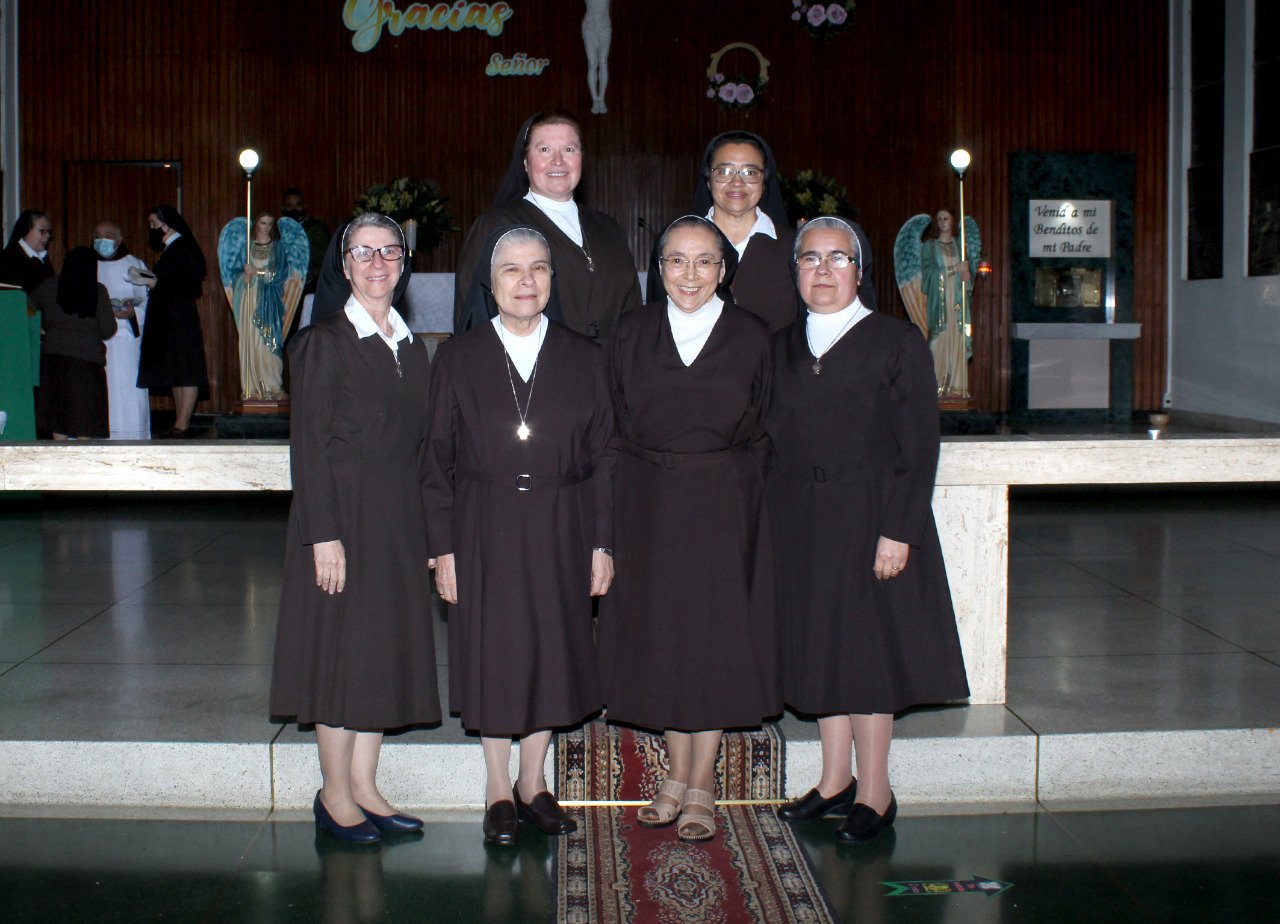
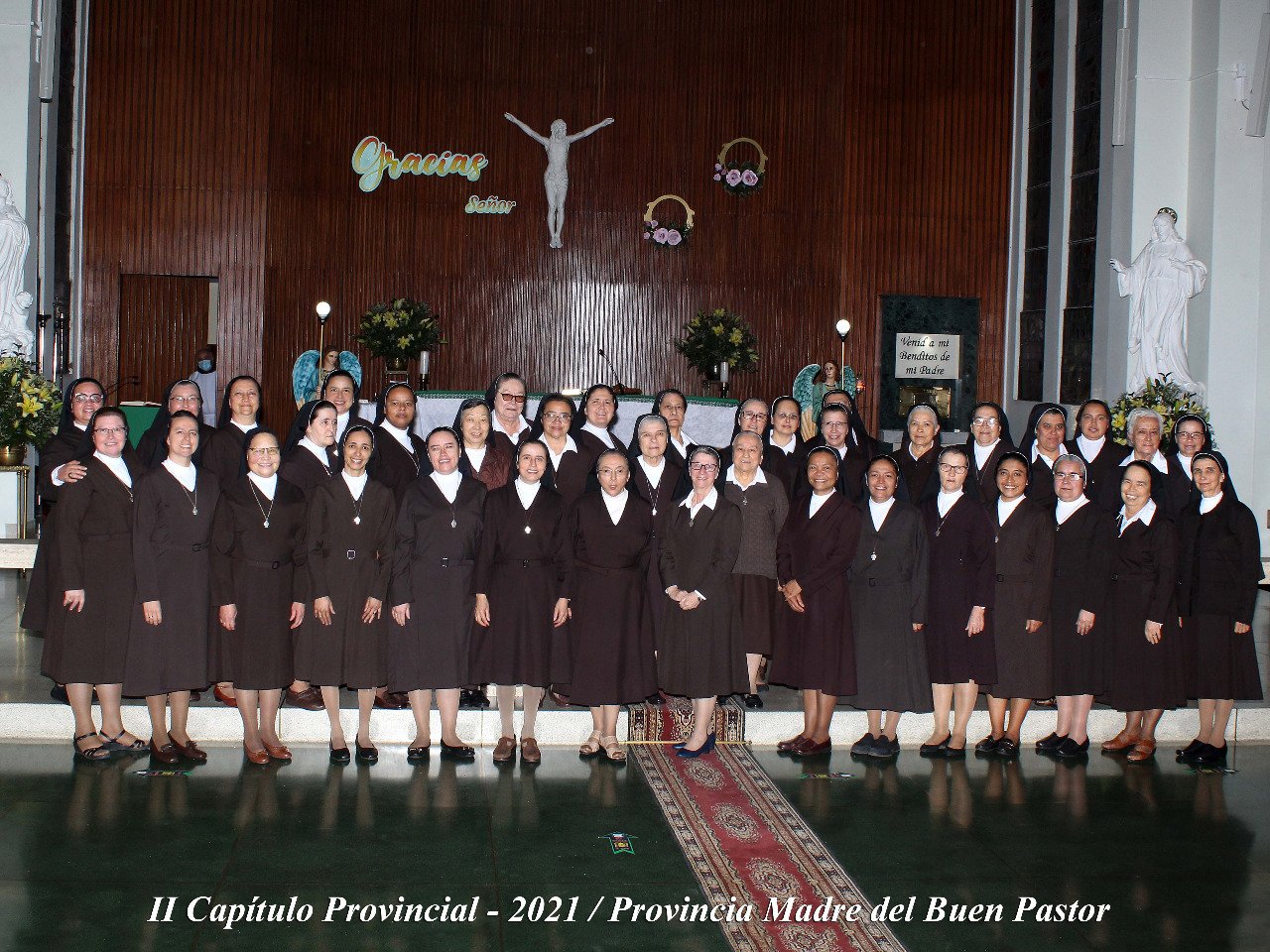
II Capítulo provincial 2021 / Provincia “Nuestra Señora de la Divina Providencia”


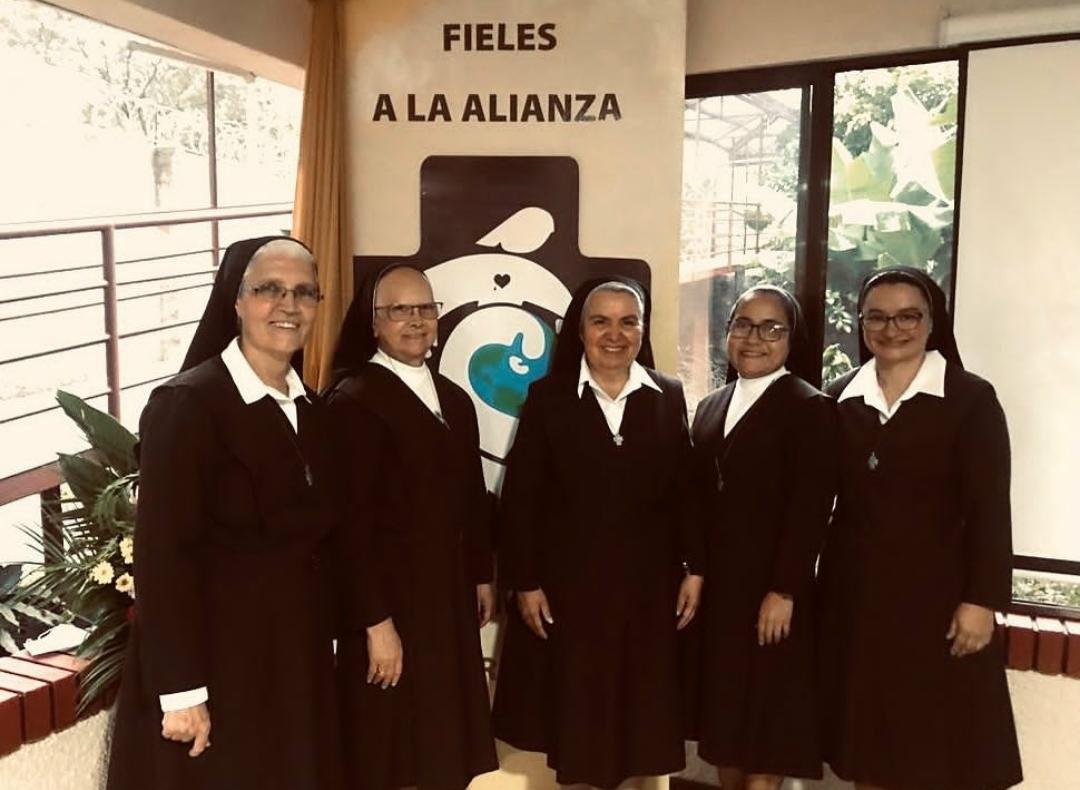
II Capítulo provincial 2021 / Provincia “Nuestra Señora de Guadalupe”

Categorías
Últimas Noticias

The Pope’s visit to the heart of Europe

In September, Hungary and Slovakia welcomed the visit of Pope Francis. In Budapest, on September 12th, the Holy Father concluded the International Eucharistic Congress, concelebrating the Eucharist in Heroes’ Square, an emblematic place in the history of Hungary and, in the afternoon of the same day, he travelled to Slovakia that has been the scenario of important and significant events, through which the Pope came into contact with various realities of this country and, in each of them, he left a trail of light.

Among the messages that Pope Francis left in every meeting of his visit in the heart of Europe, we like to highlight two: the ecumenism and the reaffirmation of the Christian ethical values that he made ​​in front of so many young people.

It has been unforgettable, for those who participated in it, the Divine Liturgy of St. Chrysostom, celebrated in the city of Prešov and characterized by a deep devotional feeling aroused by the beauty of the Byzantine and Eastern rites, and it was a beautiful expression of the universality of the Church. For the first time in the young history of Slovakia, bishops and archbishops, metropolitans and Latin confreres celebrated the Eucharist together chaired by the Pastor of the universal Church and that was a beautiful testimony that the church, Christ’s community, breathes with two lungs.

In his meeting with young people in Koŝice Pope Francis touched delicate topics especially for young people: preparation for marriage, premarital chastity and the difficulties of living the sacrament of Reconciliation. Addressing the young people and creating a dialogue with the crowd, he reminded everyone that it is possible to front difficulties only with courage, putting all trust in God’s Providence, not being afraid in taking decisions, not living provisionally and following a true ideal and leaving aside the dreams and illusions offered by the worldly way of living one’s life.

The trip ended with the Mass in the shrine of Our Lady of the Seven Sorrows in Šastin, on the day of the liturgical feast of Our Lady of Sorrows, Patroness of Slovakia. This is a very important sanctuary for Slovaks, where every year,  on September 15th, takes place a great national pilgrimage, a tradition that Slovak Christians have courageously carried out even during communism, despite the totalitarian regime was doing all that it could to prevent it. Here, during the years of the communist regime, catholic people were born at a new life joining and rooting themselves in prayer and faith, with the intention to free the country from communism and to encourage the younger generation to create the community unified through the Word of God.

As well as every visit of the Pope, also his journey to Hungary and Slovakia has left a deep mark in the hearts of those who have been involved, but his messages have their echo even in other contexts and it will be useful to profit God’s grace poured into the universal Christian and human community through Pope Francis’ gestures and words.


Categorías
Últimas Noticias

Olympiad: a sign of hope and universal brotherhood In the name of a honest competition

Shortly after the opening of the Tokyo Olympic Games, the Pope expressed his hope that, in this time of pandemic, the Olympiad would be «a sign of hope and universal brotherhood in the name of a honest competition».

And indeed, this event has provoked strong emotions and has told many stories of men and women of distant countries making gestures whose value goes far beyond the sporting performance and, as well, of countries witnessing the hope and universal brotherhood desired by the Pope. We like to mention some of them.

The athletes from South Sudan (a poor country with serious internal conflicts), due to the health emergency, have remained in Japan for another year, thanks to a money collected by the citizens of Maebashi. The South African Dallas Oberholzer, competing in skateboarding, began training during the apartheid years and, in his country, he still uses the skate to gather and train children in difficult neighborhoods and keep them away from drugs and gangs. Several athletes won medals in the name of countries that welcomed them as refugees or immigrants showing their great integration and identification with the country and a great willpower; among them, we remember the Italian sprinter Fausto Desalu, son of a Nigerian woman who raised him alone working as a caregiver in Italy; the family where she works, shared the joy of her son’s victory.

In the Tokyo Olympics, even small states such as Bermuda, Puerto Rico and San Marino, showed their value winning medals for the first time and therefore, in a certain sense, the Games, redesigned the geography of the world sport competition

And for the first time, as a sign of hope, in the Games participated a national team that does not represent a country but the over 82 million people, forced to leave their homes because of the discrimination or wars: the national team of the refugees that, in the real life, often ‘had to run an obstacle marathon’ persecuted by wars and dictatorships and they brought a living sign of hope for the world.