

Categorías
Artículos

“Day of the dead” in mexican culture

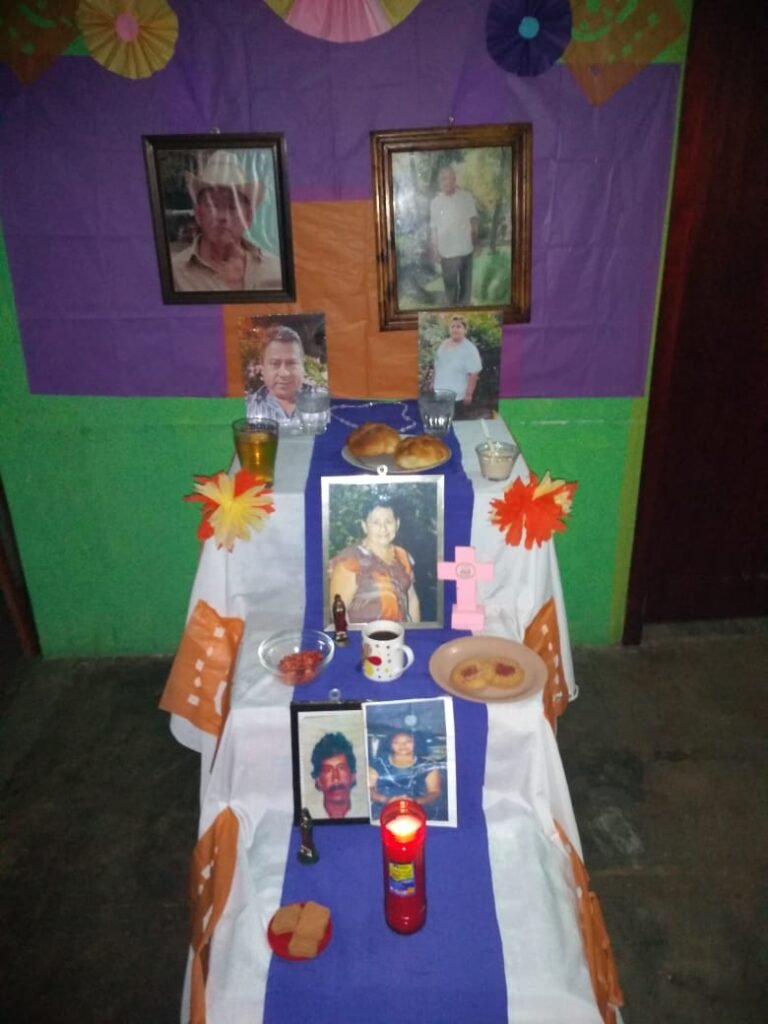
Remembrance of what I have lived in my home are like drops of water refreshing my daily life. The celebration of the “Day of the Dead” or “All saints” as my grandparents were calling it, was a celebration-party we were waiting for with great joy. Since January or February we could hear our grandfather or father saying «that pig» is for the “deceased” and we were fattening it during the whole year until October 31st when it was slaughtered and this ritual was an opportunity to enjoy, meet and sharing together. With the meat of the pig we were preparing the “tamales” for the “altar” or to take them to the cemetery.

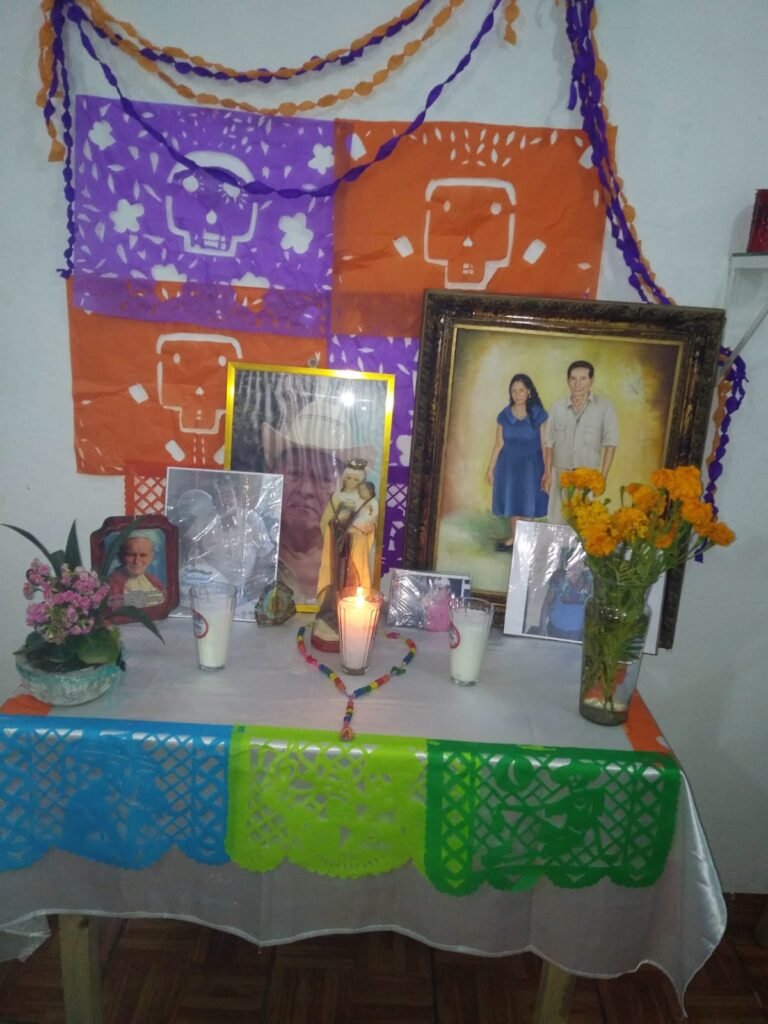
In Tabasco, my homeland, located in the south of Mexico, we make sweets of papaya and pozol, a corn drink with cocoa and we give them to the families and closest neighbors and, of course, we offered on the altar. I remember that we, the little ones, had to clean the banana leaves needed for the tamales and to prepare the vases with glass jars; the flowers were wildflowers and from Mom’s garden. We were making the cempasúchil flowers with crepe paper and my uncles chopped with skull drawings, the tissue paper we were using as decoration. In my house the “offering” or the altar was presided by a big image of Our Lady of Mount Carmel and, beside it, a wooden image of Christ and a photo of our deceased beloved ones. My grandfather used to say “your grandmother liked this” and that was what we were putting on the altar of the dead, “her favorite food”.
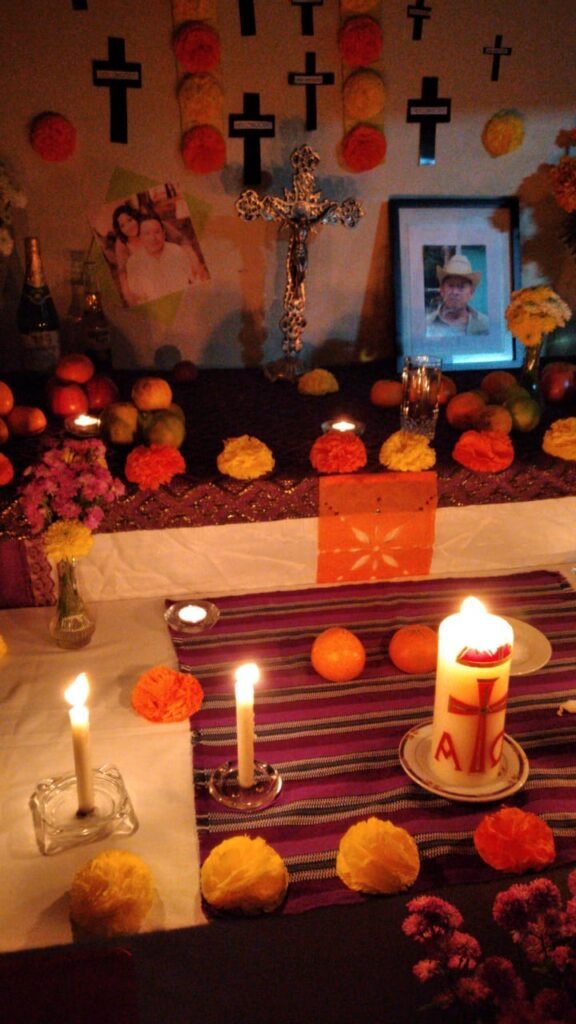
In addition to the food that we were putting salt, a glass of water and incense with copal and, of course, the candles. All that was taking place between October 31st and November 1st because, according to our customs, it was believed that the deceased began to arrive since 3:00 o’clock in the afternoon, depending on the death they had suffered.

In our house, on the first day, we were waiting until 10:00 o’clock at night and, at that time, we were remembering those who had died. My grandfather used to talk about people who had lived before us and about what liked and we were evoking and all the names of known people up to the great-great-grandparents. At that time, we were lighting the candles, one for each deceased and one for the lonely soul, Mom was leading the rosary and we all were praying and singing: «Come out, come out, come out, souls of sorrow; may the holy rosary break its chains …». At the end of the rosary, aware that they were already with us, we were eating tamales with coffee and brandy.
On November 2nd, we all were going to the cemetery to the tomb of my father’s mother and we were visiting the tombs of my mother’s parents. There we were praying the rosary and if we were meeting other relatives we shared with them the tamales. This day we were not working because tradition says that if you work, the dead get scared. All the month of November we used to pray the rosary while burning candles and my mother was saying that we could not go to bed after 12:0 at night because the “souls”  would take us away … And that’s how we grew up.

At present, in my family home, on the “altar of the dead”, there are more photos but the tradition is still the same but with a more religious meaning: our grateful remembrance of our loved ones fills our hearts with love for them and it is impossible to prevent that a tear flow down on our cheeks.

But I like also to tell you that the origin of this Mexican tradition dates back to pre-Hispanic times. This festival is one of the most important feast day of the Mexican people: t is a very special day celebrated  in a very particular way and considered the annual visit of the spirits of our deceased loved ones.

According to historians, the pre-Hispanic tradition says that the “mexicas” were celebrating their dead, in several periods of the year but the most important ones were at the end of the harvest, in the month of August and it was believed that, deceased people were going to a place of abandonment and sadness where they were losing memory and never eating anything; only in the month of August, the month of harvests, in the first part of the month, children were allowed to come and eat with their relatives and, in the second part of the month, it was the moment of the adults.

Aztec society believed that life continued even in the after-life and that is why it considered the existence of four «destinations» for people, according to how they died. The most common was “El Mictlán”, the place where most of the dead were going.

With the arrival of the Spaniards, the Day of the Dead did not completely disappear, as well as other Mexican religious festivals. The evangelizers discovered that there was a coincidence of dates between the pre-Hispanic celebration of the Dead and All Saints’ Day, dedicated to the memory of the saints who died in the name of Christ.

Let us remember that All Saints feast  began in Europe in the 13th century and on this day the Catholic martyrs’ relics were exhibited to be worshiped by the people. There was also synchronicity with the celebration of the departed faithful, held just one day after All Saints. It was in the 14th century that the Catholic hierarchy included this festival in its calendar and in Mexico they took advantage of it. That is how the Day of the Dead was reduced to just two days, November the 1st and 2nd.

The pre-Hispanic customs still existing at the arrival of the Europeans, consisted in cremating the dead or burying them at home; these customs were cancelled and they began to deposit the corpses in the churches (the rich inside and the poor in the atrium). Some other customs were adopted, such as eating bone-shaped desserts and the very popular “bread of the dead” and “sugar skulls”.

It began also the custom of preparing an altar with candles or tapers where the relatives were praying for the soul of the deceased to help him to reach heaven. In the same way, it became traditional the visit to cemeteries that were created towards the end of the 18th century that, to prevent diseases, were built on the outskirts of the cities.

Currently this tradition, as mentioned, is one of the most important of the Mexican people and it has a spiritual sense, that has grown more and more taking into consideration the three states of the Church in which we live in communion and giving to the same altar of the dead or offering a Christian meaning. We, the Catholics, make an offering and pay homage to our deceased brothers and their families using the most common elements. The water, reminding us baptism, the candles, sign of the risen Christ, the portrait of the deceased ones, expressing that they continue to live in our mind and heart, the bread of the dead, marigold flowers, sugar and chocolate skulls, incense, perforated paper, and the food that they enjoyed during their life are part of our celebration without falling into syncretism. We do everything as a reminder of those who have already departed from us, but the peculiar thing is that everything we use in the offering  has taken on a  Christian meaning.
 Sr. MARCELA CUNDAFÉ CRUZ, TC
Categorías
Artículos

«The poor you have always with you» (Mk 14,7)

 “Blessed are the hands open to welcome the poor and help them: they are hands that bring hope. Blessed are the hands that, spilling the oil of consolation over the wounds of the humanity, overcome the walls of culture, religion and nationality. Blessed are the hands open without asking anything in return, without «objections” or «conditions»: they are hands that bring God’s blessing upon their brothers ”. (Saint Paul VI; opening speech of the second session of the Second Vatican Council, on September 29, 1963).

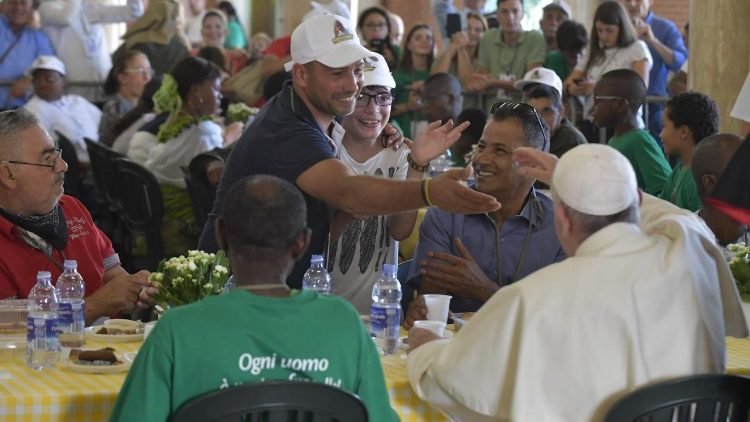
At the end of the Jubilee of Mercy, in the year 2017, Pope Francis institutes, on the XXXIII Sunday of ordinary time, the World Day of the Poor, whose aim is that “the Christian communities throughout the world, become a more and better concrete sign of Christ’s love for the least ones and most needy ”.

Every year, on the World Day of the Poor, the Pope proposes a phrase of the Holy Scripture that enlightens and helps us to be compassionate before our brothers’ suffering. I like to highlight, here, some parts of the five messages.

On the First World Day, since the biblical text: «Children, let us love not in word or speech but in deeds and truth” (1Jn 3,18), he invites us to the coherence of life and insists that «Love has no alibi.  Whenever we set out to love as Jesus loved, we have to take the Lord as our example; especially when it comes to loving the poor”.

It is very significant for us, the Capuchin Tertiary Sisters, that in several writings about the First World Day of the Poor, the Pope present Saint Francis of Assisi as a reference of love for the poor because of his coherence of life . On this occasion he says about him: “Because He kept his gaze fixed on Christ, Francis was able to see and serve Him in the poor” (cf. Test 1-3) and he puts into evidence that Francis of Assisi’s testimony is a proof of the transforming power of charity and of the Christian way of life.

Through the biblical text of the Second World Day «This poor man called, and the Lord heard him” (cf. Ps 34,7), the Pope emphasizes that God «listens», «responds» and «sets free” the poor. “God’s salvation is a hand held out to the poor, a hand that welcomes, protects and enables them to experience the friendship they need. From this concrete and tangible proximity, a genuine path of liberation emerges”. Through this message he also asks us a question: “What does the cry of the poor express, if not their suffering and their solitude, their disappointment and their hope? We can ask ourselves how their plea, which rises to the presence of God, can fail to reach our own ears, or leave us cold and indifferent”.

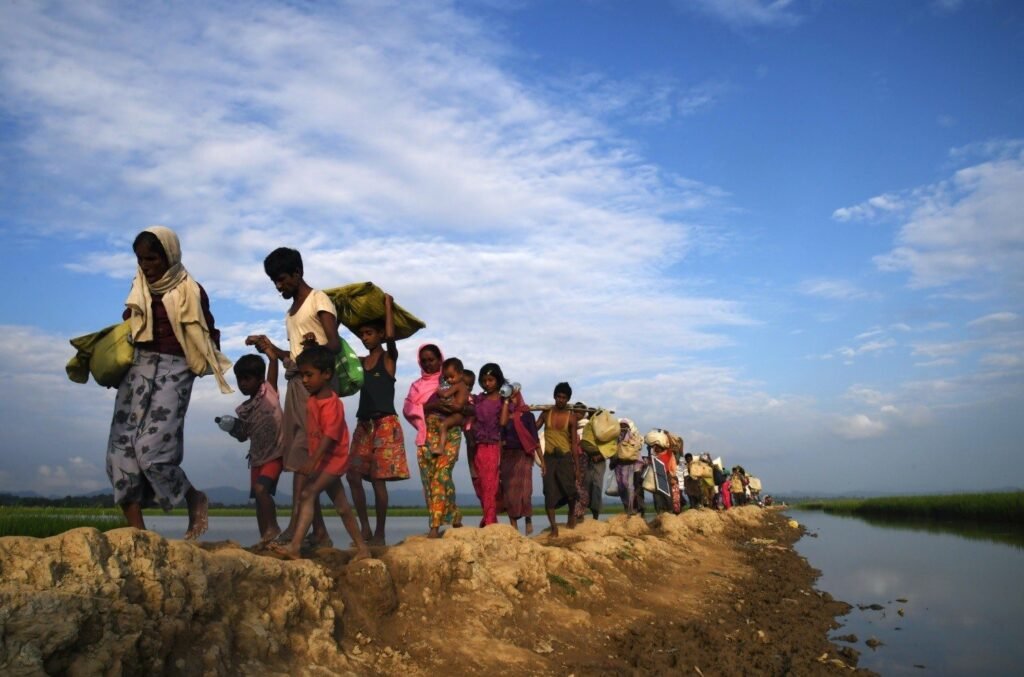
On the Third World Day he again takes up a psalm: «The hope of the poor shall not perish forever» (cf. Ps 9,19). The Pope, with realism and the prophetic spirit characterizing him, denounces the numerous forms of new slavery to which are subjected, today, millions of men, women, young people and children. Above all, he insists about people who must leave their homeland: “How can we overlook, too, the millions of immigrants who fall victim to any number of concealed interests, often exploited for political advantage, and are refused solidarity and equality? And all the homeless and ostracized persons who roam the streets of our cities?” He also makes reference to the stigmatization that, like a cross, in all times and places, the poor must carry over their lives:  “Frequently judged parasites on society, the poor are not even forgiven their poverty. Judgment is always around the corner. They are not allowed to be timid or discouraged; they are seen as a threat or simply useless, simply because they are poor”. And again he places Jesus as a poor and with the poor: “Yet, faced with countless throngs of the poor, Jesus was not afraid to identify with each of them: “Whatever you did to one of the least of these my brethren, you did to me” (Mt 25,40). If we refuse to make this identification, we falsify the Gospel and water down God’s revelation”.

In the Fourth World Day , referring to the text: “Stretch forth your hand to the poor” (cf. Si 7,32), the Pope insists that “the Christian community is called to be involved in this kind of sharing and to recognize that it cannot be delegated to others. In order to help the poor, we ourselves need to live the experience of evangelical poverty. We cannot feel “alright” when any member of the human family is left behind and in the shadows. The silent cry of so many poor men, women and children should find the people of God at the forefront, always and everywhere, in efforts to give them a voice, to protect and support them in the face of hypocrisy and so many unfulfilled promises, and to invite them to share in the life of the community”. He also reminds to all the Christian people that “the great value of the common good is a vital commitment, expressed in the effort to ensure that no one whose human dignity is violated in its basic needs will be forgotten”.

This year, on the Fifth World Day, Pope Francis has chosen a controversial evangelical text: «The poor you will always have with you” (Mk 14:7). There are persons that, may be to elude their commitment to the poor and, what is more serious,  to justify poverty, say: If Jesus said «You will always have the poor with you», and if it is a reality that they will always be with us, we should not worry about them … they will always be there and that is a reality that cannot be got over …

But Pope Francis contextualizes this text and helps us to understand better: “Jesus spoke these words at a meal in Bethany … As the Evangelist recounts, a woman came in with an alabaster flask full of precious ointment and poured it over Jesus’ head. This caused great amazement and gave rise to two different interpretations.

The first was indignation on the part of some of those present, including the disciples, who, considering the value of the ointment – about 300 denarii, equivalent to the annual salary of a worker – thought it should have been sold and the proceeds given to the poor. In Saint John’s Gospel, Judas takes this position: “Why was this ointment not sold for three hundred denarii and given to the poor? … It was no accident that this harsh criticism came from the mouth of the traitor: it shows those who do not respect the poor betray Jesus’ teaching and cannot be his disciples.

But Jesus said: “Let her alone. Why do you trouble her? She has done a beautiful thing to me” (Mk 14:6)… Jesus was reminding them that he was the first poor, the poorest of the poor, because he was representing all of them. It was also for the sake of the poor, the lonely, the marginalized and the victims of discrimination, that the Son of God accepted the woman’s gesture.  With a woman’s sensitivity, she alone understood what the Lord was thinking.  That nameless woman, meant perhaps to represent all those women who down the centuries would be silenced and suffer violence, thus became the first of those women who were significantly present at the supreme moments of Christ’s life: his crucifixion, death, burial and resurrection. Women, so often discriminated against and excluded from positions of responsibility, are seen in the Gospels to play a leading role in the history of revelation.

This strong «empathy» between Jesus and the woman, and the way in which He interpreted his anointing that was in contrast with the scandalized vision of Judas and the others, opens a fruitful path of reflection about the inseparable bond existing among Jesus, the poor and the proclamation of the Gospel… I never tire of repeating, the poor are true evangelizers, for they were the first to be evangelized and called to share in the Lord’s joy and his kingdom (cf. Mt 5:3)”.

Sisters and brothers, as a Capuchin Tertiary Family, are we ready to accept the concrete and urgent call the Lord is making to us, through Pope Francis on the Fifth World Day of the Poor? Are we ready to respond to Him? “We cannot wait for the poor to knock on our door; we need urgently to reach them in their houses, in hospitals and nursing homes, on the streets and in the dark corners where they sometimes hide, in shelters and reception centers. It is important to understand how they feel, what they are experiencing and what their hearts desire”.

Sr. LILIA CELINA BARRERA RAMÍREZ, TC

Categorías
Artículos

«We must stay here for each other Because God has shown us that he himself is here for us» (Saint Elizabeth of Hungary)

If we want to speak about a woman who left a mark in the Church and in the whole society, it will be helpful to dive into what has been written about someone so exceptional. Elizabeth of Hungary was born in 1207, in Bratislava, at present in Slovakia, more or less when our father Francisco was repairing the church of San Damiano. When Elizabeth was barely four years old, her father Andrew II gave her hand in marriage to the young Prince Louis of Thuringia and therefore, she had to move to Thuringia, to the Wartburg Castle in Germany, where she grew up with her future husband. They got married in 1220 and their family life was very happy. They got three children: Germán, the heir to the throne, Sofía and Gertrudis. After the sorrowful death of her beloved husband, she was forced to leave Wartburg Castle and she went to Marburg, where she set up a hospital and took care of the sick. On Good Friday 1229, she joined the Third Order of St. Francis and wore its habit. Shortly thereafter, on November 17th 1231, she died at the age of 24 years. Elizabeth was the first canonized Franciscan saint (1235), seven years later than our father Saint Francis (1228).

Although Elizabeth was belonging to an aristocratic family, since her early childhood, she always took care of people of low social class. Throughout her whole life, she experienced many changes, ruptures and great loneliness. She left from her place of birth and began to live in another country having to learn different languages ​​and customs; being still a four-year-old girl, she got engaged (in any case that was quite normal at the time she lived) and being still very young, she lost her mother and, later on, her beloved husband and so she had to leave the castle and to be separated from her children and all that definitely marked her personal and spiritual itinerary. Possibly the fact of losing her mother at a very young age, helped her to develop the characteristics that identify her personality: great sensitivity, humility, mercy and care for the most in need people.

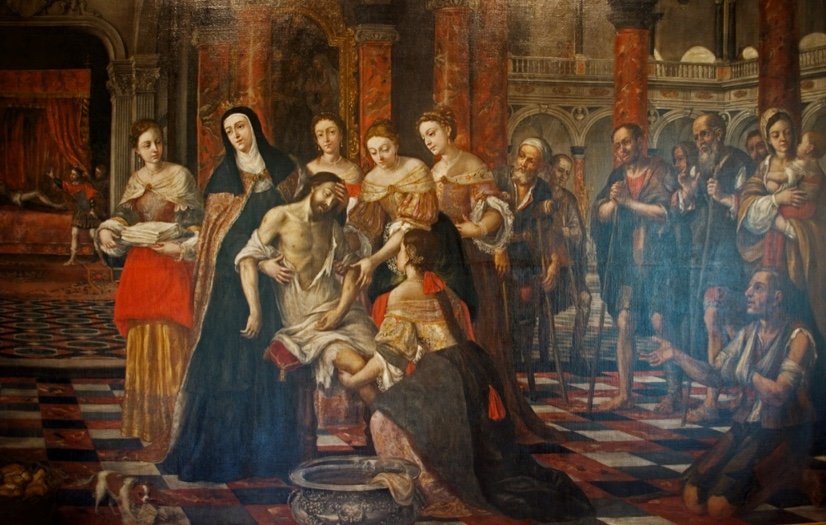
Saint Elizabeth has inspired many artists (painters and sculptors) and her extraordinary personality is reflected in the following traits. Her mercy and love to the extreme are  represented, according to the legends, by various paintings: Elizabeth laying down a poor man and when her family, knowing that, removed the blanket, they discovered a crucifix lying down. She was close and attentive to the marginalized world: she founded several hospitals, where she personally cared for, cured and washed the most disgusting patients. Through penance and prayer, Elizabeth developed a deep and intimate relationship with Jesus since her childhood and she grew up establishing a strong  relationship with Jesus, throughout her whole life. She was spiritually accompanied by a Franciscan friar who introduced her to the penitent – franciscan life and two years before her death, she wore the habit of the Third Order of Saint Francis.

According to historical data, Elizabeth’s first contact with Saint Francis’ lifestyle occurred being still alive the Poor of Assisi, in 1223, when Pope Honorius approved the Rule of the Franciscan Order.

Lucas de Valdés, a painter of the 17th-18th century, painted the Saint, highlighting very well the characteristics and qualities of this woman: her deep relationship with Christ, her mercy and care for the person in need, her intimate space (the double bed where the image of the Crucifix is laid down next to her), the poor waiting for her help and the ladies who were accompanying Elizabeth. In a few words we can say that she was transmitting to the world and in her the society what she had prayed and what had caused her heart fall in love; her social position did never paralyze or separate her from the suffering world overwhelmed by poverty and needing love. It is known that, during her life, she stripped herself of her jewelry and dresses, renounced her welfare and distributed food to people in need.

This image can help us contemplate the life of a profound and simple woman, abandoned in God’s hands, careful towards the others and able to “put into play” all that she was and she owed at the service of needed people. Evidently, she put into practice the words of Saint Francis and of the Gospel: «… Let those who have been placed above the others, boast of such a prelacy as much as if they had been entrusted with the office of washing the feet of the brothers» (Adm 4). “I have not come to be served, but to serve” (Mt 20:28), says the Lord.

Saint Elizabeth can be a model for us, since her continuous and deep prayer anchored in Christ and her intimate relationship that led her to go out to meet others. Let her way of acting with the poor inspire us to ask for a heart open to the needs of concrete people every day coming before us.

Sr. LUCIA KONTSEKOVA, TC

Categorías
Últimas Noticias

Congregational course of preparation for perpetual profession

Covid-19 pandemic that has upset many realities in our personal, social, and congregational life, prevented, for obvious reasons, also the realization, in the usual date, of JUNICON 2021 that, in its previous editions, was beginning in January.

After waiting for several months, the time finally came, for the Junior Sisters of the whole Congregation, to join this appointment, to arrive in the place and to begin an intense journey of formation, intercultural meeting and personal and fraternal experiences that, undoubtedly, mark the life of each sister who passes through this congregational structure, full of life.

Another change about the JUNICON of this year is its location: although still located in Medellín (Colombia), it is now in our house of Belén quarter; once completed the necessary restructuration work, the group of sisters of JUNICON 2021, settled, for the first time, into a part of the building prepared for them.  

The date of arrival of the juniors to the JUNICON community was September the 1st but it was on the 8th, feast day of the Nativity of Mary and also of Our Lady of Montiel, that this formative stage began within the framework of a solemn Eucharist, attended by various sisters from the nearby communities. The preparation time will end in the first days of March 2022.

As we said, interculturality is the scene of this shared experience of the sisters that, on this occasion are nine and are coming from Colombia, Ecuador, Guatemala, Nicaragua, Tanzania and Benin; they are accompanied by Sr. Mª Anabelle Céspedes Morales, 3rd General Councilor from Costa Rica, whom the General Superior appointed “to walk”, during these six months, with this group of Juniors, together with Sr. Beatriz del Socorro Cortés Gómez, Colombian, who has carried out this mission with other previous groups.

The nine juniors and the two sisters that are accompanying them, form a true community of life, carrying out their project according to the course objective. Everything is programmed: seminars of study, visits and relations with the communities, encounters with different realities, pastoral activities, preparation and realization of the cultural day of each country, month of Spiritual Exercises … But the scheduling does not reduce the creativity, the personal contribution and the sharing experiences that are a source of knowledge and wealth for each one.

At the end of this time of grace, each of the sisters will make her Perpetual Profession in her respective country. But for now, step by step …

Categorías
Últimas Noticias

The opening of the synod, an event of grace

On October 10th, 2021, with a solemn Eucharist celebrated in the Vatican Basilica of St. Peter, the Pope opened the synodal path that will end with the celebration of the XVI Ordinary General Assembly of the Synod of Bishops whose theme is precisely “synodality”.

The development of this Synod follows  unprecedented forms and phases because it is not going to take place only in the Vatican, but in each particular Church of the five continents and, in the history of this institution, it is the first time that a Synod it is carried out in a decentralized way. The opening of the Synod in the local Churches took place on Sunday, October 17th, 2021.

The synodal process follows a three-year itinerary divided into three phases marked by listening, discernment and consultation. The first stage (October 2021 – April 2022) is addressed to each  diocesan church; the second one (September 2022 – March 2023) will be worked out at a continental level, being its purpose to talk about the text of the first Instrumentum laboris; finally, in October 2023, it will take place the third and last phase of the synodal journey and it will involve the universal Church.

In his opening homily, Pope Francis exhorted each ecclesial community to meet, listen and discern guided by the Word, that opens us to discernment and enlightens it. The Pope underlined that the Synod should not be an ecclesial «convention», nor a study meeting, a political congress and not even a parliament, but an event of grace, a healing process directed by the Spirit, that should help people to free themselves from what is worldly and from their closures and repetitive pastoral models and to question themselves about what God wants to tell them at this time and towards which direction He likes to lead them.

Referring to the Gospel of the day, Mk 10, 17-30, Pope Francis highlighted how Jesus helps the rich young man to discern his path of conversion showing him that, for his own good, it is not necessary to add more religious acts, but, on the contrary, to empty himself selling what occupies his heart in order to make room for God. This text lights up also the Synod that the Pope describes «a path of spiritual discernment, of ecclesial discernment, carried out in contact with the Word of God» and necessarily demands from the Christian community to put  aside all that binds her to our securities and perhaps to her dreams but that is no longer according to God’s plans for the Church and for the world.

Categorías
Últimas Noticias

The eruption of the volcano of La Palma island (Canaries – Spain)

On September 19th, the volcano on the island “La Palma” (Canaries – Spain), started erupting and causing around itself numerous earthquakes continuing to this day, throwing gases and ash into the air and emitting a large amount of lava that, once solidified, creates rocky structures that are modifying the landscape and, reaching the sea, forms new islands in this archipelago of the Atlantic Ocean, belonging to Spain.

Thanks to God, until now, the eruption has not caused victims but the damage suffered in the island’s agriculture (banana trees, vineyards, avocados and other crops), the air  salubrity that is increasingly becoming toxic, is incalculable as well as the suffering of the inhabitants of this wonderful land that, although they have promptly executed the evacuation order, have lost their homes, their memories … and their work activities that have been seriously affected as well as the infrastructures.

Once again, a natural calamity, this time not produced by environmental pollution, is affecting the lives of many people and leads man to wonder at the uncontrollable forces of nature and to question about the meaning of existence that suddenly may change et obliges us to a new organization of our life and future.

On the other hand, the solidarity movement generated around the emergency situation is worth to be mentioned. Not only the Government of the Nation and the Canarian community, but also several associations and groups of anonymous citizens from  different parts of the country or foreigner, have spontaneously organized themselves and joined to collect funds, send them to the victims and to think about the reconstruction of everything devastated by the volcano. Truly, human suffering and weakness are privileged spaces to move man to solidarity, to let come out the best of people’s hearts and to create bonds of brotherhood.