

Categorías
Artículos

The Joy of Christmas!

«I bring you good news of great joy for all the people: today a Savior has been born to you, He is the Messiah and the Lord» (cf. Lk 2:10-11).

The Angel said this to the shepherds and they ran in haste to see and found Mary and Joseph with the baby lying in the manger. They all were astonished and returned giving glory and praise to God. The Magi from the East, at the end of their journey, «when they saw the star again, they were filled with great joy and saw the child with Mary his mother, and they knelt and worshiped him and offered their gifts of gold, frankincense and myrrh» (cf. Mt 2:10-11).

The Catholic Tradition, according to each country, has transmitted to us expressions, signs and customs of joy and rejoicing in the celebration of Christmas. Here in Spain, an endearing word has been created: “Nochebuena”, it is the Christmas Eve family dinner, something intimate and sacred; it is the night of «Christmas carols» and of the “Misa de Gallo”, Christmas Mass at midnight; although in some places and due to different circumstances is celebrated some hours in advance.

It is surprising and pleasant to note that Christmas, as a time of celebration and joy, has spread throughout the world; whether for commercial or for some other reasons, cities are filled with lights and colors, and family celebrations multiply. In a word, Christmas is a friendly and festive time in today’s world, but, perhaps for most, with no connection to faith nor to the birth of Jesus.

For us believers, Christmas is Jesus himself. The reason for our joy is the contemplation of the Incarnation: God entered our history to free us from our sin and make us sharers in His Divine Sonship. He pitched his tent in our midst to become part of our lives, to heal our wounds and give us new life. Joy is the fruit of this intervention of salvation and the love of God in us.

 CHRISTMAS, THE TENDERNESS OF GOD

 We can see to the Son of God, made one of us, in the gentleness and weakness of a newborn baby and, furthermore, in the conditions of extreme poverty; a sensitive manifestation of the immense tenderness of God. It was St. Francis of Assisi who intensely lived this dimension: «In preference to other solemnities, he celebrated with ineffable joy that of the birth of the child Jesus; he called it the feast of feasts, in which God, made a little child, was raised at the breasts of a human mother. He pictured in his mind images of the child, which he kissed with eagerness; and the compassion for the child, which had penetrated his heart, made him even to babble words of tenderness in the manner of children. And this name was for him like honey and honeycomb in his mouth» (2 Celano 199).

Later, a follower of Francis, St. Bonaventure, wrote in the same line and in the medieval spirituality of the holy humanity of Jesus, the booklet “The Five Festivals of the Child Jesus”, one of which, that of the Holy Name of Jesus, passed into the Liturgy. Moreover, two years before his death, Francis left us another great testimony: Christmas approaches, he is in the village of Greccio, and moved by his great love and devotion, he represents the Nativity of Jesus according to the Gospel data and with the people of the village: it was the first living Nativity scene, a visible and palpable example of his spirituality of the tenderness of God that later became the universal Christian tradition of “Nativity scene” representation (cf. 1Cel 84-86).

 JOY FOR ALL: Meeting and Sharing

In the angel’s message we are told that the joy announced is for all the people, that is to say, the joy of Christmas implies encounter, communication, shared joy and celebration; there is no feast in solitude, for a feast requires a meeting of people to share life and to share goods as an exchange of gifts.

 The Christmas of the poor

But, particularly, because of our faith, love and justice, joy must reach the poorest and neediest thanks to the generous sharing of all with what each one has. This is what is done in all parishes and institutions, «the Christmas of the poor,» so that joy may reach everyone. This is also the sensibility of St. Francis: «He wanted that on that day the rich should feed the poor and hungry in abundance, and that the oxen and donkeys should have more fodder and grass than usual. ‘If I come to speak to the emperor,’ he said, ‘I will beg him to issue a general decree that all the well-to-do be obliged to throw wheat and grain on the roads, so that on such a great solemnity the little birds, especially the sister larks, may have plenty’ (2 Celano 200). Poetry and mysticism, yes, but is translated into concrete actions!

 And the joy of fraternity

In civil society, in addition to family encounters, other meetings are becoming common at the level of members of organizations, work, etc. Christmas is an invitation to a festive gathering. As believers, it would be very positive to prepare these meetings in religious communities, groups, etc.

How do we want to live spiritually and festively this intimate and beautiful time? With the different initiatives, we can have very pleasant surprises: carols, cribs, decorations, visits… It will be very beautiful to live our Christmas with St. Joseph and the Virgin Mary in the Bethlehem Portal. MERRY CHRISTMAS TO ALL!

“¡Sing to the Lord with shouts of joy because He sent His beloved Son from on high and He was born of the Blessed Virgin Mary and He was placed in a manger because He had no room in the Inn. Glory to the Lord God in the highest and on earth, peace to all men of good will! “ (St. Francis of Assisi – cf. OfP, Psalm XV).

 SR. Mª ELENA ECHAVARREN SORBET, TC
Categorías
Artículos

Christmas in Poland and Germany

The celebration of Christmas, in Poland, is something magical. I will simply share a few “brushstrokes” of this special time.

In Poland we begin to perceive the Christmas atmosphere already in Advent, through the celebration, before dawn, of masses called “roraty”. This name comes from a liturgical song in Latin that begins with the words «Rorate caeli desuper», whose mean is «Drop down dew, ye heavens, from above”.  People participating in “roraty”, especially the children, go to mass holding in their hands lanterns that illuminate the Church in the dark.

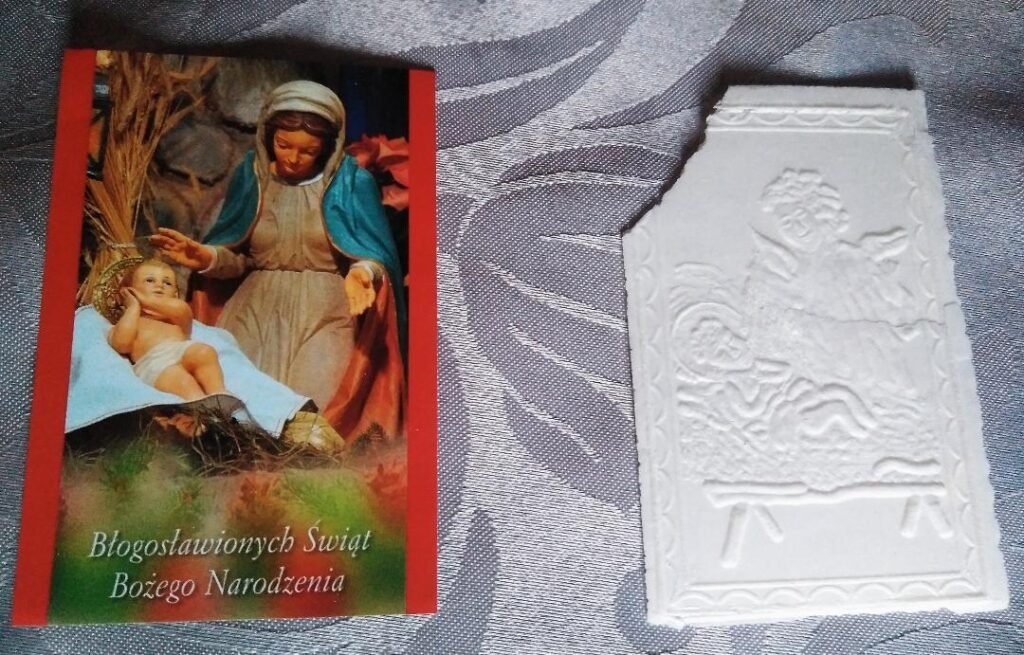
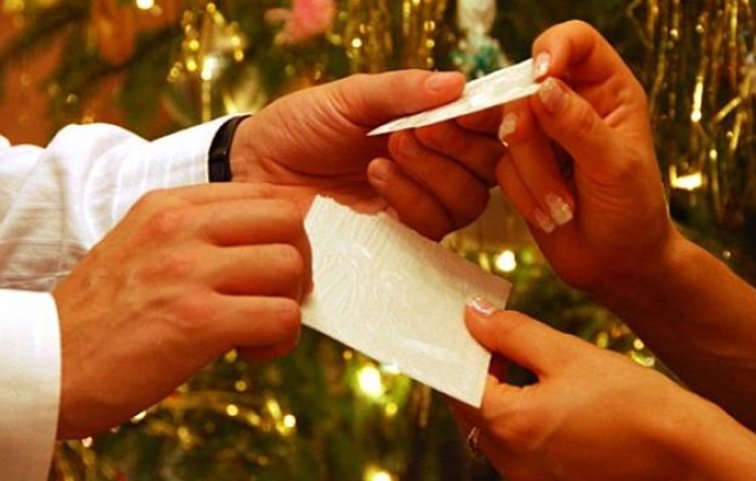
In Poland, Christmas Eve is the culminating moment of the feast day  The Christmas dinner begins as soon as it appears in the sky the first star which recalls the star of Bethlehem leading to the newborn Baby Jesus and it begins with a prayer and the reading about the birth of Jesus from the Gospel of Luke. Afterwards, everyone shares “oplatek” (it is a white bread, of fine consistency, prepared like a host), exchanging Christmas wishes. That is a symbol of reconciliation and forgiveness.

In all the houses, in Poland, it is very common to leave an empty place at the table; we set a chair, a plate and cutlery but nobody will take place there because it is reserved to welcome an unexpected person. We also put some hay under the tablecloth just to symbolize that the new born Jesus was laid in a manger.

The Christmas dinner menu consists of twelve dishes, including beetroot soup with “uszka” (small dumplings stuffed with mushrooms) and carp. After dinner, we enjoy the moment singing Christmas carols (in Poland there are more than fifty of them) and opening presents. At midnight, the families go to the Church to participate in a solemn Eucharist called “Pasterka” and to adore the Child Jesus.

Sr. GOSIA SKIBA, TC

In Germany also, the Advent season is full of traditions and symbols. The cities, streets  as well as many windows of the houses, are illuminated with decorations of lights. In the old quarters of the cities there are Christmas markets.

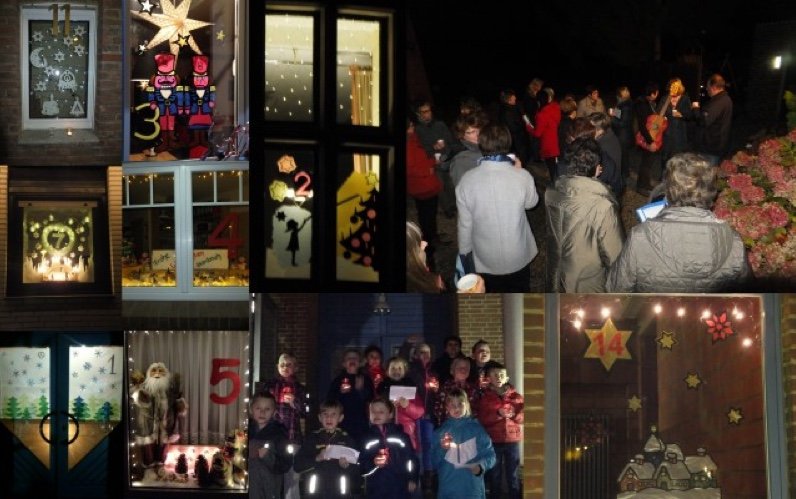
In the evenings, families often light the Advent wreath and around it, people sing, read stories, play games, paint, pray… The Advent calendar also helps, especially the children, to wait and prepare their hearts for Christmas. It is an illustration with 24 windows; every day one is opened, discovering a sweet, a story, a proposal to be made … Since 15 years, in many Christian parishes it is realized a «Living Advent Calendar»: 24 families, institutions or organizations adorn a window of their house. At night their neighbors, parishioners or other people gather in front of this house, whose window is illuminated, read a story, sing an Advent song and, at the end, they drink some wine or a hot juice and eat some sweets, cookies or «Christstollen», a typical Christmas cake, previously made at home.

Christmas Eve is also the most important feast day in Germany; it is the feast day of meeting and union; the family gets together, shares a special meal, exchanges gifts under the Christmas tree and sings Christmas carols … But at present, it doesn’t exist only a single tradition, but each family has its own «tradition». Notwithstanding, there is a German Christmas carol that cannot be omitted in the repertoire of all German families; it is a Christmas carol lifting up the heart, and expressing in a very deep way the Christmas Eve secret: Stille Nacht, Heilige Nacht… (Silent Night).

Sr. URSULA LEUFFEN, TC

Categorías
Artículos

«CHRISTMAS IN OUR HEARTS» – Christmas celebration in the Philippines

Filipinos love to have fun and celebration and Christmas in the Philippines is the world’s longest Christmas celebration. It starts from the 1st day of September, the start of the «ber» months until the Feast of the Santo Niño. «Ber Months» signifies that Christmas is coming. It can be perceived in the decorations and songs in the parks, streets, houses, malls, hospitals, schools, buses, jeepneys, taxis, and other public places.

The Philippines has a lot of customs and traditions, and the most meaningful and beautiful is that of Christmas, a time to be with family and loved ones. It’s a time of thanksgiving, reconciliation and celebration of life and love in the family. A time wherein family members who are out of the country go home to be with their loved ones. And those who cannot go home for some reason, always long and miss being home during Christmas in the Philippines.

As they say, «IT’S MORE FUN IN THE PHILIPPINES!».  It is not only the «fun» but the ambiance, the laughter, and the joy of the people being shared despite many negative situations, poverty, hunger, disasters or natural calamities, etc. If it’s Christmas time in the Philippines, there is a pandemic of sharing, loving, and caring for one another, and there is a lot of fun.

Lastly, one of the main highlights of Christmas is the «SIMBANG GABI», Tagalog word which means » Mass in the Night» or «MISA DE GALLO» («Mass at dawn»). It is a nine-day Eucharistic celebration before Christmas Eve. It is in honor of the Blessed Virgin Mary who carried Jesus in her womb for nine months. This celebration is mostly participated by people who believe that once they participate in the mass completely for nine days, their «wishes or heart’s desires» will be granted by God. Indeed, even the Covid-19 pandemic did not stop the people from attending this celebration. Despite the restrictions implemented, still many people filled with much hope and faith flooded the churches. This somehow shows the resilience of the Filipino people that no matter how difficult or hopeless the circumstances are, there is always that light that radiates in the hearts of every person, the light which is Christ Himself, the God made flesh, and who dwells among us, our «Star ng Pasko» or the «Light of Christmas» that shines in every home, every person, and every family or community even during times of suffering, pain, and poverty.

Despite, the reality of globalization and modernization, Christmas for Filipinos, here in the country and abroad is a «Christmas in our hearts» as the title of the song by Jose Mari Chan, a famous one usually played on the 1st day of September. Its lyrics have a deep meaning, and I would like to cite some of them here: «Let Him be the One to guide us, as another New Year starts, and may the spirit of Christmas, be always in our hearts…» I believe that most of the Filipinos have this plea in their hearts especially those who believe in God no matter what religion they have or whatever situation they are experiencing in their lives. I hope and pray that as we celebrate this Christmas, it is Jesus in the manger we remember and His presence in our hearts and lives we share with others especially with our loved ones, our sisters in the community, and with the people we encounter in the mission.

SR.FRANCES LARAINE ANDRADE, TC

Categorías
Artículos

Christmas in Colombia

Colombia is a South American country whose rich culture is the result of the mixture of Europeans, especially Spaniards, indigenous peoples and African slaves.

For this reason the celebration of Christmas is rooted in this cultural identity and makes it unique, keeping alive the solid inherited Catholic traditions. In Colombia, this is the best time of the year, it is an opportunity for meeting, celebration and family rejoicing. Since the month of October, we prepare the environment, decorating in each village, town and city, the houses and the common spaces. Christmas colors, lights and lighting of this period are worldwide famous for their creativity, showiness and beauty. All the preparation and festivities route towards December 24th, the day when we celebrate the great night of Child Jesus’ birth.

Officially festivals open on December 7th with the traditional “night of the candles” when candles, are lit in the streets, balconies and doors of houses, a gesture to honor the Immaculate Conception of Mary on the eve of her solemnity; the street lights are also turned on and families gather and walk through the glowing streets.

Then it is prepared the Nativity scene which recreates the birth of Jesus through images. Here Saint Joseph, the Virgin Mary, the Child Jesus, the mule and the ox play a leading role; that is a family shared work as well as the decoration of the Christmas tree with colored balls, bows and garlands. These Christmas activities are appreciated for originality and for the love and creativity they request.

From December 16th until the night of the 24th, families gather around the manger to pray the novena of Christmas gifts” and to sing Christmas carols. Here the children have their greatest participation, showing their great joy and letting their dreams and expectations flowing around the celebration of Christmas. It is a Catholic devotion that unites families and today is extended also to the social environment.

When «Christmas Eve» arrives, the last day of the novena is celebrated, preceded by sharing the Christmas dinner, prepared with the typical delicacies according to each regional custom; the common dishes are, among others, the “buñuelos” (fritters), custard and other desserts. Then all those who, with faith and hope, commemorate this beautiful and familiar Christmas eve, share the gifts “left by the Child Jesus”.

The festival lasts until December 25th, solemnity of the Nativity of the Lord. This is a day to enjoy the gifts and to continue singing carols, dancing and gatherings together to share the joy and Christmas spirit.

The Christmas celebrations in Colombia end on December 31st, with the farewell of the old year and the welcome of the new year. Family reunions, dinner, toasts, congratulations and festive celebrations resume until dawn. For a large number of Catholics, it is very important to participate in the celebration of the Eucharist at midnight, both on this day and on the night of the 24th, always according to the reality and family needs.

Liturgically, Christmas culminates with the celebration of the solemnity of the Epiphany of the Lord, or, as it is commonly called, the adoration of the Magi, whose festive relevance in Colombia  is not so important at a general level, although it is so for the Catholic Church.

HNA. BLANCA NIDIA BEDOYA SALAZAR, TC  

Categorías
Últimas Noticias

«Our Father Luis in his letters»

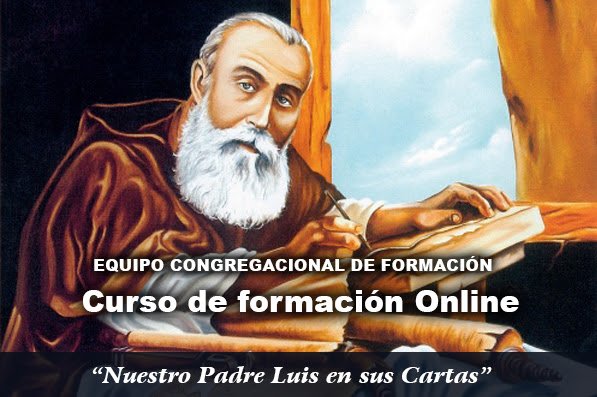
Accepting the request of many sisters of the Congregation that like to continue deepening in our Father Founder person of and in our charismatic sources, the Congregational Formation Team organized an online formation course in four sessions, that took place in the months of October (on the 9th and 23rd) and November 2021 (on the 6th and 20th). The presentation, in charge of our Sr. Isabel Valdizán Valledor, developed the theme: “Our Father Luis in his Letters”.

In the first session, Sr. Isabel helped us to consider the Letters within the Luis Amigó’s Complete Works (OCLA) and then she explained that, in the course we had not carry out a critical, historical and much less curious reading of the Letters, but, through them, we had rather got closer to the person of Father Luis listening especially to what he told us, the Capuchin Tertiary Sisters of the Holy Family. She then presented some general aspects, the theme and distribution, the letters  addressed to the Sisters and some important messages we can pick up in them and she concluded that, an increased knowledge of Father Luis leads us to deepen more and more in our own form of life and charisma.

In the session of October 23rd, Sr. Isabel presented Father Luis Amigó putting into evidence some nucleus that, since the beginning, attracted our attention: his dedicated life. He was a young friar loving his Capuchin vocation, an upright and transparent person, free and able to express  his reality; a man charged with troubles and responsibilities but sure that God is “before and above all else”; a person available and obedient, seeking out God’s will at all times; a Capuchin Provincial, brother of his brothers to the core.

Moving forward in the course, the third session began by underlining what «Our Father Luis» was demanding from us and which ones were his advice and clarifications and criteria about our life. Then Sr. Isabel reminded that among all the letters of Father Luis, only 33 are addressed to the Sisters and mainly to the Sisters that were in America, since he was never able to travel there. Father Luis is interested in each sister, in the good of all of them, in the fraternal and congregational communion, in the formation of the young women … and also in promoting that the Sisters seat themselves in settlements and places favorable for the Congregation growth … Other letters are addressed to various people, but their matters is referring to the Sisters. Sr. Isabel put into evidence also some important issues that Father Luis repeats over and over again, issues that worried him and that she took up again referring them to some  concrete situations of life. That is also a call to live in fidelity, in «growth and transformation», following the model that the Lord presents to us in Francis of Assisi.

The last session on November 20th, was about “The daily  life” and it was developed in two questions: «The good government of the communities» and «The resuscitating cross».  Sr. Isabel talked about that with an agile and motivating language: the strong threads through which Father Luis “weaves life”, the organization of his communities when he was Provincial Minister, the orientations and advices to the Sisters, orientating them to get out from complicated situations and to face difficulties; all that is something more than a good «psychology» or an «opportunity»: it helps to discover the meaning of suffering and of the cross, and to get sure that we are in God’s hands.

The course has been widely accepted and highly valued by all the sisters and has left a desire” to want something more”… That is why, in response again to the suggestions received, it has been decided to offer a second part of this charismatic course for the month of February 2022 and its topic will be: «Our Father Luis in his Pastoral Exhortations».

Categorías
Últimas Noticias

50th anniversary of the Synod of Bishops: «Justice in the world» November 30th, 1971 – 2021

The Synod is a Church institution or organism born of the Second Vatican Council. It was instituted by Pope Paul VI, who announced its creation on September 15th, 1965. Up to now, since 1967, when the first Synod took place, 29 Synods of bishops have been held in the Church, all of them in the Vatican.

On November 30th, 2021, we have celebrated the 50th anniversary of the celebration of the II Synod of Bishops, held in 1971. Pope Paul VI, in the general audience of November 24th, 1971, ordered to make public the two documents approved by the II General Assembly of the Synod of Bishops, about the concerned issues: «The ministerial priesthood» and «Justice in the world».

The document «Justice in the world» presents, with a critical look, the reality of the world at the time of the Second Vatican Council, and states: «We have been able to know the serious injustices surrounding the human world through  a network of domains, oppressions and abuses that stifle freedom and prevent most of the human race from participating in the edification and enjoyment of a more equal and more fraternal world ”.

On the other hand, it recognizes the contribution of people docile to the Spirit action sowing  hope and committed to build a better world: “There is no shortage of facts contributing to the promotion of justice. In human groups and in people themselves is born a new consciousness shaking them from resignation to fatalism and urging them to get free and responsible for their own fate. As well they appear human movements that reflect the hope for a better world and the will to change all that can no longer be tolerated ”.

The document urges the Church to carry out its mission: “Listening to the cry of people suffering violence and oppressed by unjust systems and mechanisms and listening also to the questions of a world that contradicts the Creator’s plan with its perversity, we are unanimously aware of the Church’s vocation to be present in the heart of the world, preaching the Good News to the poor, liberation to the oppressed and joy to the afflicted”. It is organized in four parts:

The first part: social justice and world society, with four sections: the crisis of universal solidarity, the right to development, the injustice without a voice and the need of dialogue.

The second part: the proclamation of the Gospel and the mission of the Church, is presented in two sections: the saving justice of God through Christ and the mission of the Church, the hierarchy and the Christians.

The third part: the practice of justice, presents six sections: the Church witness, the education for justice, the cooperation among local Churches, the ecumenical collaboration and the international action and it ends briefly expressing the wishes of the Synod.

The fourth part: it encourages with a word of hope: “The radical transformation of the world at the Lord’s Passover gives full meaning to the efforts of men, and particularly of young people, to reduce injustice, violence and hatred, and to promote the progress of all in justice, freedom, fatherhood and love ”.

Let us celebrate the anniversary of the Synod «Justice in the world», disseminating the content of this document so actual also for our time.

Categorías
Últimas Noticias

25th anniversary of the Tibhirine monks martyrdom

On December the 3rd and 4th, 2021, at the Pontifical Athenaeum Sant’Anselmo, in Rome, it was held a «Colloquium for the 25th anniversary of the martyrdom of the seven brothers» and its aim was  to reflect on the spiritual heritage of the seven Trappist monks martyred in Algeria.

It was in May 1996 that, after weeks of kidnapping, the seven brothers of Tibhirine were murdered. Beatified in Oran together with twelve other martyrs from Algeria, their experience of life and dedication offers, through their writings illuminated by the testimonies of people who knew them, a living source for the today theology and spirituality.

After the meeting in Paris (2018) and the colloquium in Freiburg (2019), this international colloquium on the occasion of the 25 years of martyrdom, liked to collect the witnesses of those who knew them and the contributions of those who today receive from them a theological, spiritual and pastoral inspiration.

The first day was reserved for the Pontifical Sant’Anselmo Athenaeum students and the meeting aimed to raise awareness of this spiritual heritage and to stimulate a work at an university level. The second day, open to a wider audience, aimed to publicize the experience lived by these monks and to contribute to spread their message through the forthcoming publication of their writings in Italian language.

Organized by the “Association pour la protection des écrits des sept de l’Atlas” and the “Comité scientifique des Écrits de Tibhirine”, in collaboration with the Pontifical Athenaeum Sant’Anselmo, the Anselmianum, and with the financial support of the Fondation des Monastères, the colloquium was organized under the patronage of the Pontifical Council for Interreligious Dialogue.

(Source: OMPRESS-ROMA)