Categorías
Últimas Noticias

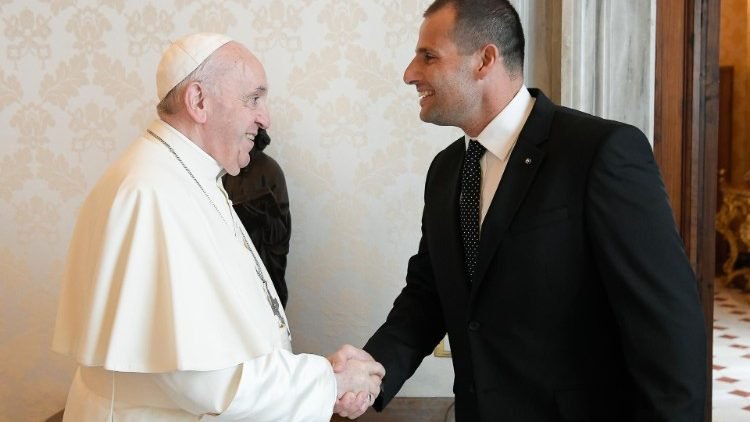
The visit of Pope Francis to Malta in april

The Pope will have a two-day apostolic journey to the Republic of Malta from 2nd to 3rd April 2022, visiting the cities of Valletta, Rabat, Floriana, and the island of Gozo. Pope Francis has accepted the invitation of its President, the civil authorities, and the Catholic Church of this country. 

The Pope was supposed to visit Malta on 31st  May 2020, but that apostolic journey was postponed due to the situation of the coronavirus pandemic.

The theme of the apostolic journey of the Pope, “They showed us unusual kindness”, refers to the hospitality shown to St. Paul by the Maltese people when a ship carrying him to Rome was shipwrecked there in 60 AD. It  highlights the plight of the migrants crossing the Mediterranean toward Europe, and it wants to be a source of encouragement for a new evangelization in the island nation.

There are other Popes who have made apostolic visits to Malta:  Pope St. John Paul II visited Malta in the year 1990 and 2001 and Pope Benedict XVI also visited the island in 2010. Pope St. John Paul II beatified George Preca, who became Malta’s first Saint in 2007.

Source: https://www.vaticannews.va/

Categorías
Últimas Noticias

133th Anniversary of Amigonian brothers

The Congregation of Religious Capuchin Tertiary of Our Lady of Sorrows will celebrate its 133th years of foundation; they were founded, four years after the Capuchin Tertiary Sisters of the Holy Family, thanks to the promptings of the Holy Spirit to the Spanish Capuchin Friar Luis Amigó y Ferrer, on April 12th 1889.

The Congregation is named Religious Capuchin Tertiary of Our Lady of Sorrows: Capuchin, because the Congregation is aggregated to the Franciscan Capuchin Order in spirit, name, and habit; Tertiary, because the Religious professes the Rule and Life of the Third Order Regular of Saint Francis of Assisi; of Our Lady of Sorrows, not only to distinguish the Congregation from other possible Tertiary Capuchin Institute  but  after the devotion of our Father Founder to Our Lady of Sorrows and to entrust the Congregation and her mission to Our Lady’s intercession.

Categorías
Últimas Noticias

Closing of the celebration of the 500 years of christianity in the Philippines

Last year March 16th, 2021, the Catholic Church marks its 500 years of presence in the Philippines. Many Filipino people remember the first arrival of Christianity five centuries ago on the shores of Limasawa, South of Leyte. The first mass was celebrated in the Philippines on March 31st, 1521 and on April 14th, 1521, the first baptism was performed. According to some sources that day at least 800 natives, including Cebu chieftain Rajah Humabon and his wife, were baptized and the image of Santo Niño was given as a gift to the wife of Rajah Humabon as a present. 

The year-long celebration of the 500 years since the gift of faith was received in the Philippines, begins on April 4th, 2021 – Easter Sunday –and it will end on April 22nd, 2022. On the opening ceremony of this celebration, Archbishop Romulo Valles of Davao, President at that time of the Catholic Bishops Conference of the Philippines (CBCP), flagged off the opening of the “Holy Doors” of pilgrim churches across the Philippines, with its theme “Gifted to Give”. The CBCP, to make it more meaningful, has been preparing for this celebration since 2013 and the whole Philippine Church has launched every year a theme for the preparation of this 500 years of Christianity.

Indeed, the gift of faith in many Filipino people is still alive and lived. And now, many Filipinos become missionaries in many foreign lands.

Categorías
Artículos

Easter 2022

It seems that for us today it should be much easier to believe in the Resurrection of Jesus, not only because we find in the New Testament several passages about this event that was revealed, first of all by Himself and then by His disciples who narrated his appearances, but because we have evidence that the Church has been announcing this truth for more than two thousand years, which is the foundation of our Christian faith. However, like the disciples of yesterday, we who follow the Lord also have to experience the paschal mystery in our own lives, and it is here that we must check whether we are attached to Jesus by a belief that is enough for us to accommodate ourselves to a life according to our convenience and criteria, or are we on the side of those who make their faith an experience of encounter with that compassionate God who suffers and dies for love, but who rises gloriously to destroy all the enemies of the human person, especially, sin and death.  Surely, and thanks be to God, although many of us fall into this second group, in the face of our own reality and that of the world, the confrontation with the Risen One is a daily, vigilant and urgent task because while we are on our way to the promised heaven and with the certainty that His Spirit goes with us, our flesh is weak and the traces of sin can be seen everywhere, giving rise to the incredulous or indifferent to continue thinking that for Christians, Jesus is not a Person but a fantastic account recorded in the Bible.

In this sense and in the face of what we are experiencing today within ourselves, our families, the Church and the world, very often a hopeless view of the present and future of humanity stands out, the images that go viral daily only expose the various faces of injustice, illness and death, caused by sin that is embodied in the abuse of power, the lack of love and respect for life in all its forms. Many of our dialogues and meetings focus on how bad we are and how bad we live because that is the reality, but it is not the whole truth.

It is exactly what happened to the apostles who accompanied Jesus during his ministry and who after His death, were shocked and confused to see their leader die cruelly, after also verifying that in approximately three days the dream of the «Master” that spoke of a new kingdom, full of justice and peace was shattered. Faced with this unexpected outcome, they were filled with doubts, fear, frustration and a terrible disillusionment with life, but in the midst of this panorama of death, trapped by the darkest night, the victorious presence of the Risen Jesus emerges, who is forever the God of Life and the truth is unleashed that also makes us free.

This is the good and great news that spread among them when Jesus appeared to them in those scenarios of sadness, disappointment and failure in which they had taken refuge. Now there was joy, their eyes, minds and hearts were opened, they understood that without death there is no resurrection, they celebrated with Jesus His victory over death manifested in His presence filled with the gestures that they already knew, but that now they perceived more consciously. The death of Jesus had prostrated them, but his resurrection raised them up and prompted them to go out with courage to announce with conviction that the crucifixion was not the end but the beginning of a new era for all humanity.

Based on what has been said above, I see it opportune to take advantage of the fact that we are a few days away from living a new Easter in the Church and humbly recognize that we also need to continue meeting the Risen Jesus, to shake off the dust that has been sticking to us along the way, preventing us from seeing the fruits of His resurrection, in people and in everyday life. In this sense, as a Capuchin Tertiary Sister, I want to conclude this simple reflection, quoting the number 5 of our Constitutions, which precisely recommends us to be attentive to the signs of times as a characteristic attitude of our Father Founder, and to propose as a task to live in community and with the laity, the welcome to the synodal process that the Church lives as a path of communion, participation and mission.

This is a call made for us through Pope Francis: to walk together as an expression of the supreme value of fraternity that is being nourished in the Risen Christ, the Bread of Life, and renews its baptismal commitment and its co-responsibility in the evangelizing mission in the world today.

ELIZABETH CABALLERO GREEN, TC


Live the Easter! Saint Paul expresses the believer’s greatest joy: «If Christ has not been raised, both my proclamation and your faith are meaningless» (1 Cor 15:14). The Second Vatican Council proclaims this ecclesial fact as root and source, center and summit” (Lumen Gentium 10,11,12; Ad gentes 9…).

We distinguish in the mystery of Christ’s Passover the history and the mystery itself, the frontal historical event and the permanent sacramental reality in the Church; the latter properly constitutes the paschal mystery in the life of the Church, the key to the liturgical year and the foundation of Christian living as ʺco-resurrected with Christ» (cf. Col 3:1).

To be a Christian is to graft oneself onto the supernatural reality of the paschal mystery; to disconnect oneself consciously and unconsciously from the salvific reality of Easter is not to be a Christian. Christ even submitted himself to death and a death on a cross. That is why God granted him the name above every nameʺ (Phil 2:8-9).

The central mystery of Easter embraces in an integral way the unitary process of the salvific events: death of the Incarnate Word as a victim in solidarity and new life, resurrection and co-resurrection with Christ. It is the paschal trilogy «Calvary, tomb and resurrection,» urging every believer to inner transformation through the personal experience of the regenerating mystery of death to the old man in Christ and with Christ. The conscious and responsible living of the Lenten journey must lead to the culmination of the new existence in the risen Christ.

Hence, the Church and in her our Congregation provoke a personal encounter with God in the consummate mystery of his Son: «No one comes to the Father except through me» (Jn. 14:6). In today’s history, the Congregation is challenging and leading us to make present the Paschal Mystery among the people to whom we announce the Gospel, sharing with them the reality they live day by day: hunger, unemployment, abandonment and arrogance of dictatorial governments, among others, sowing hope and confidence in the Resurrection of Jesus Christ, the Lord. It is the Spirit that impels and stimulates us in our evangelizing action.

The Sun has awakened, it is Easter, Christ is risen, and it is the first day of the new creation. In this context, Pope Francis tells us: ʺDo not get tired of doing good.

Joyfully, let us continue to live faithful to God in this charismatic family, always committed to reality.

ARELYS MARTÍNEZ, TC    

Categorías
Artículos

We still continue… believing and taking a risk

In this time of so many changes, when it seems that there is no way, when the night thinks it has won, Your voice assures, I am with you (cf. Mt 28:20).

When we talk about the difficult reality that our world is experiencing, the first thing we pose is that we lack awareness of the care that we must have of it to preserve its existence, and it is a phrase that we have heard and repeated endlessly, «the world is as it is, because we lack awareness” but is this true at all? Or is it a phrase that has become stale over time and has worn out from repeating it so much?

Before the saturation of so much information, the traces of despair and indifference appears with that categorical phrase: WE ALREADY KNOW THAT. To safeguard ourselves from this ghost, the ethics of care urges us to help others, in such a way that OMISSION cannot arise. We determine the need, we feel obliged to see to it that it is resolved; and this is based on the understanding of the world as a network of relationships, in which we feel inserted. Since Genesis (Gen 1,28) God has entrusted us with the task of safeguarding and mastering the earth and today the Pope, aware of the planetary ecological crisis, urges us to develop «a new paradigm of understanding of the relationship between the species human and nature. Starting from the biblical category of creation, it conceives the world as a gift from God, organic and fragile, which must be loved, respected and regulated according to God’s own law (…) The solution lies in the union and harmony between environmental ecology and human ecology.

We cannot run away from our responsibility or from the task that we have before the world, it is precise, urgent and necessary, to pray, reflect and unite to stop this self-destruction; we must care for, recreate and defend our planet, we have the prevailing need to balance an environmental ecology and a human ecology.

This is how Bernardo Toro has expressed it: “we live in a paradox, first as  human species, we have created all the conditions to vanish: climate change (global warming), the use (abuse) of water, the excessive consumption of electricity, the accumulation of wealth of a few that generates hunger in many, the limits and deterioration of the territories (fracking, illegal mining, indiscriminate felling of forests), this is born from our bad relationship with the planet; on the other hand, we have created all the conditions to recognize ourselves as single species, since there are no races, but species with different skin tones (…). The internet, tourism, globalization, inter-culturality, migration, have united us in a network and if we want we can safeguard ourselves by removing the borders that separate us, divide us, confront us and destroy us.

Paraphrasing what the Pope said in several of his speeches in the face of the natural disasters that the world has experienced, he always affirms that the world created by God is beautiful, one and harmonious, but the human being, to the extent that he is located in the center of creation, is placed above Everything; their egocentric interests introduce a fracture, a disharmony that leads the world to chaos and the loss of balance that characterizes it. The root, then, of evil, of rupture, is the logic of the ego, it consists of living according to one’s own interests.

The misuse of human freedom is the genesis of the environmental devastation we suffer. We are experiencing a predominantly anthropological crisis: in order to heal the wound in the ecosystem, we must first heal the fracture within man; caring is the same as curing – healing.

That is why it is urgent for us to return to the essential principles of the ethics of care, which is above all a way of life, which prioritizes human relationships around care, understood as affection in its maximum dimension. Caring for oneself, caring for the other, caring for what belongs to everyone; As the encyclical Laudato Si makes explicit, the common home is everyone’s business; either we join and compromise or disappear by our own hand.

Carol Gilligan, when doing a study on human actions with women, different from the one her teacher Kohlberg had done (only with men), said, among other things, that “women care about others, we have greater emotional capacity, we are more sensitive, we prioritize needs over the abstract fulfillment of duties and the exercise of rights. Women find it a little easier to respect diversity and seek to fulfil the needs of the other, not only according to their work but also their needs”.

It is time to have a change of focus in the relationship of oneself with others and with the world: it is about «moving from consumerism to sacrifice, from greed to generosity». Any change in behavior, and more so in mentality, needs specific motivations and a pedagogical path that must be worked out by all of us, and at this point, we consecrated people have a lot to contribute.

Looking at ourselves in the light of this reality, the Capuchin Tertiary Sisters of the Holy Family, feel driven to commit ourselves more, not only from the local communities, doing good things, like trying to live well with each other, recycling, saving energy, not contaminate rivers and seas, among other initiatives; it is also necessary to bet from the institutionality to work in a network with others, since we have several advantages: first of all, we are women, who have that natural sensitivity that springs from within, from our spiritual maternity, forcing us not to be indifferent to the one who suffers. Second, we are consecrated women in search of spiritual depth, which is none other than identification with the person of Jesus and his actions (cf. Gal 4:19); He was deeply moved by the woman who had been suffering from hemorrhages, the widow of Naïm, the Syrophoenician, the leper, the blind man, among others; on the other hand, we are heirs to a rich Franciscan-amigonian spirituality, where fraternal love is universal, encompassing creation and the cosmos; compassion and mercy are transversal axes of our actions. 

It is also necessary to weave a network regarding human ecology and our option for humanity, with the certainty that everyone must be loved. Gilligan also explains that human well-being and environmental sustainability depend on bio-cultural diversity, its interaction and its temporal transformation, understanding that: Biodiversity is essential for the correct functioning of the services that maintain the stability of ecosystems and the dignity of its inhabitants.  The loss of biodiversity is associated with the rapid growth of human populations, their concentration in urban centers with an unsustainable consumption model that is linked to the increase in waste and pollutants, armed conflicts and a very slow advance in equality in distribution welfare and resources.  

Social inequity has very deep roots in social inequality, inherited from generation to generation, which are difficult to eradicate and to counteract this it is necessary to join the walk with others so that the voice is stronger and will reach the ears of those who pull the strings of the world, not alone, but in communion with the Church and with all humanity, especially on the borders where life cries out because it is in danger of extinction.  Carlos Cullen poetically said: “If we know how to be and we do not pretend to be without being, we will take care of the other as another, as the deepest way of understanding self-care”.

And finally, faced with the catastrophe that is coming if we do not get converted, it is understood from human ecology that: There are two superstructures of the cultural environment, which condition the cycles, the first is money, which modulates the quantity and quality of life in the different human groups; the second, information, speedily disseminated through new technologies, conditions the patterns of social behavior in all its aspects, including those related to the excessive spending and consumption of resources. Only when we become aware and continue gambling for the Kingdom of Heaven, brotherhood and communion with all, will the situation of the world and the planet be upturned.

 “And we still continue on your path, God made man, teacher and guide, and we still live so convinced that only the Kingdom is our utopia. And we are still in love with you and your project and we still laugh and we still sing so persistently of a new world” (Hymn, 50 years of CLAR)

CILIA IRIS BONILLA, TC