


“He chose us in Christ ‘that we should be holy and blameless before Him’ (Eph 1:4).”
The Father’s plan is Christ, and we in Him. Ultimately, it is Christ loving in us, because “holiness is nothing other than charity lived to the full.” Therefore, “holiness is measured by the stature that Christ attains in us, by the degree to which, through the power of the Holy Spirit, we shape our whole life according to His.” Thus, each saint is a message that the Holy Spirit draws from the riches of Jesus Christ and gives to His people.
To recognize the word that the Lord wishes to speak through a saint, it is not helpful to dwell on details, because there may also be mistakes and shortcomings there. Not everything a saint says is completely faithful to the Gospel; not everything a saint does is authentic or perfect. What must be contemplated is the whole of the saint’s life, the entire journey of sanctification, that figure which reflects something of Jesus Christ and emerges when we are able to grasp the meaning of the person’s life as a whole.
“Holiness is both the origin and the fullness of the Christian mission. Christ cannot truly be proclaimed without first having been transformed by Him, and the ultimate purpose of mission is to help others share in that same holiness and communion with God.” A personal encounter with Jesus refers to the transforming experience of encountering Jesus Christ in a profound and life-changing way. Such encounters are decisive moments in Christian faith and often lead to conversion and to a deeper faith.
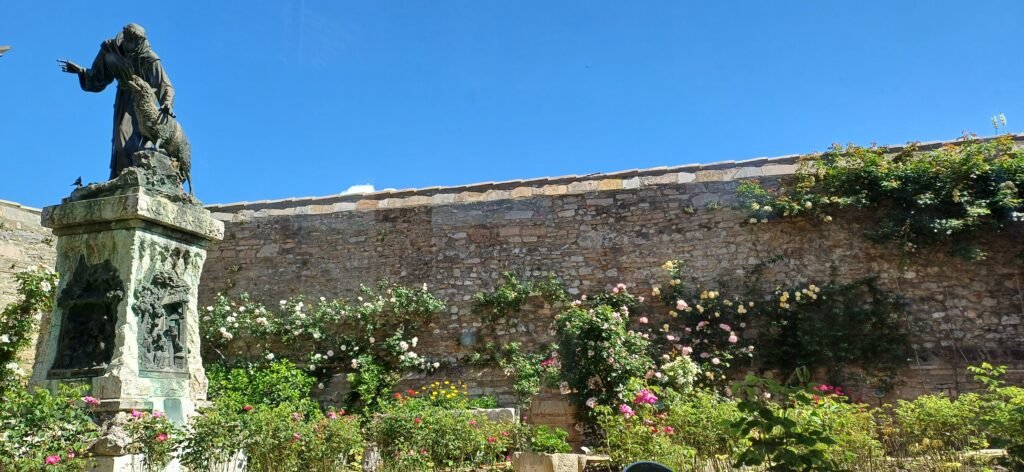
Saint Francis of Assisi once said: “Preach the Gospel at all times; use words only if necessary.” For him and for the Franciscan tradition, holiness is not merely a juridical or abstract state; it is a dynamic participation in the self-emptying (kenosis) and extravagant love of God made visible in Jesus Christ.
The Franciscan missionary saints demonstrate that evangelization becomes fruitful not primarily through extraordinary methods, but through communion with Christ and lives transformed by Him (Contemplation); it is lived in relationships marked by minority, humility, joyful poverty, and mutual love (Fraternity); and it naturally overflows into proclamation, compassionate service, dialogue, and the pursuit of peace (Mission).
In the Franciscan tradition, holiness is never a static state of private perfection; rather, it is the vital source, goal, and driving force of mission. The lives of Saints Junípero Serra, Francis Solano, Bernardine of Siena, and Fidelis of Sigmaringen demonstrate that authentic apostolic action flows entirely from a profound personal union with God. Without holiness as its root, mission deteriorates into mere activism; with holiness, ordinary human efforts become channels of divine grace.
Junípero Serra worked tirelessly, traveling on foot throughout California to establish missions and proclaim the Gospel ad gentes. His profound inner desire to share the gift of Christ, sustained by a deep Marian devotion to Our Lady of Guadalupe, was the source of his holy life. Serra’s objective was not mere colonization, but to sow the faith in a new world, demonstrating that apostolic zeal springs from a heart consumed by the love of God. His missionary life is the fruit of his encounter with Christ.
Francis Solano labored tirelessly to bring the Gospel to the Indigenous peoples of South America, while at the same time exhorting corrupt Spanish settlers to recover the integrity of their baptism. The source of his holiness lay in his understanding that an inconsistent Christian life constitutes the greatest obstacle to evangelization. His mission was grounded in personal integrity and radical self-giving, reminding the Church that holiness must precede the message: above all, our lives must be worthy of our baptism. For him, the integrity of one’s witness was of fundamental importance.
Bernardine of Siena preached before crowds of 30,000 people, reformed Italian cities torn apart by conflict, and popularized devotion to the Most Holy Name of Jesus. He acted like a “human dynamo,” yet his whirlwind of activity was sustained entirely by daily contemplation. He was a dynamic contemplative: he demonstrated that a life of intense public labor does not exclude profound prayer; on the contrary, his tireless service was simply contemplation overflowing into action.
Fidelis of Sigmaringen defended the poor as “the advocate of the poor,” cared for the sick during epidemics, and preached in the midst of mortal danger until his martyrdom. He lived in constant fear of spiritual lukewarmness, anchoring his life in unwavering fidelity to his “Captain crowned with thorns.” His mission was nourished by prayer during the night, demonstrating that the defense of justice and absolute generosity toward the vulnerable are fruits of total surrender to God.
Through these diverse lives, one singular truth emerges: mission is holiness in motion. These Franciscan saints remind us that our ultimate goal is union with God, and that our mission is simply to make that love visible before a broken world.
The witness of the Franciscan missionary saints reminds us that the future of mission does not depend primarily on better strategies, greater resources, or more effective programs. It depends on men and women who allow themselves to be continually transformed by the Holy Spirit and by a profound encounter with Christ Crucified, who spoke to Francis from the Cross of San Damiano: “Go, rebuild my Church.” Such witnesses continue the mission of Saint Francis today: to rebuild the Church, not primarily through structures, but through lives conformed to Christ and lived for Him.
This is a powerful call for all of us. It invites us continually to return to the sources of our identity. The Franciscan missionary vocation is an invitation to become what we proclaim, for only hearts formed by contemplation can become instruments of peace. Only those who have experienced God’s mercy can become channels of His mercy. Finally, holiness is not only the source of mission but also its goal; for the missionary’s deepest joy does not lie in achievements, but in seeing lives transformed by the grace of God: encountering Christ, growing in communion with Him, and sharing in the holiness to which we are all called.
Mr. Mapin Pineda, TC