



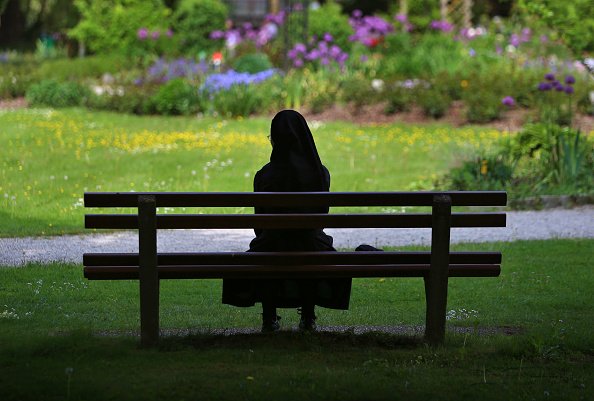
Humanity is living a crucial moment due to the pandemic and to the “infodemic” (saturation of information dispersed and broadcasted at every moment) however, possibly, in later years we will be certain of the question above described and we will know whether consecrated life is not depleted by technology and social network.
At present, it is evident that, due to technology, religiosity forms have completely changed. Writers, who do not ignore the autonomization of religious practice, nor the changes of life and contemporary religious imaginary in the world, affirm that the same religious ideology is modified by the social networks, and the new interactions through the digital world. However, the question could be: “Will social networks and internet be the best resource to grow spiritually? Is it necessary to be present in these new scenarios?
Talking about social networks, we realize that a radical change has taken place in the life of many people as well as in their way of acting and thinking. It is enough to look around us to notice that, in very few decades, society has changed so rapidly that we have been not able to realize it. Today it is normal that, as in all our houses, parishes and religious communities, there is a connected to the internet computer that allows us to send and receive information by e-mail or to maintain contacts through Facebook or Twitter; all these instruments have strongly modified our daily life and relationships and not only the social ones, but also the dialogue about and among religious beliefs circulating through Internet. I
t is exactly the appearance of the web that led the Church to rethink about the mission entrusted to her by Christ: to announce the Gospel up to the ends of the world. Indeed, the Church and consecrated life propose the evangelical message increasing the use of the instruments that web provides like, for example, religious blogs, news portals, spaces for personal reflection or discussion about spiritual issues and the presence of religious men and women in social networks.
A study made in the year 2019 revealed that, among adult people, the four most used social networks are Facebook, Pinterest, WhatsApp and Twitter and, among the adolescents, TikTok and Instagram. The general tendency is that, as access doors to social networks, people are using mobile devices and it is significant that, in fact, the two most used worldwide social networks work like applications only for mobile devices: WhatsApp that has more than 1.9 billion users (data referred to the second half of 2018), Instagram 800 million users (data referred to January 2018) and TikTok with more than 700 million users.
All these data provides coordinates to outline an adequate apostolic action: they facilitate a healthy realism, allow reconsidering more or less general needs according to the trends and offering an opportunity to examine ourselves taking into consideration these data.
Because of that, social networks offer an opportunity to serve the culture of love and, within such a great banality, they offer an oasis of faith and spirituality. The web may provide many experiences but it I necessary to identify them well because, quite often, they may be empty.
That is why it is convenient to consider the following recommendations:
- To use internet as an information tool
- To pay attention to the digital mediation in the relationship.
- To establish criteria about the need and the use of the network.
- To take into account that, in order to balance all the aspects, “the less is better”.
- To be authentic.
- To create off-line spaces (disconnection).
- To keep the control.
- To plan.
- To apply the congregational Protocol for the use of social networks.
By mandate of Jesus Christ, we should evangelize through internet, because it belongs to the missionary nature of the Church, the world expects that from us (without knowing it) and internet, being an inhabited place and an atrium of the Gentiles is always an opportunity. We have been created and we are on the web to be light.
But it is not enough to “stroll” the digital streets, simply being connected: it is necessary that the connection favor a true encounter. (Pope Francis, Message 50 Day of social communications).
Our presence in the networks should be an output to the peripheries. We should be witnesses, create communities and be daughters of the Church and women of prayer.
Some keys to think about the Internet with the Church: We have to ask ourselves:
- Do I use the web as a medium and as a place inhabited by human hearts?
- Do I promote a culture of meeting with others or do I take refuge in closed sectors?
- Do I accept my responsibility by showing myself as a Christian online?
- Is internet part of my life of faith (prayer, sacraments, spiritual life …)?
Consecrated life should contribute to network with a witness of
- Fraternity.
- Life according the Gospel.
- Mercy and personal encounter.
- Hope for our society.
The network gives us the possibility of a «free» and effective apostolate, it can help us to live the Charisma, it empowers our creativity, it inserts us into a new culture where we can instill the Gospel, it fosters us in personal encounters with users of any conditions and allows us to give more visibility to the Congregation.
The great challenge is to be significant and not only to be in the network; we should penetrate into consciences, promote a true encounter and update ourselves personally and as a community; that has to be a planned exercise having a clear objective and we have to know how to communicate every day in an attractive way and always showing ourselves explicitly or implicitly. It is worth to be present in the networks and so be witnesses of mercy, hospitality and constant evangelization, since the personal identity of a consecrated woman is related not only with herself but with God. «So that they may see your good works» (Mt 5,16).
Some advice and tools to be more productive on social networks:
- To schedule
- To plan our time into tasks.
- To set a limit to the time.
- To use a calendar.
- To create templates for content.
- To manage the information.
- “To take the pulse” of the audience.
- To work as a team.
- To measure, increase and improve.
- The blockage belongs only to our imagination.



 Hna. Tulia continúa diciendo “Como Gobierno General, trabajaremos con empeño para que la Congregación viva en verdad y coherencia las Opciones propuestas, haremos lo posible para que el aceite de nuestra lámpara no se apague para obedecer al mandato -haz tú lo mismo-; contamos con ustedes en este servicio que el Señor nos ha encomendado”. Y termina dando gracias en primer lugar al Señor que ha estado con nosotras en este caminar capitular, a Hna. Yolanda de Mª Arriaga y su Consejo, a todas las hermanas que han colaborado en este Capítulo desde las distintos comisiones y servicios encomendados; también a las hermanas de la comunidad local y, por su puesto, a todas las Capitulares. Para finalizar, nos invita a regresar a nuestros países con la alegría del deber cumplido y llevar a las Hermanas el mensaje de un Capítulo desbordado por la presencia del Espíritu.


