

Categorías
Artículos

The synodal way, the capitular way

The Synod of Bishops is in itself an Assembly of Bishops from the different regions of the world, although the Pope always invites religious and lay men and women, not only as listeners but also with the possibility of intervening and offering their point of view. The ordinary Assembly is usually held in October, every three or four years. The Synod of Bishops is an ancient ecclesial institution, which was revitalized by the Second Vatican Council (1965).  The First Assembly was held in October 1967, and the last one, the XV, in 2018. In addition, three extraordinary General Assemblies and ten special Assemblies of continents or regions have been held during this time.

Unlike the Councils, which have the capacity to define dogmas and legislate (always with the Pope’s permission), the Synods are only consultative and their primary mission is to advise the Pope on the proposed theme (diverse in each Assembly), sharing the vision of the different realities of the world and strengthening unity as a universal Church.

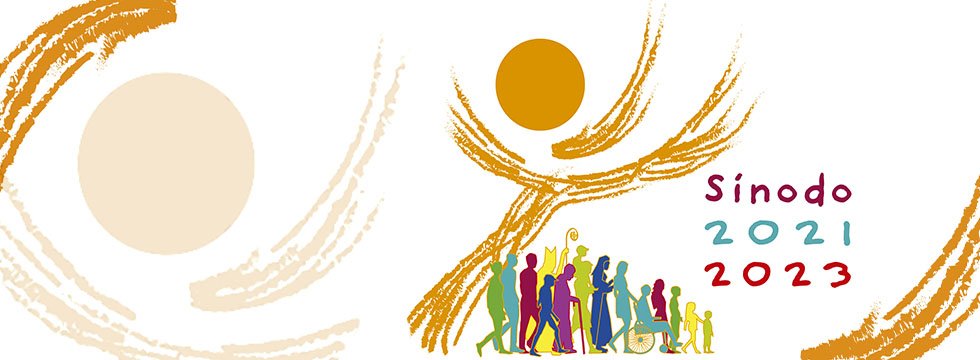
Now, since October 2021, we are already working at the level of all the Dioceses on the XVI Assembly of Bishops to be held in October 2023, with the theme of synodality. We are all called together for a synodal Church: communion, participation and mission. «Synodality» means «walking together» and is what best realizes the nature of the Church, a community of believers united as brothers and sisters around Jesus, the pilgrim People of God to bring the light of the Gospel, sowing love and hope to our world.

It is the Pope’s wish that all the People of God be able to participate, that is, all the baptized without exclusion: bishops, priests, consecrated and lay faithful, including those who are in the marginal situations. That a participatory and inclusive ecclesial process be lived, so that all can express themselves and be heard and take advantage of the richness and variety of gifts and charisms that the Spirit freely distributes for the good of the community and for the whole human family.

This journey together requires a spiritual process of truly listening to one another, to the tradition of faith and to the signs of the times, so as to discern together what God is saying to us. Communal discernment will help to build flourishing and resilient communities for the mission of the Church so that it can better walk together with the whole human family under the guidance of the Holy Spirit.

Well, a General Chapter, like the XXIII General Chapter that the Capuchin Tertiary Sisters of the Holy Family will celebrate in Rome from September 8 to October 4, 2022, is like a Synod at the level of the Congregation and, rather, it resembles a Council for its decision-making power that marks its future journey as a Congregation and where the Superior General and her Council are elected. Together, in synodality, our identity and mission at the service of the Church and the world are strengthened and expressed in the participation, communion and collaboration of all the members, this «walking together», with the same spiritual attitudes indicated when we speak of a Synod.
Here is the logo and motto of our Chapter, the theme of which is: «Strengthened in the Spirit, we embrace our reality and the suffering humanity, moving forward with hope on a synodal journey.  

The coincidence of both events is providential: walking together! it is our identity as a Congregation; we profess the same Constitutions, we are animated by the same spirit and charism and, living it as an authentic fraternity of love and mission, characterizes us as followers of Francis of Assisi, the humble universal brother, as well as the traits of openness to others, and apostolic passion, which our Father Founder, Luis Amigó, left to us.

All of us are already immersed in this synodal, ecclesial and Chapter process, trying to make room for the Spirit to guide us and make us instruments of salvation together with the other believers and, in particular, with our Sisters of the Congregation. We have already held the “conversations” with the General Council and we continue the other activities of evaluations and elections and, above all, our daily prayer asking for the action of the Spirit in the whole process of the Chapter.  

As commended by our General Superior, Sr. Ana Tulia Lopez, let us be synodal women, beginning in our own community, humble in listening with our hearts to God, to his Word, to one another and also to the suffering humanity that surrounds us and that we serve in particular in our apostolates.

Opening ourselves to the action of the Holy Spirit, we will be able to experience marvels; in the words of Pope Francis to the youth, «Dreams will sprout and hopes will blossom» and we will give the response of fidelity that corresponds to us.

Sr. Maria Elena Echavarren, TC

Categorías
Artículos

Accompaniment after the icon of Abad Menas

The desire and interest in icons aroused in me, some time ago, when I came close to the explanation and the profundity of the icon of San Damiano and discovered another way of approaching a biblical text, because of the theological meaning that they contain and I have liked the richness of this art and the implications it has on our spirituality.

When our sisters from the Communication Team asked me to share my experience of accompaniment after this icon, I felt happy and, with pleasure and simplicity, I share it because in some moments of this journey in formation it has been a motivation for my prayer and inspiration in the delicate task of accompanying.

THE WORK AS A WHOLE:

We are dealing with a Coptic icon (Egyptian Church) from the 4th-7th century, from an Egyptian monastery and which is currently in the Louvre Museum in Paris. The icon measures approximately 57x57cm and is 2cm thick.

When Coptic art got converted to Christianity (from the 5th century), it began to incorporate religious themes into its works. This is how the icon arose there. For the Orthodox Christian, the icon is a portable sacred image object of veneration and worship, in the same way as the relics of saints and martyrs.

In the 5th century, an innovative style was created based on the alteration of anthropophysical proportions and measurements, there came, the features of the square. The Friendship Icon (as it is known) incorporates that style. The work of Christ and Abbot Menas is framed in a square support of hardwood, which was the typical material of the time to make icons (pray with icons.com Granada).

I want to highlight four aspects of this work and its relationship with the accompaniment.

  1. FRAMED IN A CONCRETE ENVIRONMENT

Although it is not easy because they seem static, it could be said that they are in a natural area, on the way, because of the kind of golden color that resembles the dust of the feet; furthermore, the position in front indicates movement.

Formation is carried out from a specific context and environment, it is to accompany a person located historically and geographically in a society, a human group, a culture, a family.

The text of the disciples of Emmaus, which has become a paradigm of accompaniment, can be applied to this icon: «Jesus in person approached and began to walk by their side» (Lk 24:15). In addition, another text that expresses familiarity, affection and involvement is Jn 15:15: «I call you friends because I have made known to you everything I learned from my Father». There is a comment by Carlos Mesters that can help us deepen and act on his gestures and words in our formative processes and environments. This is how he describes it: “Jesus is the Friend who lives with and forms for life: he ate with them, walked with them, suffered with them. It was through this coexistence that they were formed” (3rd week of Catechesis Brazil X/2009).

It is the vital experience of someone who accompanies us always feeling on the way, discovering how the life of Jesus and his following transforms and fills our own life and that of the one accompanied with meaning. It also expresses the pedagogy of Jesus in accompaniment, closeness, proximity without attachments.

  1. THE FRIENDLY GESTURE OF JESUS ​​ WITH ABBOT MENAS

One of the most significant gestures of Jesus is the human warmth expressed in trust, welcome, kindness, acceptance, freedom, essential elements for accompaniment. The one who accompanies is an open person, available, willing to accompany whoever comes, with responsibility and awareness of their limits. It doesn’t matter if they are healthy people or with more complex biographies; the unconditional acceptance of the person and what they express, sincere openness without moralism or confusion, acceptance of their own rhythms – the basic qualities to walk together with others who have been entrusted to us.

  1. THE FACE, THE LOOK OF THE ABBOT IS OF A CERTAIN FEAR, AMAZEMENT, CONFLICT, SURPRISE OR ILLUSION

Attitudes that contrast and are manifested in many of whom we accompany, expressing humility, openness, strangeness or perhaps an «I love you» just as you are. Ways of being that we find and that invite us to cultivate minority and to put aside the superficial, appearances, prejudices. Always have an appreciative look in front of each sister and person that comes our way along the way.

It invites us to exercise in the art of learning to listen, to widen the heart so that proximity occurs and the true encounter that helps in on many occasions heals and restores.

The very experience of letting ourselves to be accompanied, the ability to express our life in front of those who accompany us, teaches us to be patient, understanding and compassionate with others and enables us to find the paths that make us grow and advance.

  1. JESUS ​​HOLDS “THE BOOK OF THE GOSPELS”, ABBOT MENAS THE PAPYRUS SCROLL

Like Abbot Menas who wrote down what he wants to learn from Christ, or what Christ teaches him. It expresses an attitude of receptivity and welcome towards the learning process, a process that occurs along the way in the events of life.

The gesture can also be applied at the recognition of the formandee, as a formation tool for the formator; we form ourselves, we grow, forming and accompanying others. It shows that in the dynamics of formation there is a mutual enrichment and encouragement of a lifestyle.

Let us allow ourselves to be gazed by this Good Friend who has called us to follow Him. That in our mission we feel the closeness, the affection, the dedication that Jesus offers with a certainty that despite the fact we give our best, we are weak instruments in his hands because….

Nobody went yesterday,
nor goes today,
nor will go
towards God
by this same path
that I am going.

The sun keeps
a new ray of light for each man… and God
a virgin path (León Felipe)

HERLINDA INÉS MAESTRE GÁMEZ, TC

Categorías
Artículos

Easter 2022

It seems that for us today it should be much easier to believe in the Resurrection of Jesus, not only because we find in the New Testament several passages about this event that was revealed, first of all by Himself and then by His disciples who narrated his appearances, but because we have evidence that the Church has been announcing this truth for more than two thousand years, which is the foundation of our Christian faith. However, like the disciples of yesterday, we who follow the Lord also have to experience the paschal mystery in our own lives, and it is here that we must check whether we are attached to Jesus by a belief that is enough for us to accommodate ourselves to a life according to our convenience and criteria, or are we on the side of those who make their faith an experience of encounter with that compassionate God who suffers and dies for love, but who rises gloriously to destroy all the enemies of the human person, especially, sin and death.  Surely, and thanks be to God, although many of us fall into this second group, in the face of our own reality and that of the world, the confrontation with the Risen One is a daily, vigilant and urgent task because while we are on our way to the promised heaven and with the certainty that His Spirit goes with us, our flesh is weak and the traces of sin can be seen everywhere, giving rise to the incredulous or indifferent to continue thinking that for Christians, Jesus is not a Person but a fantastic account recorded in the Bible.

In this sense and in the face of what we are experiencing today within ourselves, our families, the Church and the world, very often a hopeless view of the present and future of humanity stands out, the images that go viral daily only expose the various faces of injustice, illness and death, caused by sin that is embodied in the abuse of power, the lack of love and respect for life in all its forms. Many of our dialogues and meetings focus on how bad we are and how bad we live because that is the reality, but it is not the whole truth.

It is exactly what happened to the apostles who accompanied Jesus during his ministry and who after His death, were shocked and confused to see their leader die cruelly, after also verifying that in approximately three days the dream of the «Master” that spoke of a new kingdom, full of justice and peace was shattered. Faced with this unexpected outcome, they were filled with doubts, fear, frustration and a terrible disillusionment with life, but in the midst of this panorama of death, trapped by the darkest night, the victorious presence of the Risen Jesus emerges, who is forever the God of Life and the truth is unleashed that also makes us free.

This is the good and great news that spread among them when Jesus appeared to them in those scenarios of sadness, disappointment and failure in which they had taken refuge. Now there was joy, their eyes, minds and hearts were opened, they understood that without death there is no resurrection, they celebrated with Jesus His victory over death manifested in His presence filled with the gestures that they already knew, but that now they perceived more consciously. The death of Jesus had prostrated them, but his resurrection raised them up and prompted them to go out with courage to announce with conviction that the crucifixion was not the end but the beginning of a new era for all humanity.

Based on what has been said above, I see it opportune to take advantage of the fact that we are a few days away from living a new Easter in the Church and humbly recognize that we also need to continue meeting the Risen Jesus, to shake off the dust that has been sticking to us along the way, preventing us from seeing the fruits of His resurrection, in people and in everyday life. In this sense, as a Capuchin Tertiary Sister, I want to conclude this simple reflection, quoting the number 5 of our Constitutions, which precisely recommends us to be attentive to the signs of times as a characteristic attitude of our Father Founder, and to propose as a task to live in community and with the laity, the welcome to the synodal process that the Church lives as a path of communion, participation and mission.

This is a call made for us through Pope Francis: to walk together as an expression of the supreme value of fraternity that is being nourished in the Risen Christ, the Bread of Life, and renews its baptismal commitment and its co-responsibility in the evangelizing mission in the world today.

ELIZABETH CABALLERO GREEN, TC


Live the Easter! Saint Paul expresses the believer’s greatest joy: «If Christ has not been raised, both my proclamation and your faith are meaningless» (1 Cor 15:14). The Second Vatican Council proclaims this ecclesial fact as root and source, center and summit” (Lumen Gentium 10,11,12; Ad gentes 9…).

We distinguish in the mystery of Christ’s Passover the history and the mystery itself, the frontal historical event and the permanent sacramental reality in the Church; the latter properly constitutes the paschal mystery in the life of the Church, the key to the liturgical year and the foundation of Christian living as ʺco-resurrected with Christ» (cf. Col 3:1).

To be a Christian is to graft oneself onto the supernatural reality of the paschal mystery; to disconnect oneself consciously and unconsciously from the salvific reality of Easter is not to be a Christian. Christ even submitted himself to death and a death on a cross. That is why God granted him the name above every nameʺ (Phil 2:8-9).

The central mystery of Easter embraces in an integral way the unitary process of the salvific events: death of the Incarnate Word as a victim in solidarity and new life, resurrection and co-resurrection with Christ. It is the paschal trilogy «Calvary, tomb and resurrection,» urging every believer to inner transformation through the personal experience of the regenerating mystery of death to the old man in Christ and with Christ. The conscious and responsible living of the Lenten journey must lead to the culmination of the new existence in the risen Christ.

Hence, the Church and in her our Congregation provoke a personal encounter with God in the consummate mystery of his Son: «No one comes to the Father except through me» (Jn. 14:6). In today’s history, the Congregation is challenging and leading us to make present the Paschal Mystery among the people to whom we announce the Gospel, sharing with them the reality they live day by day: hunger, unemployment, abandonment and arrogance of dictatorial governments, among others, sowing hope and confidence in the Resurrection of Jesus Christ, the Lord. It is the Spirit that impels and stimulates us in our evangelizing action.

The Sun has awakened, it is Easter, Christ is risen, and it is the first day of the new creation. In this context, Pope Francis tells us: ʺDo not get tired of doing good.

Joyfully, let us continue to live faithful to God in this charismatic family, always committed to reality.

ARELYS MARTÍNEZ, TC    

Categorías
Artículos

We still continue… believing and taking a risk

In this time of so many changes, when it seems that there is no way, when the night thinks it has won, Your voice assures, I am with you (cf. Mt 28:20).

When we talk about the difficult reality that our world is experiencing, the first thing we pose is that we lack awareness of the care that we must have of it to preserve its existence, and it is a phrase that we have heard and repeated endlessly, «the world is as it is, because we lack awareness” but is this true at all? Or is it a phrase that has become stale over time and has worn out from repeating it so much?

Before the saturation of so much information, the traces of despair and indifference appears with that categorical phrase: WE ALREADY KNOW THAT. To safeguard ourselves from this ghost, the ethics of care urges us to help others, in such a way that OMISSION cannot arise. We determine the need, we feel obliged to see to it that it is resolved; and this is based on the understanding of the world as a network of relationships, in which we feel inserted. Since Genesis (Gen 1,28) God has entrusted us with the task of safeguarding and mastering the earth and today the Pope, aware of the planetary ecological crisis, urges us to develop «a new paradigm of understanding of the relationship between the species human and nature. Starting from the biblical category of creation, it conceives the world as a gift from God, organic and fragile, which must be loved, respected and regulated according to God’s own law (…) The solution lies in the union and harmony between environmental ecology and human ecology.

We cannot run away from our responsibility or from the task that we have before the world, it is precise, urgent and necessary, to pray, reflect and unite to stop this self-destruction; we must care for, recreate and defend our planet, we have the prevailing need to balance an environmental ecology and a human ecology.

This is how Bernardo Toro has expressed it: “we live in a paradox, first as  human species, we have created all the conditions to vanish: climate change (global warming), the use (abuse) of water, the excessive consumption of electricity, the accumulation of wealth of a few that generates hunger in many, the limits and deterioration of the territories (fracking, illegal mining, indiscriminate felling of forests), this is born from our bad relationship with the planet; on the other hand, we have created all the conditions to recognize ourselves as single species, since there are no races, but species with different skin tones (…). The internet, tourism, globalization, inter-culturality, migration, have united us in a network and if we want we can safeguard ourselves by removing the borders that separate us, divide us, confront us and destroy us.

Paraphrasing what the Pope said in several of his speeches in the face of the natural disasters that the world has experienced, he always affirms that the world created by God is beautiful, one and harmonious, but the human being, to the extent that he is located in the center of creation, is placed above Everything; their egocentric interests introduce a fracture, a disharmony that leads the world to chaos and the loss of balance that characterizes it. The root, then, of evil, of rupture, is the logic of the ego, it consists of living according to one’s own interests.

The misuse of human freedom is the genesis of the environmental devastation we suffer. We are experiencing a predominantly anthropological crisis: in order to heal the wound in the ecosystem, we must first heal the fracture within man; caring is the same as curing – healing.

That is why it is urgent for us to return to the essential principles of the ethics of care, which is above all a way of life, which prioritizes human relationships around care, understood as affection in its maximum dimension. Caring for oneself, caring for the other, caring for what belongs to everyone; As the encyclical Laudato Si makes explicit, the common home is everyone’s business; either we join and compromise or disappear by our own hand.

Carol Gilligan, when doing a study on human actions with women, different from the one her teacher Kohlberg had done (only with men), said, among other things, that “women care about others, we have greater emotional capacity, we are more sensitive, we prioritize needs over the abstract fulfillment of duties and the exercise of rights. Women find it a little easier to respect diversity and seek to fulfil the needs of the other, not only according to their work but also their needs”.

It is time to have a change of focus in the relationship of oneself with others and with the world: it is about «moving from consumerism to sacrifice, from greed to generosity». Any change in behavior, and more so in mentality, needs specific motivations and a pedagogical path that must be worked out by all of us, and at this point, we consecrated people have a lot to contribute.

Looking at ourselves in the light of this reality, the Capuchin Tertiary Sisters of the Holy Family, feel driven to commit ourselves more, not only from the local communities, doing good things, like trying to live well with each other, recycling, saving energy, not contaminate rivers and seas, among other initiatives; it is also necessary to bet from the institutionality to work in a network with others, since we have several advantages: first of all, we are women, who have that natural sensitivity that springs from within, from our spiritual maternity, forcing us not to be indifferent to the one who suffers. Second, we are consecrated women in search of spiritual depth, which is none other than identification with the person of Jesus and his actions (cf. Gal 4:19); He was deeply moved by the woman who had been suffering from hemorrhages, the widow of Naïm, the Syrophoenician, the leper, the blind man, among others; on the other hand, we are heirs to a rich Franciscan-amigonian spirituality, where fraternal love is universal, encompassing creation and the cosmos; compassion and mercy are transversal axes of our actions. 

It is also necessary to weave a network regarding human ecology and our option for humanity, with the certainty that everyone must be loved. Gilligan also explains that human well-being and environmental sustainability depend on bio-cultural diversity, its interaction and its temporal transformation, understanding that: Biodiversity is essential for the correct functioning of the services that maintain the stability of ecosystems and the dignity of its inhabitants.  The loss of biodiversity is associated with the rapid growth of human populations, their concentration in urban centers with an unsustainable consumption model that is linked to the increase in waste and pollutants, armed conflicts and a very slow advance in equality in distribution welfare and resources.  

Social inequity has very deep roots in social inequality, inherited from generation to generation, which are difficult to eradicate and to counteract this it is necessary to join the walk with others so that the voice is stronger and will reach the ears of those who pull the strings of the world, not alone, but in communion with the Church and with all humanity, especially on the borders where life cries out because it is in danger of extinction.  Carlos Cullen poetically said: “If we know how to be and we do not pretend to be without being, we will take care of the other as another, as the deepest way of understanding self-care”.

And finally, faced with the catastrophe that is coming if we do not get converted, it is understood from human ecology that: There are two superstructures of the cultural environment, which condition the cycles, the first is money, which modulates the quantity and quality of life in the different human groups; the second, information, speedily disseminated through new technologies, conditions the patterns of social behavior in all its aspects, including those related to the excessive spending and consumption of resources. Only when we become aware and continue gambling for the Kingdom of Heaven, brotherhood and communion with all, will the situation of the world and the planet be upturned.

 “And we still continue on your path, God made man, teacher and guide, and we still live so convinced that only the Kingdom is our utopia. And we are still in love with you and your project and we still laugh and we still sing so persistently of a new world” (Hymn, 50 years of CLAR)

CILIA IRIS BONILLA, TC


Categorías
Artículos

The meaning of life

Opening our eyes and breathing every day is a gift, and finding meaning in our existence is something we definitely aspire for. Living with purpose requires a conscious and a continuous work with ourselves.

Each one has a personal story and from my experience I have come to understand, that the purpose of life is not a place to reach or a goal to achieve, but a path that is traveled in a very personal way. Sometimes this path is smooth but at times rough, through which you have to learn to travel in order to grow.

Although sometimes, we do not find meaning in what we are living, I can certainly assure you that in each experience God had a special purpose that has made me transcend.

Thinking about my origin, the family to which I belong, the people with whom I had to interact, my work, the material and human losses I have faced, health problems and everything that my personal history contains up to this moment… they have generated in me a feeling of gratitude that has allowed me to discover mainly in difficult moments, peace and strength.

At the beginning of 2019, I was diagnosed with a breast cancer and, although it was unexpected and disturbing news, I had many opportunities to experience God’s love and care (I am a person of faith). For example, in the hospital where I had the treatment, I found a welcoming and warm environment, with committed medical staffs and with great human sensitivity, that allowed my health situation to be much more bearable, to the point of achieving in me the conviction that despite the circumstance, I was fortunate and this in turn greatly helped my process of healing and personal growth.

All this process has allowed me to rethink the value and the meaning of my life and thereby seek the purpose to which I have been called, now striving mostly to put aside prejudices, fears, insecurities and everything that hinders my free spirit.

For me, to live in freedom is to enjoy each day as if it was the last, because each moment, each day is unique and unrepeatable. Feeling grateful and satisfied with what I have, enjoying the love I receive and being able to love others, appreciating every detail and I am convinced that, although we cannot choose what happens to us, we can choose how to face it.

I also have come to understand that a life well lived is about serving others.  We often stop doing favors to others because we are too busy, as if we are afraid of wasting time; but helping those who cross our path, far from taking something away from us, enriches us. The time we invest in serving others is not wasted, but transformed. I am sure that helping our fellow human beings helps us, because our existence acquires greater meaning and is an excellent form of personal growth.

When we discover the meaning of our life and live passionately for what we do and when we are able to transmit it day by day, everything changes.  It improves our self-esteem, we feel useful and valuable, optimistic and positive; this causes a transformative effect, not only in ourselves but also in the people around us, as it generates a multiplier effect that benefits the entire environment.

So, take heart! We are in this world to be happy; when you wake up every morning, breathe, smile and thank God for life and all that it gives you.

GABRIELA MORA ABARCA

(Psychologist of «Nuestra Señora de Desamparados» School, Costa Rica)

Categorías
Artículos

Francis: The Jubilee of 2025 sign of rebirth, hope and trust

The Holy Father has sent a letter to Monsignor Rino Fisichella, President of the Pontifical Council for the Promotion of the New Evangelization, a Dicastery entrusted with the organization of the Jubilee of 2025, and the responsibility of finding the appropriate ways for the Holy Year to be prepared and celebrated with intense faith, living hope and active charity.

Renato Martinez – Vatican City

«The coming Jubilee can go a long way in restoring a climate of hope and trust, as a sign of a new renaissance that we all perceive as an urgency,» Pope Francis writes in his Letter addressed to Monsignor Rino Fisichella, President of the Pontifical Council for the Promotion of the New Evangelization, a Dicastery entrusted with the organization of the Ordinary Jubilee of the Year 2025, whose motto is «Pilgrims of Hope». 

The Jubilee, a special gift of grace

In his letter – signed in St. John Lateran, February 11, 2022, on the memory of the Blessed Lady of Lourdes – the Holy Father recalls that the Jubilee has always been an event of great spiritual, ecclesial and social importance in the life of the Church. 

«Ever since Boniface VIII instituted the first Holy Year in 1300—with a cadence of one hundred years, which then became according to the biblical model, fifty years and subsequently fixed at twenty-five—the faithful people of God have lived this celebration as a special gift of grace, characterized by the forgiveness of sins and, in particular, by indulgence, the full expression of God’s mercy».

«The faithful, usually at the end of a long pilgrimage, access the spiritual treasure of the Church by passing through the Holy Door and venerating the relics of the Apostles Peter and Paul preserved in the basilicas in Rome… giving a living witness to their enduring faith».

Living the Holy Year in all its Pastoral meaning

Pope Francis also points out that the Great Jubilee of the year 2000 introduced the Church into the third millennium of its history. St. John Paul II had hoped and desired it so much, in the hope that all Christians, overcome their historical divisions that they could celebrate together the two thousand years of the birth of Jesus Christ, Savior of humanity.

«As we approach the first twenty-five years of the twenty-first century,» the Pontiff affirms, «we are called to set in motion a preparation that will enable the Christian people to live the Holy Year in all its pastoral significance».

«In this sense an important stage has been the Extraordinary Jubilee of Mercy, which has allowed us to rediscover all the strength and tenderness of the Father’s merciful love, so that in turn we may be his witnesses”. 

Two years of suffering and limitations

However, the Holy Father recalls that, in the last two years, there has been no country that has not been affected by the unexpected epidemic that, in addition to make us see the drama of dying in solitude, the uncertainty and ephemerality of existence, has also changed our way of life. As Christians, the Pope points out, we have gone through the same sufferings and limitations together with our brothers and sisters.

Our churches have been closed, the same as the schools, factories, offices, shops and recreational spaces. We have all seen the limitation of some freedom and the pandemic, in addition, the pain, has sometimes awakened doubt, fear and bewilderment in our souls. The men and women of science, with great promptness, have found the first remedy that little by little allows the everyday life to return.

«We are fully confident that the epidemic can be overcome and the world will recover its rhythms of personal relationships and social life. This will be easier to achieve to the extent that solidarity is acted upon, so that the most disadvantaged populations are not left unattended, but will be able to share all the necessary discoveries of science and medicines».

The Jubilee can help restore hope

Hence Pope Francis’ invitation to «keep burning the flame of hope that has been given to us, and to do everything possible so that each one regains the strength and certainty to look to the future with an open mind, a confident heart and a broad vision». For this reason, affirms the Pope, the upcoming Jubilee can go a long way towards restoring a climate of hope and trust, as a sign of a new renaissance that we all perceive as urgent. That’s why I chose the motto Pilgrims of Hope. All this will be possible if we are able to recover the sense of universal fraternity, if we do not close our eyes to the tragedy of rampant poverty that prevents millions of men, women, young people and children from living in a humanly dignified way. I am thinking in particular of the many refugees who are forced to leave their lands.

«May the voices of the poor be heard in this time of preparation for the Jubilee which, according to the biblical mandate, restores to each one access to the fruits of the earth: While the land has its Sabbath, all its produce will be food equally for you yourself and for your male and female slaves, for your hired help and the tenants who live with you, and likewise for your livestock and for the wild animals on your land (Lv 25:6-7)».

Let us not neglect the care of our common home

Therefore, the Bishop of Rome indicates that the spiritual dimension of the Jubilee, which invites us to conversion, must be united to these fundamental aspects of social life, in order to form a coherent whole.  Since we all feel like pilgrims in the land where the Lord has placed us so that we may cultivate and take care of it (cf. Gen 2:15), let us not neglect, along the way, the contemplation of the beauty of creation and the care of our common home. I hope that the next Jubilee Year will be celebrated and lived also with this intention.

«In fact, an increasing number of people, including many young people and adolescents, recognize that the care of creation is an essential expression of faith in God and obedience to His will».

Intense faith, living hope and active charity 

Thus, Pope Francis entrusts to Monsignor Fisichella the responsibility of finding the appropriate ways for the Holy Year to be prepared and celebrated with intense faith, living hope and active charity. The Dicastery that promotes the new evangelization will know how to make this moment of grace a significant stage for the pastoral care of the particular Churches, both Latin and Eastern, which in these years are called to intensify their synodal commitment. In this perspective, the pilgrimage to the Jubilee will be able to fortify and manifest the common path that the Church is called to travel in order to be ever more clearly a sign and instrument of unity in the harmony of diversity. It will be important to help rediscover the demands of the universal call to responsible participation, with the valorization of the charisms and ministries that the Holy Spirit does not cease to grant for the edification of the one Church.

«The four Constitutions of the Second Vatican Ecumenical Council, together with the Magisterium of these decades, will continue to orient and guide the holy People of God, so that they may progress in the mission of bringing the joyful proclamation of the Gospel to all”.

The year 2024 a great «symphony» of prayer

The Holy Father also specifies in his Letter that the Bull of Convocation, which will be published in due course, will contain the necessary indications for the celebration of the Jubilee of 2025. In this time of preparation, I am glad to think that the year 2024, which precedes the event of the Jubilee, can be dedicated to a great «symphony» of prayer; first of all, to regain the desire to be in the presence of the Lord, to listen to Him and to adore Him. Prayer, to thank God for the many gifts of his love for us and to praise his work in creation, which commits us to respect it and to act concretely and responsibly to safeguard it. Prayer as a voice «of one heart and one soul» that translates into being in solidarity and sharing the daily bread. Prayer that allows every man and woman of this world to turn to the one God, to express to Him what they have in the secrets of their hearts. Prayer as a master way to holiness, which leads us to live contemplation in action.

«In short, an intense year of prayer, in which the hearts can be opened to receive the abundance of grace, making the ‘Our Father’, the prayer that Jesus taught us, the program of life of each of his disciples. «Asking the Virgin Mary to accompany the Church on the journey of preparation for the event of grace of the Jubilee, Pope Francis concludes his Letter by thanking Monsignor Rino Fisichella and his collaborators, to whom he imparts his Apostolic Blessing.

https://www.vaticannews.va/es/papa/news/2022-02/papa-francisco-carta-jubileo-monsenor-rino-fisichella-2025-inici.html


Categorías
Artículos

24/7 In Family

When you think about family, it’s easy to remember thousands of situations that we accompany, we listen to, and even live within our own family settings. Our spirituality, rightly rooted in the heart of the Family of Nazareth, demands from us that presence, that word, and that gesture that is always timely and necessary in an important scenario like the familiar atmosphere in human life.

I want to call this article 24/7 IN FAMILY, to represent analogically that the family experience involves the totality of being. Entering and leaving, nuancing the time at home with the time away, is the normal thing of life and is usually called day to day life, and is composed of activities, habits, customs, idiosyncrasies and ways of carrying out obligations, routines, leisure time and affection.

 The everyday life is armed with an infinity of small details that become natural to such an extent that they become imperceptible, become so invisible and current that they can be mechanical.

Only when for some reasons, you go through real – crucial situations such as the pandemic for these times; also when meeting an accident, experiencing loss, or any other event that interrupts the course of daily life, it is verified that we are attached to our customs.

Entering and leaving as what has already been said, was the common thing of our life, but what happens when by obligation you cannot leave or simply life imposes hastily and bitterly and changes habits and rhythms of life?

Each family has its strengths and values to be proud of; they are reasons to experience gratitude and even satisfaction. But also weak points, difficult areas of conflicts and problems to deal with. Therefore, in these times it is better to have a breathing space of what has not been done and what has been wanted to change and give way to patience, understanding and joy.

For all human beings, the family is the element identity that marks and defines almost completely their way of being in the world, their values, their way of relating and even their options of conscience. Whether it is because you have had the privilege of growing up in a binding family that offers a secure basis as support for self-affirmation in the infancy, pre-adolescent and / or youth stage, because it offers support to the ideals of life, emotional security and economic solvency to the vital needs of a human being.  Otherwise, because in it all the above is dispensed with and therefore life is faced with fear, helplessness, anger or pain.

To belong will always be a vital need that must be urgently met not only materially but also that provides emotional control. You can be parents, children or siblings; in whatever role there is, it will be necessary to experience to be a  part of a 24/7 family, that is, full time, and without losing sight of the  individualization and personal project, encountering there the human strength that guarantees a life full of meaning and value.

It is not yet possible to talk about the pandemic in the past because it is evident that it is still facing an accumulation of situations and threats with which this historical fact has changed the daily rhythm of life. But something can be said about it: situations like these have already given the opportunity to reread and interpret many aspects of life, which customs and routines did not allow to be noticed.

«We humans are often like this; in the most difficult situations we usually find resources that we did not even suspect we had, and it is also frequent that in moments of fear, wonder arises, like those flowers that grow on the rocks  (Rodríguez, s.f).

It is the time to look from the inside to the outside all the unsuspected resources that at this moment has arisen and although each family has its own unique way of leading life, and of course, that this also applies to normal days away from the pandemic or within it, in short, there should be no talking of magical formulas so that this time of togetherness will be «ideal».

What I could refer to in this regard is that it should be quality time 24/7.  It does not symbolize all the time we should be together, but better yet, all the time in which we have to feel «part of…»  None should be left out of the dialogue, of being listened to, of being embraced and the understanding necessary for him to find the unconditional love that in other areas is always being conditioned.

Sr. Sandra Milena Velásquez Bedoya, tc

Categorías
Artículos

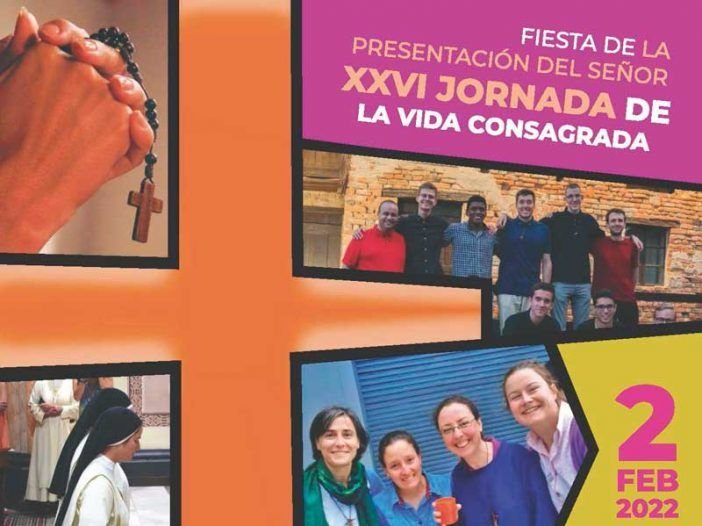
Message for the world day of consecrated life 2022

« JOURNEYING TOGETHER »

Consecrated life is at the very heart of the Church» (Vita consecrata, n. 3). These are the words of the Post-Synodal Apostolic Exhortation on Consecrated Life which, taking up the rich wealth of the conciliar heritage, has marked, as a sure compass, the path of all consecrated persons in the last twenty-five years. As a precious and necessary gift for all Christians, consecrated life unfolds its being in life, holiness and ecclesial mission.

Following in the wake of the Second Vatican Council, Pope Francis called on the entire People of God to place themselves in «synodal mode» by convening a Synod under the title «For a Synodal Church: Communion, Participation and Mission», which will culminate in October 2023. The focus is on «heading not occasionally, but structurally towards a synodal Church». The reason had already been explained by the Pope a few years ago: «The path of synodality is the path that God expects of the Church of the third millennium». And the Church «is nothing other than the ‘walking together’ of the flock of God on the paths of history that goes out to meet Christ the Lord».

In a broad sense and in a more generic way, synodality would come to designate: «The peculiar style that qualifies the life and mission of the Church expressing its nature as walking together and meeting in the assembly of the People of God summoned by the Lord Jesus in the power of the Holy Spirit to proclaim the Gospel. It must be expressed in the ordinary way of living and working of the Church. This modus vivendi et operandi is realized through community listening to the Word and the celebration of the Eucharist, the fraternity of communion and the co-responsibility and participation of the whole People of God, at their different levels and in the distinction of the various ministries and roles, in their life and in their mission».

consecrated persons are «passionate seekers and witnesses of God» on the path of history and in the heart of humanity. Walking together is an exercise in necessity and an experience of beauty. The need arises from the Church’s need to strengthen synergies in all areas of mission. Beauty springs from contemplating the witness of those who are called by the same vocation to live in fraternity and to give their lives for the kingdom at the service of their brothers and sisters.

Thus, taking up the invitation of Pope Francis, the XXVI Day of Consecrated Life has as its motto «Consecrated life, walking together». In evoking the category of the way, we can only turn our gaze to the same Jesus who proclaimed Himself «the Way, the Truth and the Life» (Jn 14:6), walked the path up to Jerusalem to the Cross to establish a new covenant between God and men (Lk 9:51) and, once resurrected, «began to walk with them» (Lk 24,  15) to discover in the disciples the truth of the Word, the power of the sacrament and the dynamism of the mission. Reflecting the experience of the Lord, the faith of the first Christians was identified as «the way» and in the first steps of the apostolic community we already have a fundamental reference in the Council of Jerusalem (Acts 15), where the categories of the way, discernment and Church found their meeting point and thus came to take shape in the doctrine of the Fathers:  «Synod is the name of the Church».

For consecrated life, the invitation to walk together means doing so in each of the fundamental dimensions of consecration, listening, communion and mission.

To walk together in consecration means to be aware of the call received, the shared vocation and the life given. Ultimately, it supposed to mean that God is to be found walking. Only when we search (Your face I will seek, O Lord) and allow ourselves to be found by him, does the miraculous encounter between the divine call by pure grace and the total, absolute and unconditional human response occur. Sharing the journey as pilgrims of eternity reminds every one of the power of the prophetic dimension of consecrated life, which finds its source in the sequela Christi and in the power of fidelity to know by whom they have been called and to whom they have trusted (cf. 2 Tim 2:12). When people called to a special consecration are able to display this full trust in God, then it is possible for them to be a voice and an interpellation «to awaken the world.» The conviction that this synodal time is a time of grace and a time of the Spirit encourages all consecrated persons to strengthen consecration by living this moment as an opportunity for encounter and closeness with God and their brothers and sisters.

Walking together listening to the Word of God. This common path to finding God can only be done from listening, which is one of the fundamental keys to synodality: «A synodal Church is a Church of listening, with the awareness that ‘listening is more than hearing”. Sharpening the ear to listen to the Spirit, to the brothers and sisters with whom life is shared and to humanity wounded with their joys and sorrows is the best guarantee to walk together along the paths of fidelity to one’s vocation. Consecrated life, which is born of listening to the Word and accepting the Gospel as the norm of life, can be considered «as an ‘incarnation’ of the very Word of God – heard, meditated upon and internalized».

It is time to intensify prayer, which is, for every Christian life, like the air our lungs need. True listening requires three conditions: reciprocity, respect and compassion. It is always necessary to communicate sincerely, show empathy towards the other and open-heartedness to receive the truth that can communicate to us. Only in this way can consecrated persons find the paths of genuine growth and become an interpelling witness in the midst of society, which sometimes closes its ears to the voice of God and to the cry of the weakest.

Walking together in communion. Consecrated persons are called to be in the Church and in the world «experts in communion», witnesses and architects of that ‘project of communion’ which constitutes the summit of man’s history according to God». This communion is to be manifested, in the first place, with God, loved above all things; in addition, with all those with whom in daily experience share life, prayer and mission, thus forming a signum fraternitatis; finally, communion extends to all humanity in need of healing wounds and curing bruises. Ecclesial communion, which does not imply uniformity, is the seal of discernment and verification of the synodal journey. For this reason, walking together in unity and harmony invites consecrated persons to strengthen communion within the same charismatic families; with other institutes favoring the inter-congregationality; and, above all, in the local Church, intensifying involvement and participation in the diocesan life.

Walking together in the mission means to discover «the sweet and comforting joy of evangelizing» (EN, n. 80) and to experience simultaneously the joy of believing and the joy of communicating the Gospel. We know that a synodal Church is an outgoing Church and that synodality is ordered to animate the life and evangelizing mission of the Church. The mission in a synodal key involves dialogue, listening, discernment and collaboration of all the actors of missionary action.

For consecrated life, walking together in mission means strengthening the co-responsibility and commitment to the mission of the local Church by contributing her charismatic gifts without ever losing sight of the availability to the universal Church. This mission that must be carried out in a missionary community translates into multiple forms, whether from the prayer of the cloister, the liturgy of the parish, the hospital room, the school class or in the meeting at street level.

Consecrated persons, each with his gifts and charisms, contribute to enriching the mission of the Church and even to making it possible for the seed of the Gospel to extensively reach much deeper areas.

As we move forward on the synodal journey, we thank God for the gift of consecrated life that enriches the Church with her virtues and charisms and shows the world the joyful witness of a radical surrender to the Lord. While they continue making the memory of Jesus and the eschatological sign, consecrated persons build up the Body of Christ and are witnesses of the kingdom in the midst of the world. In this way, we dream together, pray together and participate together and decisively contribute so that the synodal Church will not be a mirage, but a real dream that can be made into a reality.

EPISCOPAL COMMISSION FOR CONSECRATED LIFE (WRITTEN BY: IGLESIAACTUALIDAD)


Categorías
Artículos

The Joy of Christmas!

«I bring you good news of great joy for all the people: today a Savior has been born to you, He is the Messiah and the Lord» (cf. Lk 2:10-11).

The Angel said this to the shepherds and they ran in haste to see and found Mary and Joseph with the baby lying in the manger. They all were astonished and returned giving glory and praise to God. The Magi from the East, at the end of their journey, «when they saw the star again, they were filled with great joy and saw the child with Mary his mother, and they knelt and worshiped him and offered their gifts of gold, frankincense and myrrh» (cf. Mt 2:10-11).

The Catholic Tradition, according to each country, has transmitted to us expressions, signs and customs of joy and rejoicing in the celebration of Christmas. Here in Spain, an endearing word has been created: “Nochebuena”, it is the Christmas Eve family dinner, something intimate and sacred; it is the night of «Christmas carols» and of the “Misa de Gallo”, Christmas Mass at midnight; although in some places and due to different circumstances is celebrated some hours in advance.

It is surprising and pleasant to note that Christmas, as a time of celebration and joy, has spread throughout the world; whether for commercial or for some other reasons, cities are filled with lights and colors, and family celebrations multiply. In a word, Christmas is a friendly and festive time in today’s world, but, perhaps for most, with no connection to faith nor to the birth of Jesus.

For us believers, Christmas is Jesus himself. The reason for our joy is the contemplation of the Incarnation: God entered our history to free us from our sin and make us sharers in His Divine Sonship. He pitched his tent in our midst to become part of our lives, to heal our wounds and give us new life. Joy is the fruit of this intervention of salvation and the love of God in us.

 CHRISTMAS, THE TENDERNESS OF GOD

 We can see to the Son of God, made one of us, in the gentleness and weakness of a newborn baby and, furthermore, in the conditions of extreme poverty; a sensitive manifestation of the immense tenderness of God. It was St. Francis of Assisi who intensely lived this dimension: «In preference to other solemnities, he celebrated with ineffable joy that of the birth of the child Jesus; he called it the feast of feasts, in which God, made a little child, was raised at the breasts of a human mother. He pictured in his mind images of the child, which he kissed with eagerness; and the compassion for the child, which had penetrated his heart, made him even to babble words of tenderness in the manner of children. And this name was for him like honey and honeycomb in his mouth» (2 Celano 199).

Later, a follower of Francis, St. Bonaventure, wrote in the same line and in the medieval spirituality of the holy humanity of Jesus, the booklet “The Five Festivals of the Child Jesus”, one of which, that of the Holy Name of Jesus, passed into the Liturgy. Moreover, two years before his death, Francis left us another great testimony: Christmas approaches, he is in the village of Greccio, and moved by his great love and devotion, he represents the Nativity of Jesus according to the Gospel data and with the people of the village: it was the first living Nativity scene, a visible and palpable example of his spirituality of the tenderness of God that later became the universal Christian tradition of “Nativity scene” representation (cf. 1Cel 84-86).

 JOY FOR ALL: Meeting and Sharing

In the angel’s message we are told that the joy announced is for all the people, that is to say, the joy of Christmas implies encounter, communication, shared joy and celebration; there is no feast in solitude, for a feast requires a meeting of people to share life and to share goods as an exchange of gifts.

 The Christmas of the poor

But, particularly, because of our faith, love and justice, joy must reach the poorest and neediest thanks to the generous sharing of all with what each one has. This is what is done in all parishes and institutions, «the Christmas of the poor,» so that joy may reach everyone. This is also the sensibility of St. Francis: «He wanted that on that day the rich should feed the poor and hungry in abundance, and that the oxen and donkeys should have more fodder and grass than usual. ‘If I come to speak to the emperor,’ he said, ‘I will beg him to issue a general decree that all the well-to-do be obliged to throw wheat and grain on the roads, so that on such a great solemnity the little birds, especially the sister larks, may have plenty’ (2 Celano 200). Poetry and mysticism, yes, but is translated into concrete actions!

 And the joy of fraternity

In civil society, in addition to family encounters, other meetings are becoming common at the level of members of organizations, work, etc. Christmas is an invitation to a festive gathering. As believers, it would be very positive to prepare these meetings in religious communities, groups, etc.

How do we want to live spiritually and festively this intimate and beautiful time? With the different initiatives, we can have very pleasant surprises: carols, cribs, decorations, visits… It will be very beautiful to live our Christmas with St. Joseph and the Virgin Mary in the Bethlehem Portal. MERRY CHRISTMAS TO ALL!

“¡Sing to the Lord with shouts of joy because He sent His beloved Son from on high and He was born of the Blessed Virgin Mary and He was placed in a manger because He had no room in the Inn. Glory to the Lord God in the highest and on earth, peace to all men of good will! “ (St. Francis of Assisi – cf. OfP, Psalm XV).

 SR. Mª ELENA ECHAVARREN SORBET, TC

Categorías
Artículos

Christmas in Poland and Germany

The celebration of Christmas, in Poland, is something magical. I will simply share a few “brushstrokes” of this special time.

In Poland we begin to perceive the Christmas atmosphere already in Advent, through the celebration, before dawn, of masses called “roraty”. This name comes from a liturgical song in Latin that begins with the words «Rorate caeli desuper», whose mean is «Drop down dew, ye heavens, from above”.  People participating in “roraty”, especially the children, go to mass holding in their hands lanterns that illuminate the Church in the dark.

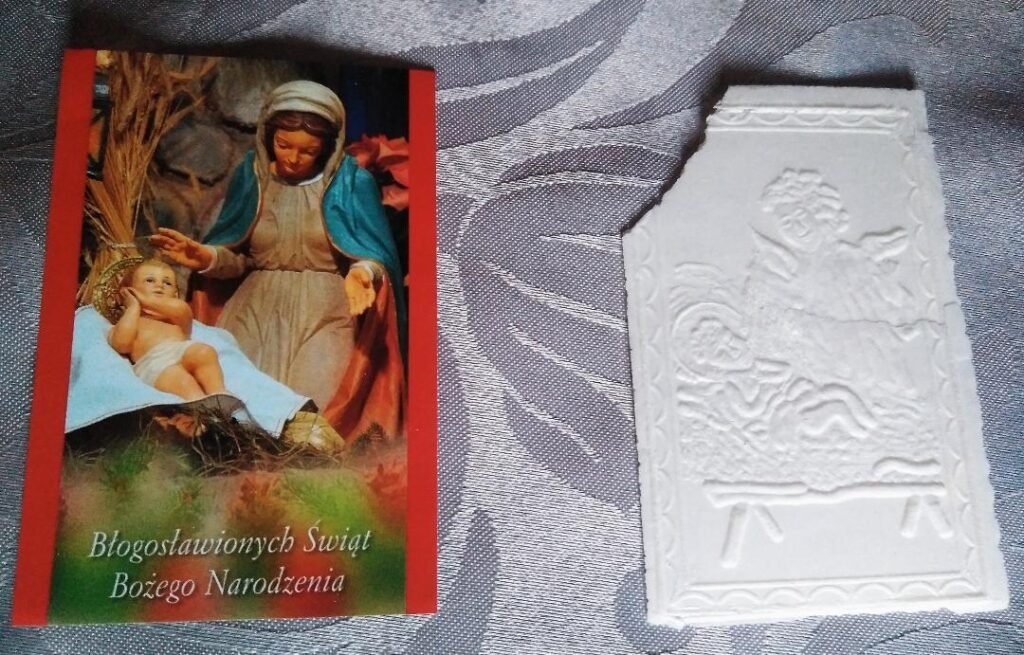
In Poland, Christmas Eve is the culminating moment of the feast day  The Christmas dinner begins as soon as it appears in the sky the first star which recalls the star of Bethlehem leading to the newborn Baby Jesus and it begins with a prayer and the reading about the birth of Jesus from the Gospel of Luke. Afterwards, everyone shares “oplatek” (it is a white bread, of fine consistency, prepared like a host), exchanging Christmas wishes. That is a symbol of reconciliation and forgiveness.

In all the houses, in Poland, it is very common to leave an empty place at the table; we set a chair, a plate and cutlery but nobody will take place there because it is reserved to welcome an unexpected person. We also put some hay under the tablecloth just to symbolize that the new born Jesus was laid in a manger.

The Christmas dinner menu consists of twelve dishes, including beetroot soup with “uszka” (small dumplings stuffed with mushrooms) and carp. After dinner, we enjoy the moment singing Christmas carols (in Poland there are more than fifty of them) and opening presents. At midnight, the families go to the Church to participate in a solemn Eucharist called “Pasterka” and to adore the Child Jesus.

Sr. GOSIA SKIBA, TC

In Germany also, the Advent season is full of traditions and symbols. The cities, streets  as well as many windows of the houses, are illuminated with decorations of lights. In the old quarters of the cities there are Christmas markets.

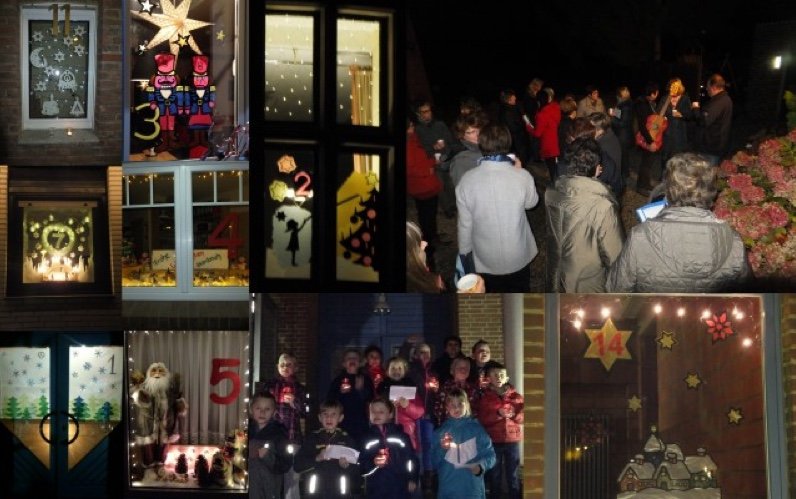
In the evenings, families often light the Advent wreath and around it, people sing, read stories, play games, paint, pray… The Advent calendar also helps, especially the children, to wait and prepare their hearts for Christmas. It is an illustration with 24 windows; every day one is opened, discovering a sweet, a story, a proposal to be made … Since 15 years, in many Christian parishes it is realized a «Living Advent Calendar»: 24 families, institutions or organizations adorn a window of their house. At night their neighbors, parishioners or other people gather in front of this house, whose window is illuminated, read a story, sing an Advent song and, at the end, they drink some wine or a hot juice and eat some sweets, cookies or «Christstollen», a typical Christmas cake, previously made at home.

Christmas Eve is also the most important feast day in Germany; it is the feast day of meeting and union; the family gets together, shares a special meal, exchanges gifts under the Christmas tree and sings Christmas carols … But at present, it doesn’t exist only a single tradition, but each family has its own «tradition». Notwithstanding, there is a German Christmas carol that cannot be omitted in the repertoire of all German families; it is a Christmas carol lifting up the heart, and expressing in a very deep way the Christmas Eve secret: Stille Nacht, Heilige Nacht… (Silent Night).

Sr. URSULA LEUFFEN, TC