Categorías
Artículos

«CHRISTMAS IN OUR HEARTS» – Christmas celebration in the Philippines

Filipinos love to have fun and celebration and Christmas in the Philippines is the world’s longest Christmas celebration. It starts from the 1st day of September, the start of the «ber» months until the Feast of the Santo Niño. «Ber Months» signifies that Christmas is coming. It can be perceived in the decorations and songs in the parks, streets, houses, malls, hospitals, schools, buses, jeepneys, taxis, and other public places.

The Philippines has a lot of customs and traditions, and the most meaningful and beautiful is that of Christmas, a time to be with family and loved ones. It’s a time of thanksgiving, reconciliation and celebration of life and love in the family. A time wherein family members who are out of the country go home to be with their loved ones. And those who cannot go home for some reason, always long and miss being home during Christmas in the Philippines.

As they say, «IT’S MORE FUN IN THE PHILIPPINES!».  It is not only the «fun» but the ambiance, the laughter, and the joy of the people being shared despite many negative situations, poverty, hunger, disasters or natural calamities, etc. If it’s Christmas time in the Philippines, there is a pandemic of sharing, loving, and caring for one another, and there is a lot of fun.

Lastly, one of the main highlights of Christmas is the «SIMBANG GABI», Tagalog word which means » Mass in the Night» or «MISA DE GALLO» («Mass at dawn»). It is a nine-day Eucharistic celebration before Christmas Eve. It is in honor of the Blessed Virgin Mary who carried Jesus in her womb for nine months. This celebration is mostly participated by people who believe that once they participate in the mass completely for nine days, their «wishes or heart’s desires» will be granted by God. Indeed, even the Covid-19 pandemic did not stop the people from attending this celebration. Despite the restrictions implemented, still many people filled with much hope and faith flooded the churches. This somehow shows the resilience of the Filipino people that no matter how difficult or hopeless the circumstances are, there is always that light that radiates in the hearts of every person, the light which is Christ Himself, the God made flesh, and who dwells among us, our «Star ng Pasko» or the «Light of Christmas» that shines in every home, every person, and every family or community even during times of suffering, pain, and poverty.

Despite, the reality of globalization and modernization, Christmas for Filipinos, here in the country and abroad is a «Christmas in our hearts» as the title of the song by Jose Mari Chan, a famous one usually played on the 1st day of September. Its lyrics have a deep meaning, and I would like to cite some of them here: «Let Him be the One to guide us, as another New Year starts, and may the spirit of Christmas, be always in our hearts…» I believe that most of the Filipinos have this plea in their hearts especially those who believe in God no matter what religion they have or whatever situation they are experiencing in their lives. I hope and pray that as we celebrate this Christmas, it is Jesus in the manger we remember and His presence in our hearts and lives we share with others especially with our loved ones, our sisters in the community, and with the people we encounter in the mission.

SR.FRANCES LARAINE ANDRADE, TC

Categorías
Artículos

Christmas in Colombia

Colombia is a South American country whose rich culture is the result of the mixture of Europeans, especially Spaniards, indigenous peoples and African slaves.

For this reason the celebration of Christmas is rooted in this cultural identity and makes it unique, keeping alive the solid inherited Catholic traditions. In Colombia, this is the best time of the year, it is an opportunity for meeting, celebration and family rejoicing. Since the month of October, we prepare the environment, decorating in each village, town and city, the houses and the common spaces. Christmas colors, lights and lighting of this period are worldwide famous for their creativity, showiness and beauty. All the preparation and festivities route towards December 24th, the day when we celebrate the great night of Child Jesus’ birth.

Officially festivals open on December 7th with the traditional “night of the candles” when candles, are lit in the streets, balconies and doors of houses, a gesture to honor the Immaculate Conception of Mary on the eve of her solemnity; the street lights are also turned on and families gather and walk through the glowing streets.

Then it is prepared the Nativity scene which recreates the birth of Jesus through images. Here Saint Joseph, the Virgin Mary, the Child Jesus, the mule and the ox play a leading role; that is a family shared work as well as the decoration of the Christmas tree with colored balls, bows and garlands. These Christmas activities are appreciated for originality and for the love and creativity they request.

From December 16th until the night of the 24th, families gather around the manger to pray the novena of Christmas gifts” and to sing Christmas carols. Here the children have their greatest participation, showing their great joy and letting their dreams and expectations flowing around the celebration of Christmas. It is a Catholic devotion that unites families and today is extended also to the social environment.

When «Christmas Eve» arrives, the last day of the novena is celebrated, preceded by sharing the Christmas dinner, prepared with the typical delicacies according to each regional custom; the common dishes are, among others, the “buñuelos” (fritters), custard and other desserts. Then all those who, with faith and hope, commemorate this beautiful and familiar Christmas eve, share the gifts “left by the Child Jesus”.

The festival lasts until December 25th, solemnity of the Nativity of the Lord. This is a day to enjoy the gifts and to continue singing carols, dancing and gatherings together to share the joy and Christmas spirit.

The Christmas celebrations in Colombia end on December 31st, with the farewell of the old year and the welcome of the new year. Family reunions, dinner, toasts, congratulations and festive celebrations resume until dawn. For a large number of Catholics, it is very important to participate in the celebration of the Eucharist at midnight, both on this day and on the night of the 24th, always according to the reality and family needs.

Liturgically, Christmas culminates with the celebration of the solemnity of the Epiphany of the Lord, or, as it is commonly called, the adoration of the Magi, whose festive relevance in Colombia  is not so important at a general level, although it is so for the Catholic Church.

HNA. BLANCA NIDIA BEDOYA SALAZAR, TC  

Categorías
Artículos

“Day of the dead” in mexican culture

Remembrance of what I have lived in my home are like drops of water refreshing my daily life. The celebration of the “Day of the Dead” or “All saints” as my grandparents were calling it, was a celebration-party we were waiting for with great joy. Since January or February we could hear our grandfather or father saying «that pig» is for the “deceased” and we were fattening it during the whole year until October 31st when it was slaughtered and this ritual was an opportunity to enjoy, meet and sharing together. With the meat of the pig we were preparing the “tamales” for the “altar” or to take them to the cemetery.

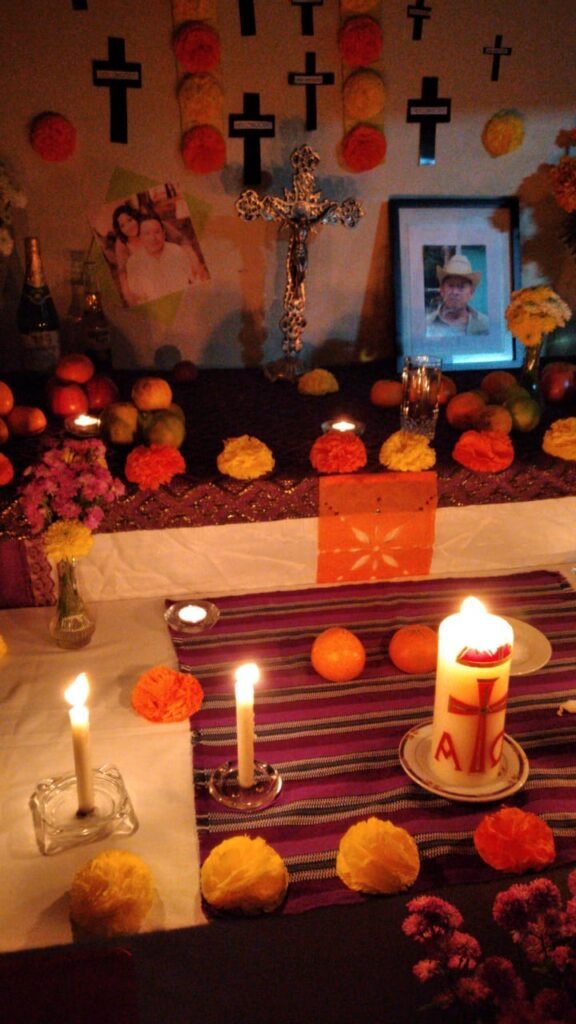
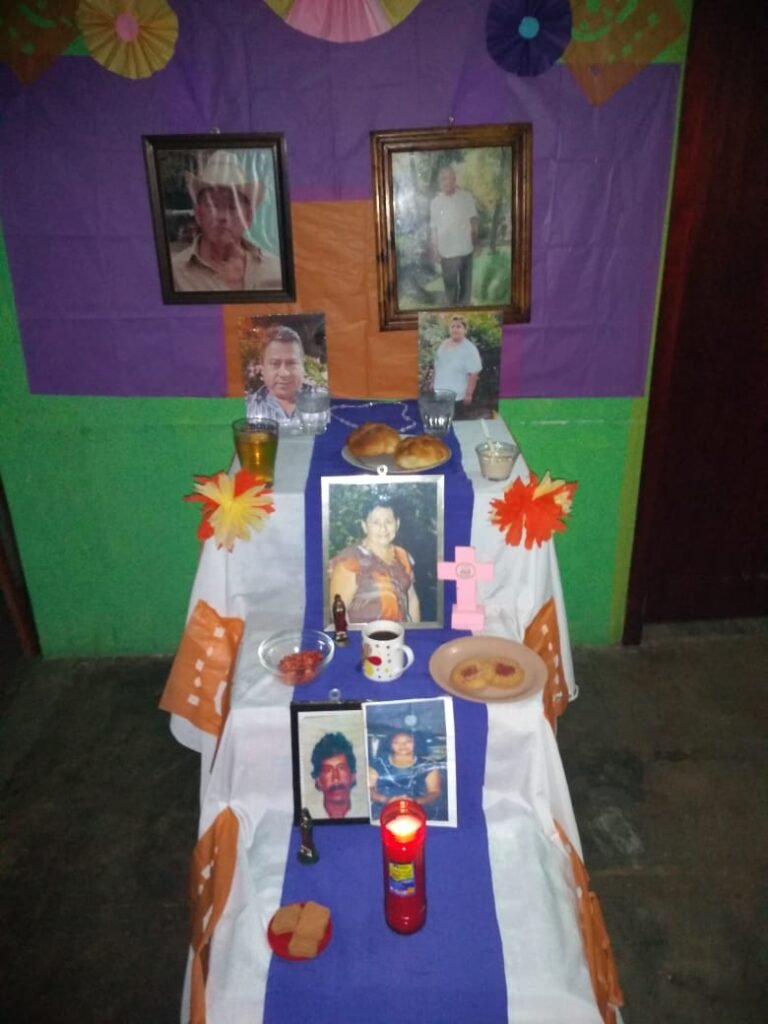
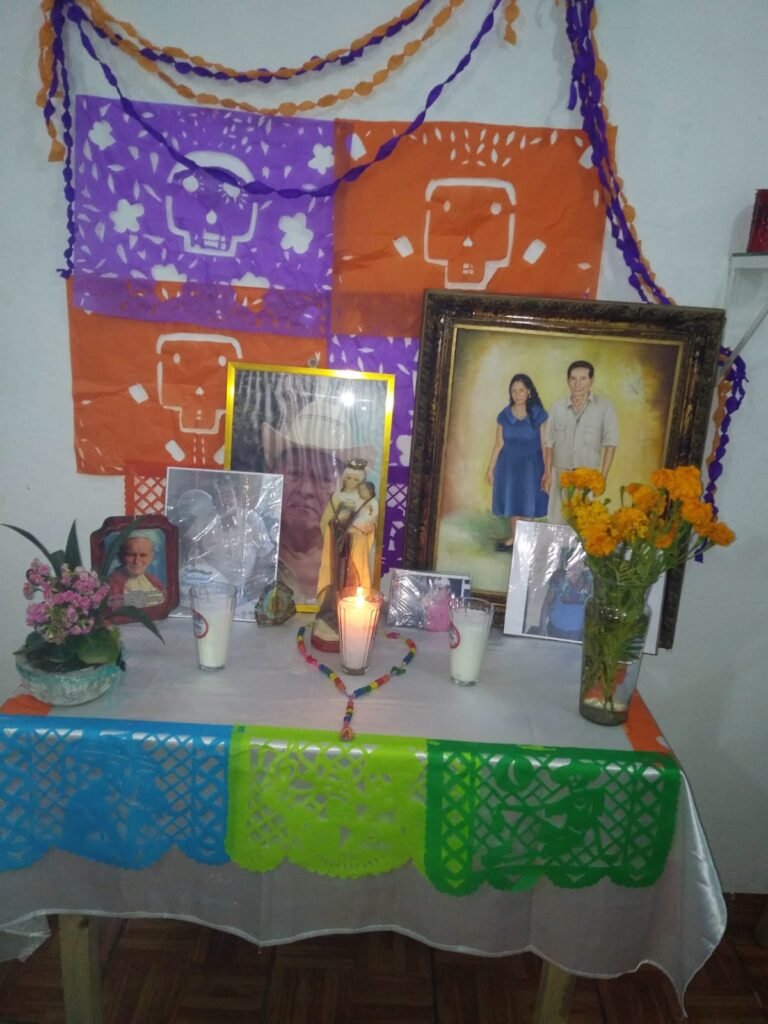
In Tabasco, my homeland, located in the south of Mexico, we make sweets of papaya and pozol, a corn drink with cocoa and we give them to the families and closest neighbors and, of course, we offered on the altar. I remember that we, the little ones, had to clean the banana leaves needed for the tamales and to prepare the vases with glass jars; the flowers were wildflowers and from Mom’s garden. We were making the cempasúchil flowers with crepe paper and my uncles chopped with skull drawings, the tissue paper we were using as decoration. In my house the “offering” or the altar was presided by a big image of Our Lady of Mount Carmel and, beside it, a wooden image of Christ and a photo of our deceased beloved ones. My grandfather used to say “your grandmother liked this” and that was what we were putting on the altar of the dead, “her favorite food”.

In addition to the food that we were putting salt, a glass of water and incense with copal and, of course, the candles. All that was taking place between October 31st and November 1st because, according to our customs, it was believed that the deceased began to arrive since 3:00 o’clock in the afternoon, depending on the death they had suffered.

In our house, on the first day, we were waiting until 10:00 o’clock at night and, at that time, we were remembering those who had died. My grandfather used to talk about people who had lived before us and about what liked and we were evoking and all the names of known people up to the great-great-grandparents. At that time, we were lighting the candles, one for each deceased and one for the lonely soul, Mom was leading the rosary and we all were praying and singing: «Come out, come out, come out, souls of sorrow; may the holy rosary break its chains …». At the end of the rosary, aware that they were already with us, we were eating tamales with coffee and brandy.

On November 2nd, we all were going to the cemetery to the tomb of my father’s mother and we were visiting the tombs of my mother’s parents. There we were praying the rosary and if we were meeting other relatives we shared with them the tamales. This day we were not working because tradition says that if you work, the dead get scared. All the month of November we used to pray the rosary while burning candles and my mother was saying that we could not go to bed after 12:0 at night because the “souls”  would take us away … And that’s how we grew up.

At present, in my family home, on the “altar of the dead”, there are more photos but the tradition is still the same but with a more religious meaning: our grateful remembrance of our loved ones fills our hearts with love for them and it is impossible to prevent that a tear flow down on our cheeks.

But I like also to tell you that the origin of this Mexican tradition dates back to pre-Hispanic times. This festival is one of the most important feast day of the Mexican people: t is a very special day celebrated  in a very particular way and considered the annual visit of the spirits of our deceased loved ones.

According to historians, the pre-Hispanic tradition says that the “mexicas” were celebrating their dead, in several periods of the year but the most important ones were at the end of the harvest, in the month of August and it was believed that, deceased people were going to a place of abandonment and sadness where they were losing memory and never eating anything; only in the month of August, the month of harvests, in the first part of the month, children were allowed to come and eat with their relatives and, in the second part of the month, it was the moment of the adults.

Aztec society believed that life continued even in the after-life and that is why it considered the existence of four «destinations» for people, according to how they died. The most common was “El Mictlán”, the place where most of the dead were going.

With the arrival of the Spaniards, the Day of the Dead did not completely disappear, as well as other Mexican religious festivals. The evangelizers discovered that there was a coincidence of dates between the pre-Hispanic celebration of the Dead and All Saints’ Day, dedicated to the memory of the saints who died in the name of Christ.

Let us remember that All Saints feast  began in Europe in the 13th century and on this day the Catholic martyrs’ relics were exhibited to be worshiped by the people. There was also synchronicity with the celebration of the departed faithful, held just one day after All Saints. It was in the 14th century that the Catholic hierarchy included this festival in its calendar and in Mexico they took advantage of it. That is how the Day of the Dead was reduced to just two days, November the 1st and 2nd.

The pre-Hispanic customs still existing at the arrival of the Europeans, consisted in cremating the dead or burying them at home; these customs were cancelled and they began to deposit the corpses in the churches (the rich inside and the poor in the atrium). Some other customs were adopted, such as eating bone-shaped desserts and the very popular “bread of the dead” and “sugar skulls”.

It began also the custom of preparing an altar with candles or tapers where the relatives were praying for the soul of the deceased to help him to reach heaven. In the same way, it became traditional the visit to cemeteries that were created towards the end of the 18th century that, to prevent diseases, were built on the outskirts of the cities.

Currently this tradition, as mentioned, is one of the most important of the Mexican people and it has a spiritual sense, that has grown more and more taking into consideration the three states of the Church in which we live in communion and giving to the same altar of the dead or offering a Christian meaning. We, the Catholics, make an offering and pay homage to our deceased brothers and their families using the most common elements. The water, reminding us baptism, the candles, sign of the risen Christ, the portrait of the deceased ones, expressing that they continue to live in our mind and heart, the bread of the dead, marigold flowers, sugar and chocolate skulls, incense, perforated paper, and the food that they enjoyed during their life are part of our celebration without falling into syncretism. We do everything as a reminder of those who have already departed from us, but the peculiar thing is that everything we use in the offering  has taken on a  Christian meaning.

 Sr. MARCELA CUNDAFÉ CRUZ, TC

Categorías
Artículos

«The poor you have always with you» (Mk 14,7)

 “Blessed are the hands open to welcome the poor and help them: they are hands that bring hope. Blessed are the hands that, spilling the oil of consolation over the wounds of the humanity, overcome the walls of culture, religion and nationality. Blessed are the hands open without asking anything in return, without «objections” or «conditions»: they are hands that bring God’s blessing upon their brothers ”. (Saint Paul VI; opening speech of the second session of the Second Vatican Council, on September 29, 1963).

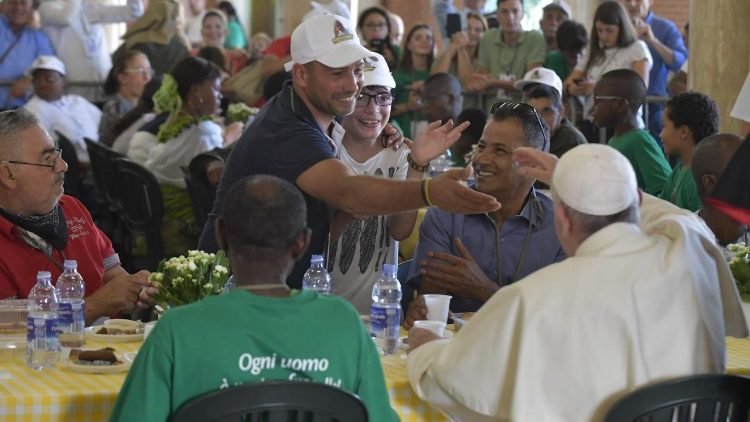
At the end of the Jubilee of Mercy, in the year 2017, Pope Francis institutes, on the XXXIII Sunday of ordinary time, the World Day of the Poor, whose aim is that “the Christian communities throughout the world, become a more and better concrete sign of Christ’s love for the least ones and most needy ”.

Every year, on the World Day of the Poor, the Pope proposes a phrase of the Holy Scripture that enlightens and helps us to be compassionate before our brothers’ suffering. I like to highlight, here, some parts of the five messages.

On the First World Day, since the biblical text: «Children, let us love not in word or speech but in deeds and truth” (1Jn 3,18), he invites us to the coherence of life and insists that «Love has no alibi.  Whenever we set out to love as Jesus loved, we have to take the Lord as our example; especially when it comes to loving the poor”.

It is very significant for us, the Capuchin Tertiary Sisters, that in several writings about the First World Day of the Poor, the Pope present Saint Francis of Assisi as a reference of love for the poor because of his coherence of life . On this occasion he says about him: “Because He kept his gaze fixed on Christ, Francis was able to see and serve Him in the poor” (cf. Test 1-3) and he puts into evidence that Francis of Assisi’s testimony is a proof of the transforming power of charity and of the Christian way of life.

Through the biblical text of the Second World Day «This poor man called, and the Lord heard him” (cf. Ps 34,7), the Pope emphasizes that God «listens», «responds» and «sets free” the poor. “God’s salvation is a hand held out to the poor, a hand that welcomes, protects and enables them to experience the friendship they need. From this concrete and tangible proximity, a genuine path of liberation emerges”. Through this message he also asks us a question: “What does the cry of the poor express, if not their suffering and their solitude, their disappointment and their hope? We can ask ourselves how their plea, which rises to the presence of God, can fail to reach our own ears, or leave us cold and indifferent”.

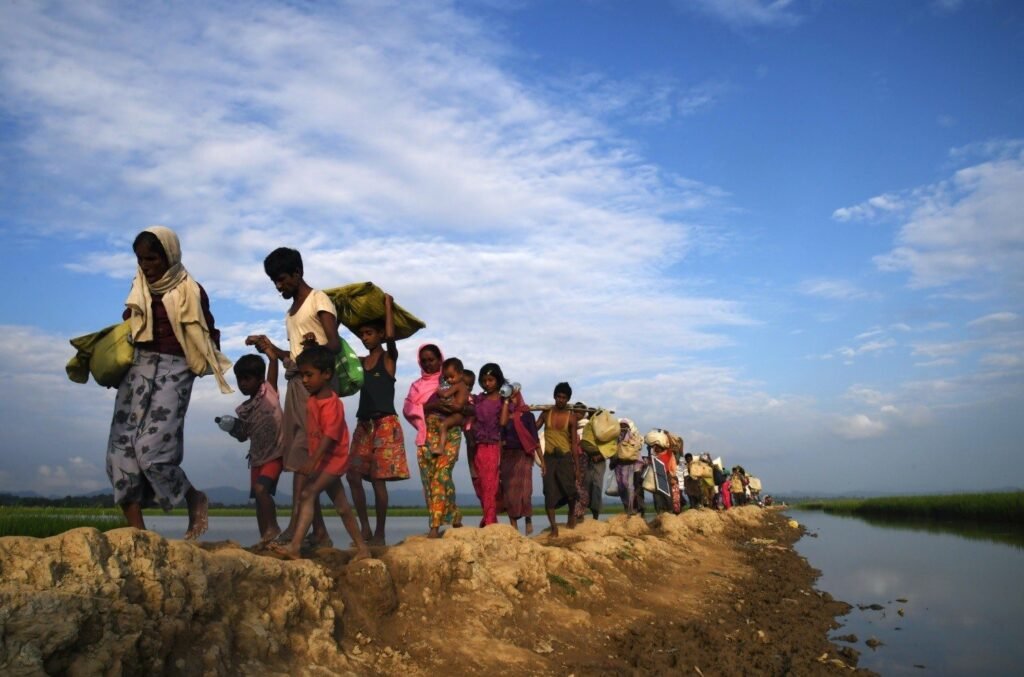
On the Third World Day he again takes up a psalm: «The hope of the poor shall not perish forever» (cf. Ps 9,19). The Pope, with realism and the prophetic spirit characterizing him, denounces the numerous forms of new slavery to which are subjected, today, millions of men, women, young people and children. Above all, he insists about people who must leave their homeland: “How can we overlook, too, the millions of immigrants who fall victim to any number of concealed interests, often exploited for political advantage, and are refused solidarity and equality? And all the homeless and ostracized persons who roam the streets of our cities?” He also makes reference to the stigmatization that, like a cross, in all times and places, the poor must carry over their lives:  “Frequently judged parasites on society, the poor are not even forgiven their poverty. Judgment is always around the corner. They are not allowed to be timid or discouraged; they are seen as a threat or simply useless, simply because they are poor”. And again he places Jesus as a poor and with the poor: “Yet, faced with countless throngs of the poor, Jesus was not afraid to identify with each of them: “Whatever you did to one of the least of these my brethren, you did to me” (Mt 25,40). If we refuse to make this identification, we falsify the Gospel and water down God’s revelation”.

In the Fourth World Day , referring to the text: “Stretch forth your hand to the poor” (cf. Si 7,32), the Pope insists that “the Christian community is called to be involved in this kind of sharing and to recognize that it cannot be delegated to others. In order to help the poor, we ourselves need to live the experience of evangelical poverty. We cannot feel “alright” when any member of the human family is left behind and in the shadows. The silent cry of so many poor men, women and children should find the people of God at the forefront, always and everywhere, in efforts to give them a voice, to protect and support them in the face of hypocrisy and so many unfulfilled promises, and to invite them to share in the life of the community”. He also reminds to all the Christian people that “the great value of the common good is a vital commitment, expressed in the effort to ensure that no one whose human dignity is violated in its basic needs will be forgotten”.

This year, on the Fifth World Day, Pope Francis has chosen a controversial evangelical text: «The poor you will always have with you” (Mk 14:7). There are persons that, may be to elude their commitment to the poor and, what is more serious,  to justify poverty, say: If Jesus said «You will always have the poor with you», and if it is a reality that they will always be with us, we should not worry about them … they will always be there and that is a reality that cannot be got over …

But Pope Francis contextualizes this text and helps us to understand better: “Jesus spoke these words at a meal in Bethany … As the Evangelist recounts, a woman came in with an alabaster flask full of precious ointment and poured it over Jesus’ head. This caused great amazement and gave rise to two different interpretations.

The first was indignation on the part of some of those present, including the disciples, who, considering the value of the ointment – about 300 denarii, equivalent to the annual salary of a worker – thought it should have been sold and the proceeds given to the poor. In Saint John’s Gospel, Judas takes this position: “Why was this ointment not sold for three hundred denarii and given to the poor? … It was no accident that this harsh criticism came from the mouth of the traitor: it shows those who do not respect the poor betray Jesus’ teaching and cannot be his disciples.

But Jesus said: “Let her alone. Why do you trouble her? She has done a beautiful thing to me” (Mk 14:6)… Jesus was reminding them that he was the first poor, the poorest of the poor, because he was representing all of them. It was also for the sake of the poor, the lonely, the marginalized and the victims of discrimination, that the Son of God accepted the woman’s gesture.  With a woman’s sensitivity, she alone understood what the Lord was thinking.  That nameless woman, meant perhaps to represent all those women who down the centuries would be silenced and suffer violence, thus became the first of those women who were significantly present at the supreme moments of Christ’s life: his crucifixion, death, burial and resurrection. Women, so often discriminated against and excluded from positions of responsibility, are seen in the Gospels to play a leading role in the history of revelation.

This strong «empathy» between Jesus and the woman, and the way in which He interpreted his anointing that was in contrast with the scandalized vision of Judas and the others, opens a fruitful path of reflection about the inseparable bond existing among Jesus, the poor and the proclamation of the Gospel… I never tire of repeating, the poor are true evangelizers, for they were the first to be evangelized and called to share in the Lord’s joy and his kingdom (cf. Mt 5:3)”.
Sisters and brothers, as a Capuchin Tertiary Family, are we ready to accept the concrete and urgent call the Lord is making to us, through Pope Francis on the Fifth World Day of the Poor? Are we ready to respond to Him? “We cannot wait for the poor to knock on our door; we need urgently to reach them in their houses, in hospitals and nursing homes, on the streets and in the dark corners where they sometimes hide, in shelters and reception centers. It is important to understand how they feel, what they are experiencing and what their hearts desire”.

Sr. LILIA CELINA BARRERA RAMÍREZ, TC

Categorías
Artículos

«We must stay here for each other Because God has shown us that he himself is here for us» (Saint Elizabeth of Hungary)

If we want to speak about a woman who left a mark in the Church and in the whole society, it will be helpful to dive into what has been written about someone so exceptional. Elizabeth of Hungary was born in 1207, in Bratislava, at present in Slovakia, more or less when our father Francisco was repairing the church of San Damiano. When Elizabeth was barely four years old, her father Andrew II gave her hand in marriage to the young Prince Louis of Thuringia and therefore, she had to move to Thuringia, to the Wartburg Castle in Germany, where she grew up with her future husband. They got married in 1220 and their family life was very happy. They got three children: Germán, the heir to the throne, Sofía and Gertrudis. After the sorrowful death of her beloved husband, she was forced to leave Wartburg Castle and she went to Marburg, where she set up a hospital and took care of the sick. On Good Friday 1229, she joined the Third Order of St. Francis and wore its habit. Shortly thereafter, on November 17th 1231, she died at the age of 24 years. Elizabeth was the first canonized Franciscan saint (1235), seven years later than our father Saint Francis (1228).

Although Elizabeth was belonging to an aristocratic family, since her early childhood, she always took care of people of low social class. Throughout her whole life, she experienced many changes, ruptures and great loneliness. She left from her place of birth and began to live in another country having to learn different languages ​​and customs; being still a four-year-old girl, she got engaged (in any case that was quite normal at the time she lived) and being still very young, she lost her mother and, later on, her beloved husband and so she had to leave the castle and to be separated from her children and all that definitely marked her personal and spiritual itinerary. Possibly the fact of losing her mother at a very young age, helped her to develop the characteristics that identify her personality: great sensitivity, humility, mercy and care for the most in need people.

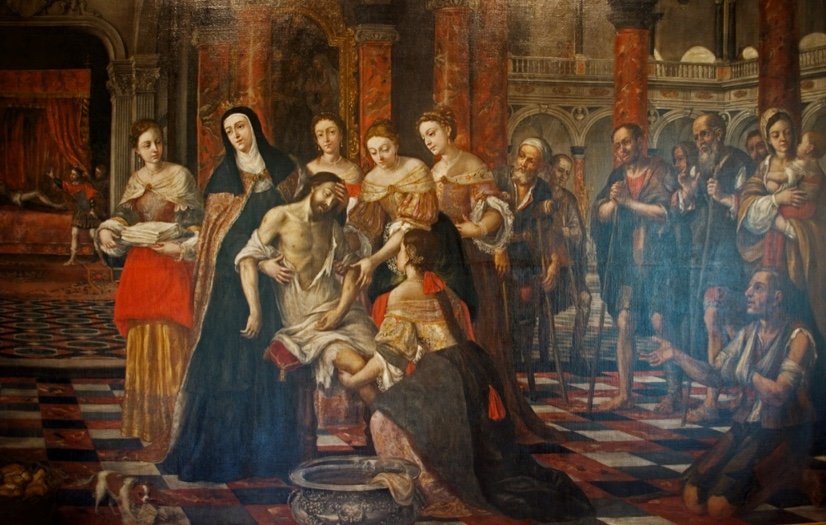
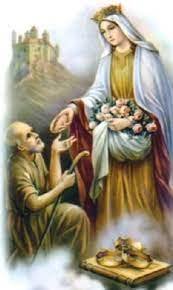
Saint Elizabeth has inspired many artists (painters and sculptors) and her extraordinary personality is reflected in the following traits. Her mercy and love to the extreme are  represented, according to the legends, by various paintings: Elizabeth laying down a poor man and when her family, knowing that, removed the blanket, they discovered a crucifix lying down. She was close and attentive to the marginalized world: she founded several hospitals, where she personally cared for, cured and washed the most disgusting patients. Through penance and prayer, Elizabeth developed a deep and intimate relationship with Jesus since her childhood and she grew up establishing a strong  relationship with Jesus, throughout her whole life. She was spiritually accompanied by a Franciscan friar who introduced her to the penitent – franciscan life and two years before her death, she wore the habit of the Third Order of Saint Francis.

According to historical data, Elizabeth’s first contact with Saint Francis’ lifestyle occurred being still alive the Poor of Assisi, in 1223, when Pope Honorius approved the Rule of the Franciscan Order.

Lucas de Valdés, a painter of the 17th-18th century, painted the Saint, highlighting very well the characteristics and qualities of this woman: her deep relationship with Christ, her mercy and care for the person in need, her intimate space (the double bed where the image of the Crucifix is laid down next to her), the poor waiting for her help and the ladies who were accompanying Elizabeth. In a few words we can say that she was transmitting to the world and in her the society what she had prayed and what had caused her heart fall in love; her social position did never paralyze or separate her from the suffering world overwhelmed by poverty and needing love. It is known that, during her life, she stripped herself of her jewelry and dresses, renounced her welfare and distributed food to people in need.

This image can help us contemplate the life of a profound and simple woman, abandoned in God’s hands, careful towards the others and able to “put into play” all that she was and she owed at the service of needed people. Evidently, she put into practice the words of Saint Francis and of the Gospel: «… Let those who have been placed above the others, boast of such a prelacy as much as if they had been entrusted with the office of washing the feet of the brothers» (Adm 4). “I have not come to be served, but to serve” (Mt 20:28), says the Lord.

Saint Elizabeth can be a model for us, since her continuous and deep prayer anchored in Christ and her intimate relationship that led her to go out to meet others. Let her way of acting with the poor inspire us to ask for a heart open to the needs of concrete people every day coming before us.

Sr. LUCIA KONTSEKOVA, TC

Categorías
Artículos

«What we have seen and what we have heard» Living the joy of the gospel with a missionary heart

On the occasion of World Mission Day 2021, in which all Christians are invited to share “what we have seen and what we have heard”, I like to share my testimony; I will do it in a simple way and with a grateful heart for my vocation as a Capuchin Tertiary Sister of the Holy Family weaving  life with people of every race, language, people and nation, whom, thanks to the Good News of Jesus Christ, our Faith and Hope, I can truly call them sisters and brothers, pronouncing their names since a shared life and mission.

That is how I live the mission and the gift of fraternity that, like every gift I must accept and , acknowledge and also apply myself so that it may bear fruit in abundance; that is, for me, a path of purification and salvation that I am walking along little by little, with patience, wisdom and the mercy that Jesus has with me, expressing it through the concrete gestures of my Sisters and of many people who, even without knowing it, are helping me to grow and to mature as a consecrated woman.

It is beautiful to see how, just when I experience my fragility as a foreigner, different, not knowing the language or the different and countless cultures in Africa, having a skin that gets burned, not enduring one day without eating, for example …, I meet people that take care of me, help and protect me with kindness. Also I receive from them a life lesson when, suffering my «impatience» originating from my own rhythms, way of thinking and seeing things, they are patient with me. As well, discernment helps me to move on from «mine» to «ours», freeing me from the arrogance of thinking that «mine is the best» and  that what is «mine … what I think, feel, believe, my culture… ” is not the best, but simply “mine”, and leading me to open myself to the richness of welcoming “what comes from the other” that many times is completely different, valid, enriching and leading me to the beautiful path of “ours”.

One of my faith certainties, according to what I have lived, is that God never allows himself to be won in generosity, He multiplies to unsuspected limits everything given with love. Thus, fraternity broadens and allows me to reach any of the thirteen communities that we have in Africa, D. R. of Congo, Benin, Tanzania and Equatorial Guinea, feeling at home, welcomed and loved by my sisters, enjoying and also searching out, all together and with lay people and beneficiaries, how to carry out our apostolic works sharing the mission and putting into practice a fraternal and fair economy in which all contribute and receive; through numerous projects we also receive a great help from our benefactors.

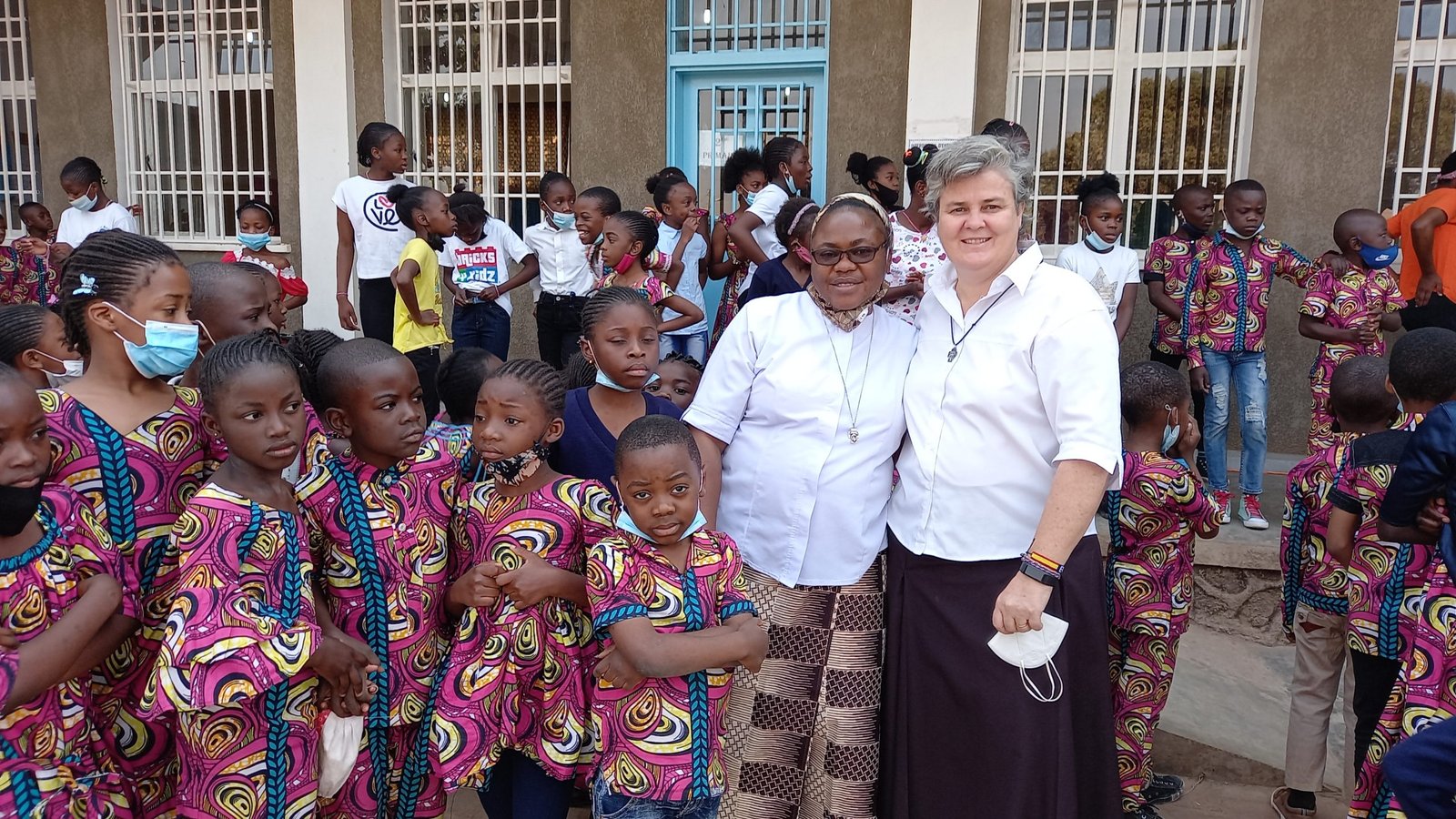
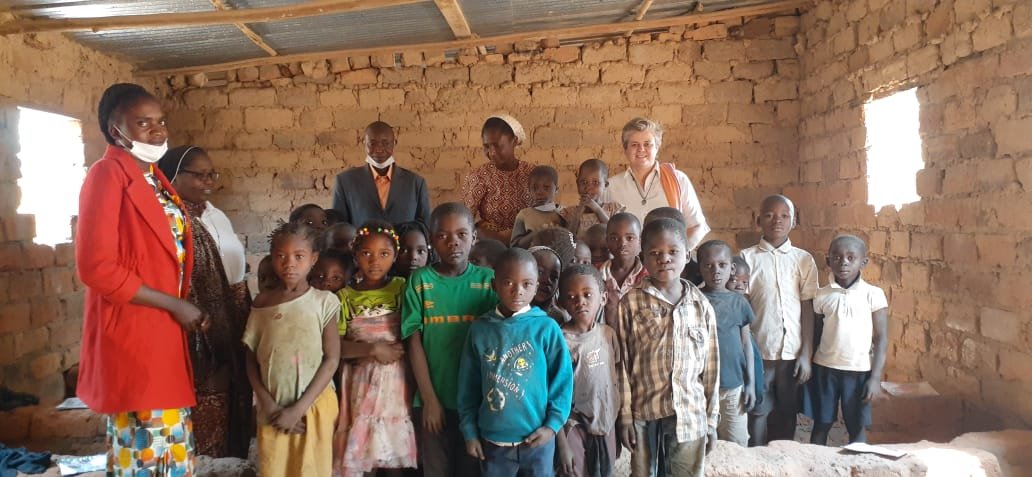
When I go to Rosario de Soano Home for young women with different abilities, in Morogoro  (Tanzania) and I knock on the door, I am welcomed with a wide smile by Magdalena, a girl living in this Home. When I arrive at Ntuntu (Singida – Tanzania), small groups of children of San Juan María Vianney Kindergarten coming from their scattered houses, appear among the trees, go to Mass early in the morning and then they accompany us on the way to the school. When I stroll about Kigamboni (Dar-es-Salaam, Tanzania) the children, youth and parents of Fray Luis Amigó Schools greet me with affection and without distinction of religion, Christian or Muslim. When I greet people in Kasungami, neighborhood of Lubumbashi (D. R. of Congo). I enjoy the family that God has given us: Maman Georgette, already old and alone, lives under the protection of the Sisters and always welcomes me, speaking to me in Swahili and French and thinking that I can  understand all that she says and without stopping her work, the children and young people of Hoy Family, the sick people of Saint Claire Health Center, the children of Montiel Kindergarten. And also it has been an experience of family to celebrate fifty years of presence in Kansenia (D. R. of Congo) and to welcome groups from distant parishes, coming walking during three days to participate in the fest, to visit with the group of novices the abandoned elderly  in Ouessè (Benin), the villages where the women’s cooperatives t are a source of life and development for the families and the malnourished children and sick people cared in Nikki, Cotonou, Gló and many other persons whose names I keep in my heart that I have meet in Evinayong, Equatorial Guinea …

Blessed be God for the gift of my family that, through its witnessing, made me growing in the faith in Jesus Christ and  allowed me to discover the importance of serving others, for my beloved Congregation, and for the service that I am currently rendering to my sisters and brothers. .

As our dear Father Luis Amigó said: «Let everything be for the love of God».

SR. EVA MARÍA SALVADOR ASPAS, TC

Categorías
Artículos

Luis Amigó, an inspiration for our time

In the year 1948 the first Capuchin Tertiary Sisters arrived in Brazil from Colombia. Due to the audacity and courage of these sisters, the Franciscan-Amigonian seed arrived in Brazilian lands and since the essence of the Amigonian Pedagogy, we have been keeping our eyes and actions always focused on the needs surrounding us, trying to enable effective responses to promote and to defend the rights of all but especially of people in situations of greater vulnerability.

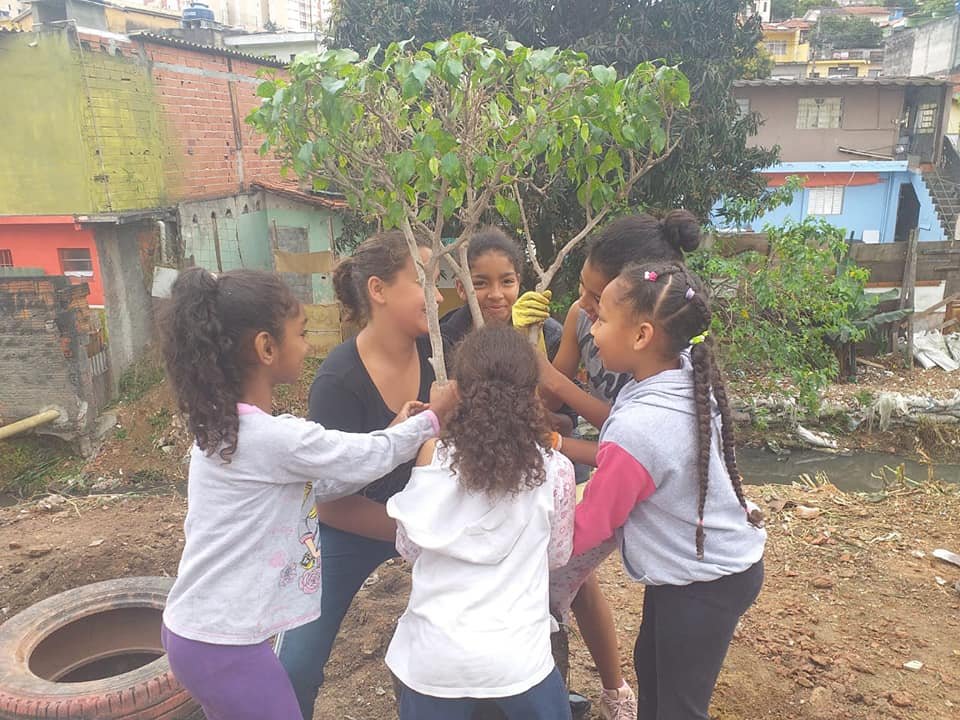
Through this article, we like to share how Luis Amigó has inspired our work at the Frei Luis Amigó Educational Center (CEFLA), located since 2003 in the west of the city of São Paulo. This Educational Center purpose of is to take good care of children and adolescents from 6 to 14 years old, that are living in situations of social vulnerability in the marginal neighborhoods. Along these 18 year, we have helped people to build many stories of promotion of the dignity of the human being. At present we offer our service to 120 children and adolescents belonging to 92 families. According to our Charism, we try to put into practice our preferential option for the poorest and most needy people, putting effort into creating a living space where it is possible to strengthen the process of humanization, integral formation, participation and citizenship. We develop actions and activities that generate the force of leadership and autonomy, and based on their interests, demands and potential. The activities aim to strengthen the sense of belonging, to fashion the identity, to transmit social and cultural codes; they are activities of citizen participation developing the perception of social, economic, cultural, environmental and political reality, the appropriation of the citizen rights, the recognition of duties, cosmovision and positioning in public space.

The mission carried out in this work is based on the Amigonian pedagogical proposal, through its principles and values that are at the basis of our actions. Following in the footsteps of our Father Founder, we assume love as the essence that mobilizes our practice, a love that generates spaces of trust, acceptance, mercy, accompaniment, respect and humanity, a love that allows us to respond today to the challenges presented to us by an increasingly individualistic and meaningless community.

Our attention to the signs of the times and to the new social scenario made us live again the experience of Luis Amigó, our Founder and of our first Sisters at the beginning of the history of the Congregation; since 1885 they showed a clear attitude of sensitivity, trust in Providence, great love, compassion and generosity. They took up love as a decision, to the point of sacrificing their own life to alleviate the pain and loneliness of the orphans victims of the cholera pandemic.

The year 2019 marks the beginning of a difficult and challenging times for all humanity; we had to adjust ourselves to a new normality created by the Covid-19 pandemic. This drastic social change affected our work, we had to innovate our responses and to adapt our project in order to continue accompanying the growth and needs of children, adolescents and their families.

Motivated by the strength, zeal and missionary ardor of our Charism, we continued to take care of our students, families and community, being instruments of peace and hope in the midst of the great pain they had to face at that moment and to fulfill our mission offering alternatives for all realities. Those who had the possibility, received remote attention through virtual meetings, that allowed us to enter into  their houses and not to lose our ties of union with them.  We also tried to accompany those who could not have access to digital media, through primers and different materials. We also visited, in their homes, the families living in the most vulnerable situations and, when needed, we referred them to psychologists and social workers as well to the Basic Health Unit (UBS). The Institution, sensitive to the needs of families, favored the comprehensive care , listening to their experienced reality through phone calls, face-to-face visits specially in urgent cases, delivery of baskets containing food, hygiene items, cleaning materials and medicines, virtual meetings for recreational activities, spirituality and listening spaces; we also referred to the protection network the more complex situations helping them to access to the health services, community awareness campaign about COVID-19 and to sign them up so that  everyone may have the right to vaccines and to the government financial support programs.

Specifically, the mission in this Project, puts into practice our Father Founder’s phrase: «In the union is the secret of strength» because the human quality of the care we offer is possible only thanks to the teamwork of educators and sisters, that contributes to transcend the difficulties and, day by day, it feeds the dream of collaborating in the humanization and promotion of our children and adolescents. Through a systematic training, the educators receive tools to know, deepen and apply the Amigonian Pedagogy proposal. Being an Amigonian educator is a demanding mission and because of that it is important to receive all the necessary elements to develop this profile.

The germination of the scattered seeds and the visibility of the fruits …

Through the following two testimonies, we present our appreciation and we offer some of the many fruits generated through our presence, always in communion with the community.

«CEFLA inspires me to be more supportive and careful in the small details that I would normally neglect. Since I am frequenting here since I was a little boy, it is quite familiar to the phrase» I give up my life for my sheep», and that caused in me a feeling of affection for what this phrases means, as well for what it represents for me. The experience I made in this place where I spent so much time and the people I met here helped me, over the years, to become better, encouraging me to solidarity and to return the good received in some way, whether in daily life or at work ”(Lincon is a former student and currently he works as a young apprentice).

“You exhale caring for one another as part of your lives. I could know the space and the love here overflowing, when, during many years,  I participated in a treasure hunt as a member of the youth group of the São Matheus Parish. Once known the project here existing, I was sure that I would find here the support I always needed to make my son’s life healthier and happier. And since two years, most of the time during this pandemic, this love got wings and invaded our home through online encounters, basic baskets, material support, calls, posters, etc. Our gratitude is immense for its existence in our lives ”(Valéria Meira, mother of Arthur, 8 years old).

Sr. JULIANA FRANCISCA DO NASCIMENTO, TC

Categorías
Artículos

Paving the way in India my experience as the first Capuchin Tertiary of my country

I discovered that a fresh start is a process. A fresh start is a journey, a journey that requires a plan. And it’s this discernment of our congregation had extended its missionary presence to incredible India. India is a land of Lords and a nursery of temples and mosques; where in religious diversity has been a defining characteristic of India’s population for centuries. It’s a country where the people are of different castes, creed, religion and culture live together and speak different languages. That’s why India is said to be a country of “Unity in Diversity”.

Passion is what consumes your heart and your mind. Purpose is how you use that passion in a concrete way. With sparkles of passion in their hearts our sisters landed in India with an authentic missionary spirit of making our presence and our charisma in this land on 2008. No constructed rooms, no furniture, no compound walls, no comforts, no atmosphere of a convent but all that was there was an unconditional trust in the Divine Providence and a warm welcome with a brotherly hospitality of our Capuchin Fathers. As it’s said “venture outside your comfort zones, the rewards are worth it. Yes, with few months of our stay in the Friary, we slowly put up our own building and from there we had been collaborating with the Capuchin Fathers.

Great things never come from comfort zones. Indeed my experience as first TC, challenged me a lot not just to adopt to the culture of the congregation but to adopt myself to the culture of my own people and to twin them with the  gospel culture. To break my own cultural traits, caste boundaries, attachments to regionalism costs me a lot. I said “Princy, be open, let God do the rest in you. It was a long process for me to sculpt myself in the hands of many sculptors through formation or various experiences that molded me to have a conviction that I am called to be an authentic TC, to embrace reciprocity, to bloom into relationships of circularity.

In the beginnings the community existed with the three sisters who come and go out due visa issues. There was always a problem of consistency of the sisters which also demanded a lot of adjustments to climate, food, culture and language. We begin to work in the college of the capuchin Fathers which helped us economically. Our presence in Rameshwaram has become more vivid in the due time as we venture to collaborate with the parish activities like taking care of the substation, visiting the families, giving catechesis, preparing for first Holy Communion and distributing communion to the sick brought us more closely to the people. People, priests and other religious in the island began to appreciate our presence as it challenged them to live a simple life, to make oneself approachable, to roam around the streets with smile and to talk to the people whom we encounter on our way as it broke their the image of priests and religious are people who live in pedestal. This community also functioned as a formation house for the aspirants.

When years rolled by we were also offered to take care of the children’s home which is under the administration of the Capuchins. So now we had two communities with three sisters in each working as missionaries. Due to the government policies the avail of visa became harder and continuous discernment brought to a newer presence in a different community by closing down these two communities that already existed.

And now we stay in Anugraha Institute of counseling and psychotherapy administered by the capuchins as they offer easy student visa to the foreign sisters. Our community Montiel Illam- Anugraha (means house of Mercy) consists of three of us where in we study as well as we work here. We realized that as we lose ourselves in the services of others we discover our own lives and our own happiness.


God’s work done in God’s ways will never lack God’s supplies. This had been my enormous experience during these years of our presence here. Many are the blessings that I encountered through various persons, have met many crossroads; have to unlearn many things to learn anew. The gift of this life has not simply been the myriad of opportunities offered to me as a sister, but also the relationships that I have developed in and out of the community and the aspects of myself that have emerged as a result of these experiences has broadened my perspective rather than narrowing it.  In all this I could always say my sisters had been there beside me and I am proud to be a TC in out our charismatic Identity here in this land of mine. I would say that there is no true gospel-centeredness that does not lead to mission, because the gospel is the story of a God with a missionary heart. And I am as His follower called to live so of living out this God with a missionary heart in daily living. Let each of us Stop, look around and ask ourselves “WHO NEEDS ME TODAY”?


SR. PRINCY JOSEPH, TC

Categorías
Artículos

50 years of simple presence accompanying the Congolese people

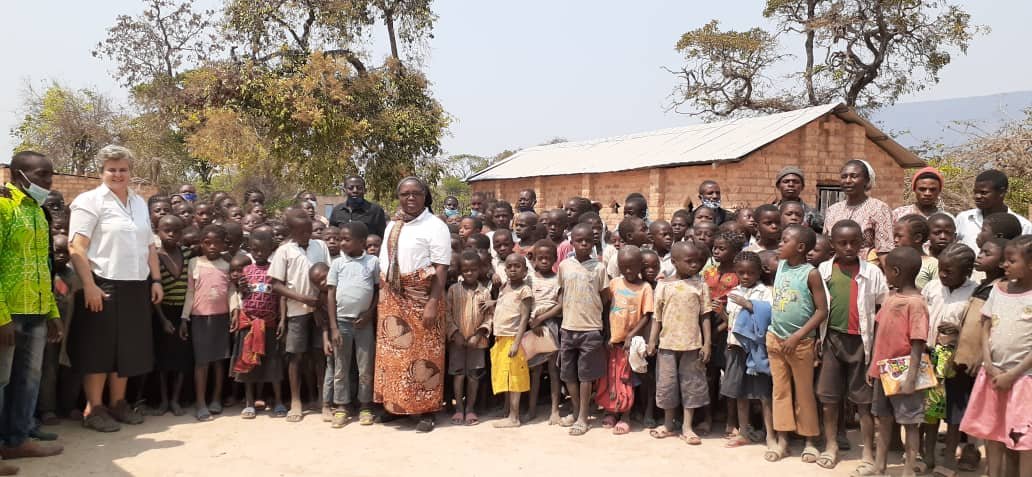
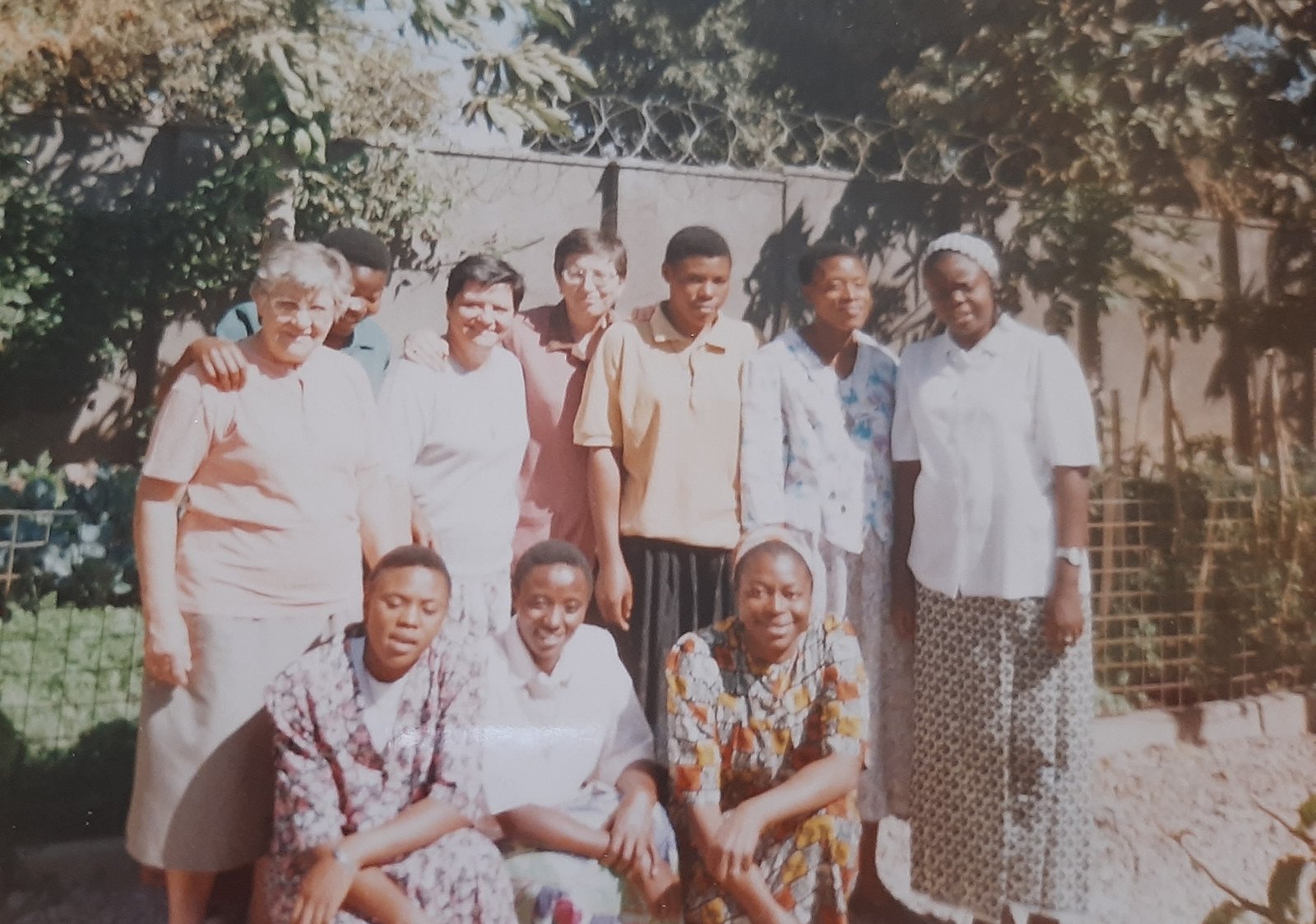
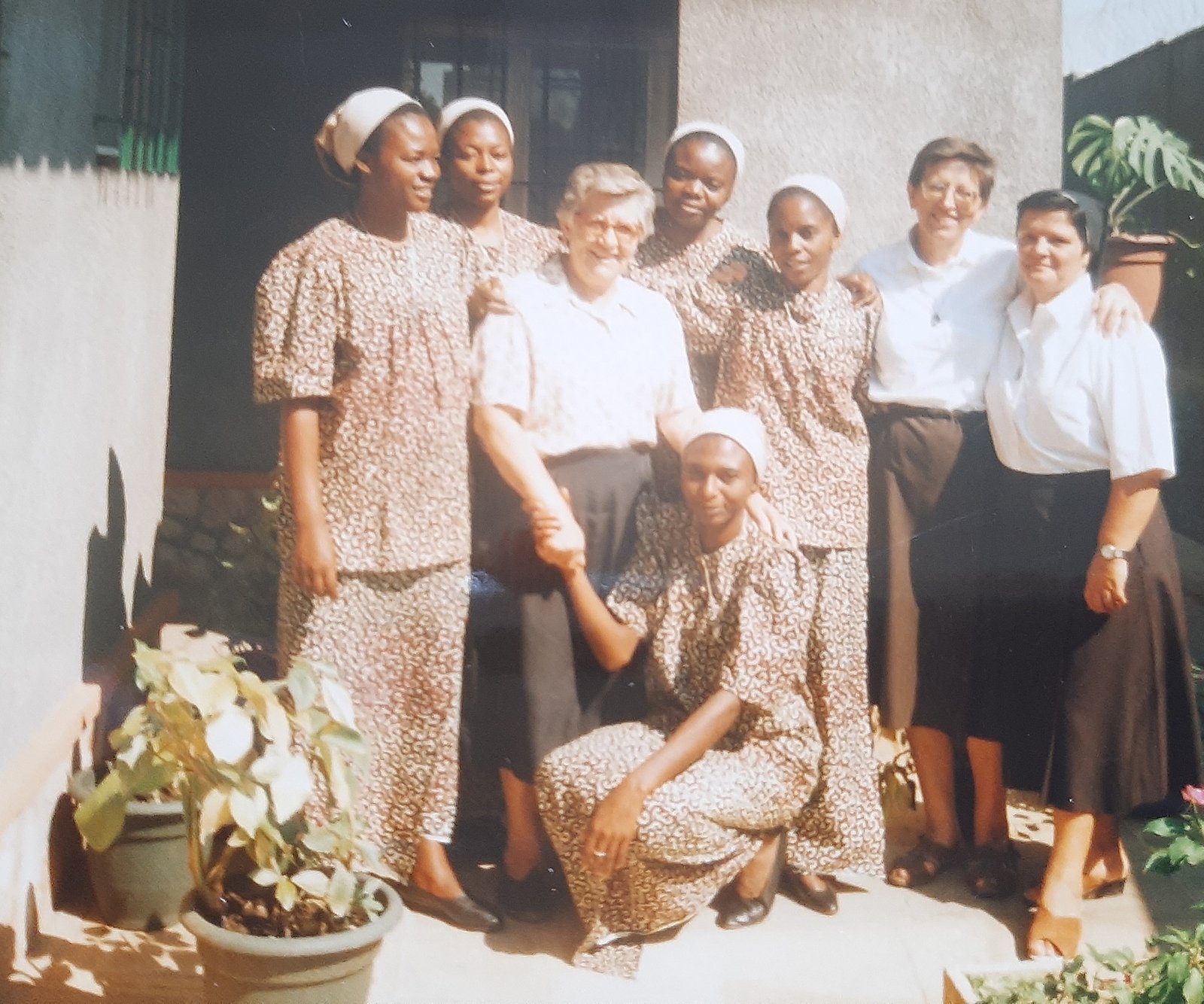
Our Congregation, founded in Spain in 1885 and spread in some European countries, but especially in Latin America, since the year 1905 when we arrived in Colombia, was not yet present in Africa until 1971 when, the former «Immaculate» Province, received two insistent requests to go to the black continent. One of them was from Mons. Eugenio Kabanga, Archbishop of Lubumbashi in Congo and the other from a White Father (Missionary of Africa) inviting the sisters to Rwanda. The Provincial Superior at that time, Sr. María Pilar Burillo, accompanied by Sr. Margarita Ros, travelled to visit both places and finally they opted to go to Congo (whose name, from 1971 to 1997 was Zaire).

On August 20th, 1971, just 50 years ago, the first five Capuchin Tertiary Sisters who were going to settle in the Democratic Republic of Congo, arrived in Lubumbashi (capital town of the province of Katanga). Their final destination was the Mission of Kansenia, where the Benedictine Monks of Saint André (Belgians), were present since 1912; the Benedictine Sisters withdrew from the place because of lack of sisters and remained there only Sr. Marie Gregoire and another religious, a Saint Augustine’s Canoness, that were carrying on pastoral work in the small villages.  

Five days before our departure from Spain to the African continent, during the missionary sending ceremony in our chapel in Burlada (Navarra – Spain), full of people to overflowing, we told our sisters, family members and the Christian community accompanying us, that we were happy with their presence because, like us, they were eager to communicate to the others the joy of knowing Jesus and they were feeling encouraged by the Spirit of God. In a community, each one has his mission and our mission was to express the Church universality, being a sign of communion, friendship and collaboration with the still young Church of the Congo. On August 21st we arrived at our mission, Kansenia, about 300 km far from Lubumbashi that was attending 35 villages spread over an area of ​​about 2,700 km2 where we would deal with the Hospital (which was in an indescribable situation) and the boarding for the Secondary school girls, we would open a home for girls who had given up the school and we would give classes of religion in Primary and Secondary schools.

When in our community we became six sisters, two sisters, from Monday to Friday, were going to the villages of the Mission to live and share with the people, especially at night, around the bonfire.

In 1981 another community was opened in the provincial capital, Lubumbashi, since the Archbishop asked the collaboration of one sister in the diocesan store that was providing services to the poor and missionaries At the beginning the Diocese accommodated us in a part of the building of the Diocesan Offices and later in a house near the Cathedral. The other three sisters were performing different tasks: one in a clinic, another in a suburban neighborhood and another coordinating the religion classes in the Primary schools.

When our work in the diocesan store ended, we the sisters preferred to live in a suburban neighborhood and the Salesians offered us to go to Kasungami, a parish they were pastorally attending but where they were not living. And we settled there on January 20th, 1989, taking care of education, health, abandoned elderly, street children, mentally ill people wandering aimlessly, students without means to continue their studies and undernourished people, especially children … And it was there the where we began to receive the first postulants and novices.

It was the moment to think about the formation of the young women who were starting their journey with us and we considered convenient to open a new house, a formation house, in the city, where it was easier to attend courses and seminars organized by the Union of Major Superiors, at an intercongregational level.

The opportunity was provided us by a Belgian priest, parish priest in the Ruashi neighborhood. The formation community settled there on August 19th 1993. They were the last days of President Mobutu and the political situation was complex, reining everywhere a great disorder and insecurity. On three occasions our house was looted and robbed and, due to the seriousness of the situation, we discerned about the convenience of leaving that place. The novices and their Mistress traveled to Benin and joined the Novitiate in that country, at that time belonging to a General Delegation, to complete the canonical year. Meanwhile, we began the construction of a new formation house located near the Lubumbashi university campus and it was inaugurated in October 1998. And on the 30th of that same month, when our first Congolese sister made her Perpetual Profession, the four novices who had already come back from Benin, made their First Profession.

Open to the arising needs and welcoming the signs that God’s Providence placed on our way, we opened a new community to attend, at first, street children. Later, in 2009, the mission of this community expanded and we inaugurated a dormitory for young girls studying in the university: subsequently, due to various circumstances, the girls at risk that were living in this house, were transferred to Kasungami, and welcomed in the home operating there for this mission and managed by the sisters of that community. And in Lubumbashi, instead of the girls’ home, we opened a nursery school whose educational service we are at present completing with Primary School.

Since 2014, as a result of the process of congregational restructuring, the four existing communities in the Democratic Republic of Congo became part of the General Delegation «Our Lady of Africa»: Kansenia, in the heart of the savannah; Kasungami, in the suburbs of Lubumbashi; the formation house and the school complex with the student Dormitory in the city of Lubumbashi.

Personally, my life in Congo has been a great gift. I was feeling in my place. The people were simple and very welcoming; young people eager to learn… it was a joy! I was also happy to see that many people without means could be welcomed and cared with interest and affection in the Hospital …, in fact, nobody had health insurance, except those who, were working in the mining centers for a company. Our life was a life of full insertion in the mission.

I never cease to be grateful for everything I have experienced and for all the love received and offered by all the Capuchin Tertiary Sisters who had the grace to work and serve in the Democratic Republic of Congo.

Hna. María Carmen Sanz Lorente, Tc


(Sr. María Carmen, author of this article, was a member of the founding group of the Congo in 1971; she remained in this country during 46 years and she returned to Spain in 2017).

Categorías
Artículos

The amigonian in my life

It is impossible to imagine that, after my retirement, I would also get the opportunity to expand my «Life Project».

First contact

I received the invitation to collaborate in the School «Nuestra Señora de los Desamparados», in San José (Costa Rica), from the Academic Coordination and the Subdirection. That seemed interesting to me and, from the beginning, I could not see any difficulty: I could count on a sufficient academic support and experience for such work and so I accepted. But, oh my God, I did not know what the Lord had prepared for me: to accompany the teachers and administrators in the noble task of education, but “with a surname”… Amigonians.

About Father Luis Amigó y Ferrer I knew that he was a Capuchin Brother and the Founder of the Congregation to which belongs my sister Damaris and I had got some material that she had given to me but that was “standing in line” to be read. I like collecting holy cards and medals (I have always liked the holy objects).

Self-learning

Something that began out of necessity, professional pride and responsibility, became a passion, an enjoyment and a fundamental part of my life project.

My work in an Amigonian Educational Center was for me a constant challenge and learning experience. The “Amigonian Chair” and the civic and religious events were getting a different nuance for me and it was amazing the opportunity to evangelize since the teaching subject, as well as the environment closeness, fraternity and solidarity that were always accompanying my daily life.

Amigonian Lay Movement (MLA)

By the hand of Sr. Ana Jessie Castillo, Capuchin Tertiary Sister, I started my «Amigonian itinerary” in the MLA group gathering in the Provincial House in Córdoba neighborhood (San José – Costa Rica). Its behavior was excellent, and it was a group responsible in the formation in the human, christian and charismatic dimensions, according to what is contemplated in the Form of Life. I made my own the objective that the MLA – Adults agenda proposes: «To value the following of Jesus from Father Luis Amigó’s proposal and his preferential love for the needy, with an attitudes of mercy, in one’s own family and in the environment«. I am far from the fulfilment of this goal, but as long as I live …

Four years after beginning my MLA itinerary, I made my commitment no less than in the Holy Family Chapel of the Sisters in Massamagrell (Valencia – Spain), next to the altar of God and very close to Father Luis’ sepulcher…

Gratitude

Several experiences allowed me to deepen in the Amigonian mission: the Amigonian way, in Assisi, in Colombia, Guatemala… just to mention some few experiences that I consider gifts of pure mercy, as well as the visit to reeducation institutions, listening to young people and knowing their life process, the appreciation for the fraternity and the value of living together in the family homes for girls at risk and the health and nutrition centers were for me a real teaching of Amigonian Pedagogy in action.

It has no price the experience of sharing, for example, the Liturgy of the Hours, in the community of the aged sisters and brothers, and I appreciate how their voices, ordinarily almost muffled, become joy and life when singing hymns and thanking the Lord. … How wonderful is this charisma and to see that even in sickness or, at the life sunset, it builds brotherhood!

My experience as a member of the Luis Amigó Intercongregational Commission, was another great teaching, and I like mention especially three of the tasks assigned to me, that, although simple, contributed to enrich me a lot. The first one was to inquire, in the different “Hoja informativa” of the life and work of Father Luis”, how people where feeling and were expressing their gratitude for his intercession: it was wonderful to see the devotion and gratitude for the received favors. The second one was to review the material about the Founding Father’s life and work existing on the social networks. The third one consisted in reading the prolific production of MLA material sent by the different communities of the world where our Congregation of Capuchin Tertiary Sisters of the Holy Family is present and it is stored, with a special zeal, in the Secretary of the Sisters General House, in Rome.

Our Congregation? Yes, my dear lay colleagues you read well… We, as MLA, are one of the deeds of the Congregation, of our Congregation. Therefore, as members of the MLA we must know, love and share the life and work of Father Luis, since we share with the Sisters their mission and spirituality.

At present my health is not the same … but the Amigonian “eaves” are very wide … I participate in the MLA Adults group Saint Isabel of Hungary gathering in the House of Postulancy and of the aged sisters in La Ribera (Heredia – Costa Rica), led by Sr. Flora Virginia Garbanzo. The pandemic connected me also to the virtual Mother of the Rosary prayer group, where every day at five in the afternoon, we join MLA members, Amigonian Cooperators, Brothers and Sisters. During the pandemic, “it was born” also the “Amigonian Way” at the provincial level. All is grace!

What I have learned

God does not allow himself to be won in generosity and Father Luis is «the man who trusted in God.» Therefore: let everything be «for God’s glory and the good of the minor», whatever be the circumstances. I am almost always, that «minor» … Thank you, Father Luis! Thank you Lord for calling me!

María Teresa Araya Chavarría, Mla

(La Ribera de Belén, Heredia. Costa Rica)