

Categorías
Artículos

24/7 In Family

When you think about family, it’s easy to remember thousands of situations that we accompany, we listen to, and even live within our own family settings. Our spirituality, rightly rooted in the heart of the Family of Nazareth, demands from us that presence, that word, and that gesture that is always timely and necessary in an important scenario like the familiar atmosphere in human life.

I want to call this article 24/7 IN FAMILY, to represent analogically that the family experience involves the totality of being. Entering and leaving, nuancing the time at home with the time away, is the normal thing of life and is usually called day to day life, and is composed of activities, habits, customs, idiosyncrasies and ways of carrying out obligations, routines, leisure time and affection.

 The everyday life is armed with an infinity of small details that become natural to such an extent that they become imperceptible, become so invisible and current that they can be mechanical.

Only when for some reasons, you go through real – crucial situations such as the pandemic for these times; also when meeting an accident, experiencing loss, or any other event that interrupts the course of daily life, it is verified that we are attached to our customs.

Entering and leaving as what has already been said, was the common thing of our life, but what happens when by obligation you cannot leave or simply life imposes hastily and bitterly and changes habits and rhythms of life?

Each family has its strengths and values to be proud of; they are reasons to experience gratitude and even satisfaction. But also weak points, difficult areas of conflicts and problems to deal with. Therefore, in these times it is better to have a breathing space of what has not been done and what has been wanted to change and give way to patience, understanding and joy.

For all human beings, the family is the element identity that marks and defines almost completely their way of being in the world, their values, their way of relating and even their options of conscience. Whether it is because you have had the privilege of growing up in a binding family that offers a secure basis as support for self-affirmation in the infancy, pre-adolescent and / or youth stage, because it offers support to the ideals of life, emotional security and economic solvency to the vital needs of a human being.  Otherwise, because in it all the above is dispensed with and therefore life is faced with fear, helplessness, anger or pain.

To belong will always be a vital need that must be urgently met not only materially but also that provides emotional control. You can be parents, children or siblings; in whatever role there is, it will be necessary to experience to be a  part of a 24/7 family, that is, full time, and without losing sight of the  individualization and personal project, encountering there the human strength that guarantees a life full of meaning and value.

It is not yet possible to talk about the pandemic in the past because it is evident that it is still facing an accumulation of situations and threats with which this historical fact has changed the daily rhythm of life. But something can be said about it: situations like these have already given the opportunity to reread and interpret many aspects of life, which customs and routines did not allow to be noticed.

«We humans are often like this; in the most difficult situations we usually find resources that we did not even suspect we had, and it is also frequent that in moments of fear, wonder arises, like those flowers that grow on the rocks  (Rodríguez, s.f).

It is the time to look from the inside to the outside all the unsuspected resources that at this moment has arisen and although each family has its own unique way of leading life, and of course, that this also applies to normal days away from the pandemic or within it, in short, there should be no talking of magical formulas so that this time of togetherness will be «ideal».

What I could refer to in this regard is that it should be quality time 24/7.  It does not symbolize all the time we should be together, but better yet, all the time in which we have to feel «part of…»  None should be left out of the dialogue, of being listened to, of being embraced and the understanding necessary for him to find the unconditional love that in other areas is always being conditioned.

Sr. Sandra Milena Velásquez Bedoya, tc
Categorías
Artículos

Message for the world day of consecrated life 2022

« JOURNEYING TOGETHER »

Consecrated life is at the very heart of the Church» (Vita consecrata, n. 3). These are the words of the Post-Synodal Apostolic Exhortation on Consecrated Life which, taking up the rich wealth of the conciliar heritage, has marked, as a sure compass, the path of all consecrated persons in the last twenty-five years. As a precious and necessary gift for all Christians, consecrated life unfolds its being in life, holiness and ecclesial mission.

Following in the wake of the Second Vatican Council, Pope Francis called on the entire People of God to place themselves in «synodal mode» by convening a Synod under the title «For a Synodal Church: Communion, Participation and Mission», which will culminate in October 2023. The focus is on «heading not occasionally, but structurally towards a synodal Church». The reason had already been explained by the Pope a few years ago: «The path of synodality is the path that God expects of the Church of the third millennium». And the Church «is nothing other than the ‘walking together’ of the flock of God on the paths of history that goes out to meet Christ the Lord».

In a broad sense and in a more generic way, synodality would come to designate: «The peculiar style that qualifies the life and mission of the Church expressing its nature as walking together and meeting in the assembly of the People of God summoned by the Lord Jesus in the power of the Holy Spirit to proclaim the Gospel. It must be expressed in the ordinary way of living and working of the Church. This modus vivendi et operandi is realized through community listening to the Word and the celebration of the Eucharist, the fraternity of communion and the co-responsibility and participation of the whole People of God, at their different levels and in the distinction of the various ministries and roles, in their life and in their mission».

consecrated persons are «passionate seekers and witnesses of God» on the path of history and in the heart of humanity. Walking together is an exercise in necessity and an experience of beauty. The need arises from the Church’s need to strengthen synergies in all areas of mission. Beauty springs from contemplating the witness of those who are called by the same vocation to live in fraternity and to give their lives for the kingdom at the service of their brothers and sisters.

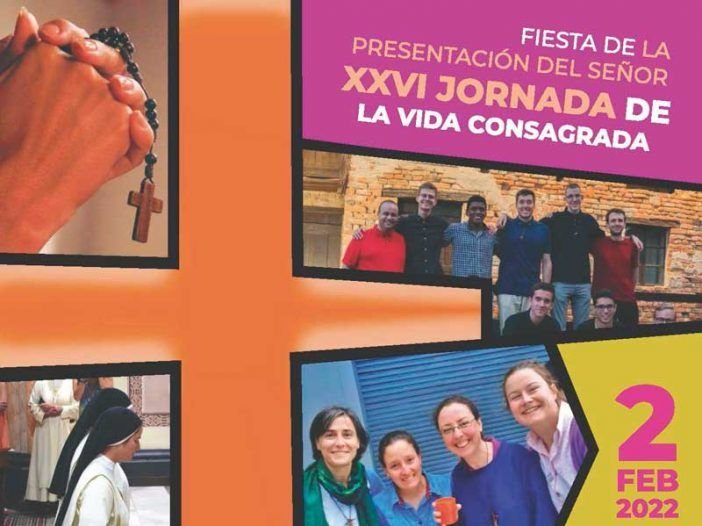
Thus, taking up the invitation of Pope Francis, the XXVI Day of Consecrated Life has as its motto «Consecrated life, walking together». In evoking the category of the way, we can only turn our gaze to the same Jesus who proclaimed Himself «the Way, the Truth and the Life» (Jn 14:6), walked the path up to Jerusalem to the Cross to establish a new covenant between God and men (Lk 9:51) and, once resurrected, «began to walk with them» (Lk 24,  15) to discover in the disciples the truth of the Word, the power of the sacrament and the dynamism of the mission. Reflecting the experience of the Lord, the faith of the first Christians was identified as «the way» and in the first steps of the apostolic community we already have a fundamental reference in the Council of Jerusalem (Acts 15), where the categories of the way, discernment and Church found their meeting point and thus came to take shape in the doctrine of the Fathers:  «Synod is the name of the Church».

For consecrated life, the invitation to walk together means doing so in each of the fundamental dimensions of consecration, listening, communion and mission.

To walk together in consecration means to be aware of the call received, the shared vocation and the life given. Ultimately, it supposed to mean that God is to be found walking. Only when we search (Your face I will seek, O Lord) and allow ourselves to be found by him, does the miraculous encounter between the divine call by pure grace and the total, absolute and unconditional human response occur. Sharing the journey as pilgrims of eternity reminds every one of the power of the prophetic dimension of consecrated life, which finds its source in the sequela Christi and in the power of fidelity to know by whom they have been called and to whom they have trusted (cf. 2 Tim 2:12). When people called to a special consecration are able to display this full trust in God, then it is possible for them to be a voice and an interpellation «to awaken the world.» The conviction that this synodal time is a time of grace and a time of the Spirit encourages all consecrated persons to strengthen consecration by living this moment as an opportunity for encounter and closeness with God and their brothers and sisters.

Walking together listening to the Word of God. This common path to finding God can only be done from listening, which is one of the fundamental keys to synodality: «A synodal Church is a Church of listening, with the awareness that ‘listening is more than hearing”. Sharpening the ear to listen to the Spirit, to the brothers and sisters with whom life is shared and to humanity wounded with their joys and sorrows is the best guarantee to walk together along the paths of fidelity to one’s vocation. Consecrated life, which is born of listening to the Word and accepting the Gospel as the norm of life, can be considered «as an ‘incarnation’ of the very Word of God – heard, meditated upon and internalized».

It is time to intensify prayer, which is, for every Christian life, like the air our lungs need. True listening requires three conditions: reciprocity, respect and compassion. It is always necessary to communicate sincerely, show empathy towards the other and open-heartedness to receive the truth that can communicate to us. Only in this way can consecrated persons find the paths of genuine growth and become an interpelling witness in the midst of society, which sometimes closes its ears to the voice of God and to the cry of the weakest.

Walking together in communion. Consecrated persons are called to be in the Church and in the world «experts in communion», witnesses and architects of that ‘project of communion’ which constitutes the summit of man’s history according to God». This communion is to be manifested, in the first place, with God, loved above all things; in addition, with all those with whom in daily experience share life, prayer and mission, thus forming a signum fraternitatis; finally, communion extends to all humanity in need of healing wounds and curing bruises. Ecclesial communion, which does not imply uniformity, is the seal of discernment and verification of the synodal journey. For this reason, walking together in unity and harmony invites consecrated persons to strengthen communion within the same charismatic families; with other institutes favoring the inter-congregationality; and, above all, in the local Church, intensifying involvement and participation in the diocesan life.

Walking together in the mission means to discover «the sweet and comforting joy of evangelizing» (EN, n. 80) and to experience simultaneously the joy of believing and the joy of communicating the Gospel. We know that a synodal Church is an outgoing Church and that synodality is ordered to animate the life and evangelizing mission of the Church. The mission in a synodal key involves dialogue, listening, discernment and collaboration of all the actors of missionary action.

For consecrated life, walking together in mission means strengthening the co-responsibility and commitment to the mission of the local Church by contributing her charismatic gifts without ever losing sight of the availability to the universal Church. This mission that must be carried out in a missionary community translates into multiple forms, whether from the prayer of the cloister, the liturgy of the parish, the hospital room, the school class or in the meeting at street level.

Consecrated persons, each with his gifts and charisms, contribute to enriching the mission of the Church and even to making it possible for the seed of the Gospel to extensively reach much deeper areas.

As we move forward on the synodal journey, we thank God for the gift of consecrated life that enriches the Church with her virtues and charisms and shows the world the joyful witness of a radical surrender to the Lord. While they continue making the memory of Jesus and the eschatological sign, consecrated persons build up the Body of Christ and are witnesses of the kingdom in the midst of the world. In this way, we dream together, pray together and participate together and decisively contribute so that the synodal Church will not be a mirage, but a real dream that can be made into a reality.

EPISCOPAL COMMISSION FOR CONSECRATED LIFE (WRITTEN BY: IGLESIAACTUALIDAD)


Categorías
Últimas Noticias

Convocation to the XXIII general Chapter Capuchin Tertiary Sisters of the Holy Family

On February 2nd, feast day of the Presentation of Jesus in the Temple, the General Superior of the Tertiary Capuchin Sisters of the Holy Family, Sr. Ana Tulia López Bedoya, sent to the whole Congregation the convocation letter to the XXIII General Chapter, that will take place in the Headquarter of the General Curia in Rome.

The opening of the Chapter will be on September 8th, feast day of the Nativity of the Virgin Mary as well as of Our Lady of Montiel, in whose Sanctuary located in Benaguacil (Valencia – Spain), the Congregation was founded on May 11th, 1885. The closing of the Chapter will be on October 4th, solemnity of Saint Francis of Assisi. Before opening the Chapter, a few days of spiritual retreat are planned, as a preparation for this congregational and ecclesial event and will participate in it sisters coming from different countries and demarcations of the four continents where the Congregation is present.

The theme chosen for the XXIII General Chapter is: «Strengthened in the Spirit, we embrace our reality and the suffering humanity, moving forward with hope on a synodal path», and its motto is: «We humbly listen in order to move forward in synodality».

In her circular, Sr. Ana Tulia told the sisters: “the XXIII General Chapter is the opportunity to dialogue, listen, walk together, and get involved in a change, starting from the root of our gifts and weaknesses, in order to give hopeful answers to people walking with us. I invite all of you to participate in the celebration of the Chapter, opening the closed spaces of our hearts to let entering the Spirit’s light, wisdom and novelty; this is the only way to be women authentically synodal …”.

Let us accompany this pre-chapter time with our entrusted supplication to the Lord.

Categorías
Últimas Noticias

Typhoon Rai devastation in the Philippines: it is the second most important natural disaster of 2021

Last December 16, 2021, typhoon Rai (local name Odette) hit the different provinces of Philippines. The first landfall was in Siargao Island at 1:30 PM, the second landfall was in Dinagat Island at 3:10 PM, followed in Southern Leyte twice at 4:50 AM and 5:40 AM, and twice also in Bohol at 6:30 AM and 7:30 AM. It reached Cebu at night and did the landfall at 10:00 PM. The following day at 2:00 in the morning it made landfall in Negros Oriental. The last landfall of Odette was in Palawan at 4:00 in the afternoon.

The said typhoon brought torrential rains, violent winds; landslides and storm surged in different places in the Philippines but most especially in the places where it did the landfall. After the typhoon there were many families left without houses, they lost their livelihood and even some of their love ones, there was scarcity of water especially drinking water, no electricity and many establishments were destroyed.

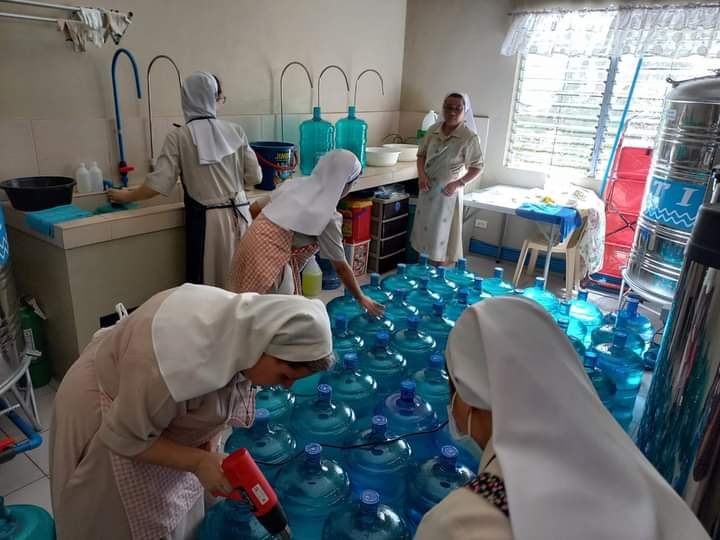
Our two communities of Capuchin Tertiary Sisters of the Holy Family in Negros and in Cebu were also affected, we had damages in our houses and we had no electricity for almost a month. It was a providence that, in Cebu we have just recently open the water station project and there are enough stocks of drinking water for the community. Because of that, the sisters didn’t have problem to get drinking water but their concern was how to help other families also to get water to drink. Since there was no electricity it was impossible for the community to produce water at that time, but then the providence of God poured out. There were people helping the community to make possible to produce drinking water for the people and the sisters  were able to produce more or less 2000 5 gallons bottles container of water. It was a privilege for the community to help people greatly affected by the typhoon.

At this moment Philippines is still in recovery, there are still some places, even here in Cebu where there is no electricity because of the big damage, but the situation is a little bit better compared right after the typhoon.


Categorías
Últimas Noticias

Listening with the ears of the heart

On the feast of St. Francis de Sales, patron saint of journalists, the Vatican has made public the Message of the Holy Father Francis for the 56th World Day of Social Communications, which this year 2022 is announced with the title «Listening with the ears of the heart».

Last year we reflected on the need to «go and see» in order to discover the reality and be able to tell it from the experience of events and the encounter with people. Following in this line, the Pope now expresses his desire to focus one’s attention on another verb, «to listen», which is decisive in the grammar of communication and a condition for an authentic dialogue.

Indeed, we are losing the ability to listen to who is in front of us, whether in the normal scenario of everyday relationships or in debates on the most important issues in civil life. At the same time, listening is undergoing a new and important development in the communicative and informative field, through the various podcast and audio chat offerings, confirming that listening is still essential for human communication.

Francis went on to say in his message: A well-known doctor, accustomed to heal the wounds of the soul, was asked what the greatest need of human beings was. He replied, «The immense need to be listened to.» It is a desire that often remains hidden, but that challenges all those who are called to be educators or formators, or who play the role of communicator: parents and teachers, pastors and pastoral workers, information workers and those who provide a social or political service. 

The Pope based his message of “Listening with the ears of the heart”, in the biblical pages where we learn that listening not only has the meaning of an acoustic perception, but is essentially linked to the dialogical relationship between God and humanity. «Shema’ Israel – Listen, Israel» (Deut. 6:4), the incipit of the first commandment of the Torah is continually proposed in the Bible, to such an extent that St. Paul affirms that «faith comes from listening» (Rom. 10:17). Indeed, the initiative is of God who speaks to us, and we respond by listening to him; but also this listening, in the background, comes from his grace, as happens to the newborn who responds to the gaze and voice of the mother and father. Of the five senses, it seems that the one privileged by God is precisely the ear, perhaps because it is less invasive, more discreet than sight, and therefore leaves the human being freer.

Listening corresponds to God’s humble style. It is that action that allows God to reveal Himself as the One who, speaking, creates man in His image, and, listening, recognizes Him as his interlocutor. God loves man: that is why he addresses the Word to him, that is why he «bows his ear» to listen to Him.

Francis upholds that on the one hand there is God, Who always reveals Himself by communicating freely; and on the other, the man, who is asked to listen. The Lord explicitly calls man to a covenant of love, so that he may become fully what he is: the image and likeness of God in his capacity to listen, to welcome, to give space to the other. Listening, deep down, is a dimension of love.

To read the full message of the 56th World Day you can access from the following link:

https://www.agenciasic.es/2022/01/24/escuchar-con-los-oidos-del-corazon-mensaje-de-la-jornada-mundial-de-las-comunicaciones-sociales-2022/

Photograph taken from the Dicastery for Communications 

Taken from: SIC Agency (Catholic Information Service)


Categorías
Artículos

The Joy of Christmas!

«I bring you good news of great joy for all the people: today a Savior has been born to you, He is the Messiah and the Lord» (cf. Lk 2:10-11).

The Angel said this to the shepherds and they ran in haste to see and found Mary and Joseph with the baby lying in the manger. They all were astonished and returned giving glory and praise to God. The Magi from the East, at the end of their journey, «when they saw the star again, they were filled with great joy and saw the child with Mary his mother, and they knelt and worshiped him and offered their gifts of gold, frankincense and myrrh» (cf. Mt 2:10-11).

The Catholic Tradition, according to each country, has transmitted to us expressions, signs and customs of joy and rejoicing in the celebration of Christmas. Here in Spain, an endearing word has been created: “Nochebuena”, it is the Christmas Eve family dinner, something intimate and sacred; it is the night of «Christmas carols» and of the “Misa de Gallo”, Christmas Mass at midnight; although in some places and due to different circumstances is celebrated some hours in advance.

It is surprising and pleasant to note that Christmas, as a time of celebration and joy, has spread throughout the world; whether for commercial or for some other reasons, cities are filled with lights and colors, and family celebrations multiply. In a word, Christmas is a friendly and festive time in today’s world, but, perhaps for most, with no connection to faith nor to the birth of Jesus.

For us believers, Christmas is Jesus himself. The reason for our joy is the contemplation of the Incarnation: God entered our history to free us from our sin and make us sharers in His Divine Sonship. He pitched his tent in our midst to become part of our lives, to heal our wounds and give us new life. Joy is the fruit of this intervention of salvation and the love of God in us.

 CHRISTMAS, THE TENDERNESS OF GOD

 We can see to the Son of God, made one of us, in the gentleness and weakness of a newborn baby and, furthermore, in the conditions of extreme poverty; a sensitive manifestation of the immense tenderness of God. It was St. Francis of Assisi who intensely lived this dimension: «In preference to other solemnities, he celebrated with ineffable joy that of the birth of the child Jesus; he called it the feast of feasts, in which God, made a little child, was raised at the breasts of a human mother. He pictured in his mind images of the child, which he kissed with eagerness; and the compassion for the child, which had penetrated his heart, made him even to babble words of tenderness in the manner of children. And this name was for him like honey and honeycomb in his mouth» (2 Celano 199).

Later, a follower of Francis, St. Bonaventure, wrote in the same line and in the medieval spirituality of the holy humanity of Jesus, the booklet “The Five Festivals of the Child Jesus”, one of which, that of the Holy Name of Jesus, passed into the Liturgy. Moreover, two years before his death, Francis left us another great testimony: Christmas approaches, he is in the village of Greccio, and moved by his great love and devotion, he represents the Nativity of Jesus according to the Gospel data and with the people of the village: it was the first living Nativity scene, a visible and palpable example of his spirituality of the tenderness of God that later became the universal Christian tradition of “Nativity scene” representation (cf. 1Cel 84-86).

 JOY FOR ALL: Meeting and Sharing

In the angel’s message we are told that the joy announced is for all the people, that is to say, the joy of Christmas implies encounter, communication, shared joy and celebration; there is no feast in solitude, for a feast requires a meeting of people to share life and to share goods as an exchange of gifts.

 The Christmas of the poor

But, particularly, because of our faith, love and justice, joy must reach the poorest and neediest thanks to the generous sharing of all with what each one has. This is what is done in all parishes and institutions, «the Christmas of the poor,» so that joy may reach everyone. This is also the sensibility of St. Francis: «He wanted that on that day the rich should feed the poor and hungry in abundance, and that the oxen and donkeys should have more fodder and grass than usual. ‘If I come to speak to the emperor,’ he said, ‘I will beg him to issue a general decree that all the well-to-do be obliged to throw wheat and grain on the roads, so that on such a great solemnity the little birds, especially the sister larks, may have plenty’ (2 Celano 200). Poetry and mysticism, yes, but is translated into concrete actions!

 And the joy of fraternity

In civil society, in addition to family encounters, other meetings are becoming common at the level of members of organizations, work, etc. Christmas is an invitation to a festive gathering. As believers, it would be very positive to prepare these meetings in religious communities, groups, etc.

How do we want to live spiritually and festively this intimate and beautiful time? With the different initiatives, we can have very pleasant surprises: carols, cribs, decorations, visits… It will be very beautiful to live our Christmas with St. Joseph and the Virgin Mary in the Bethlehem Portal. MERRY CHRISTMAS TO ALL!

“¡Sing to the Lord with shouts of joy because He sent His beloved Son from on high and He was born of the Blessed Virgin Mary and He was placed in a manger because He had no room in the Inn. Glory to the Lord God in the highest and on earth, peace to all men of good will! “ (St. Francis of Assisi – cf. OfP, Psalm XV).

 SR. Mª ELENA ECHAVARREN SORBET, TC

Categorías
Artículos

Christmas in Poland and Germany

The celebration of Christmas, in Poland, is something magical. I will simply share a few “brushstrokes” of this special time.

In Poland we begin to perceive the Christmas atmosphere already in Advent, through the celebration, before dawn, of masses called “roraty”. This name comes from a liturgical song in Latin that begins with the words «Rorate caeli desuper», whose mean is «Drop down dew, ye heavens, from above”.  People participating in “roraty”, especially the children, go to mass holding in their hands lanterns that illuminate the Church in the dark.

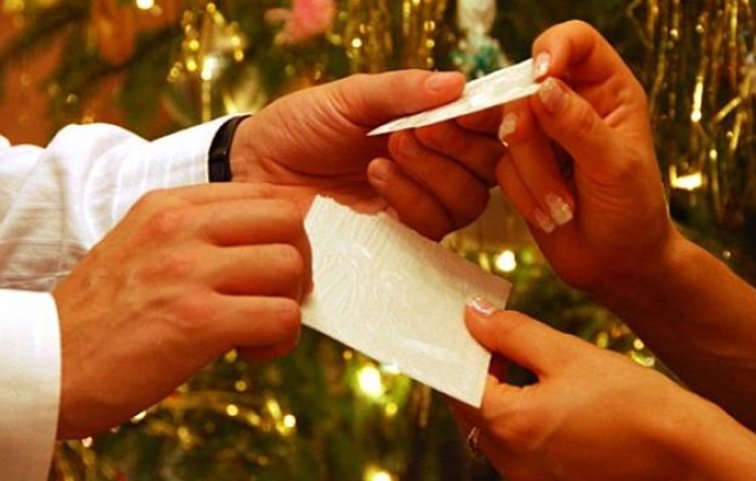
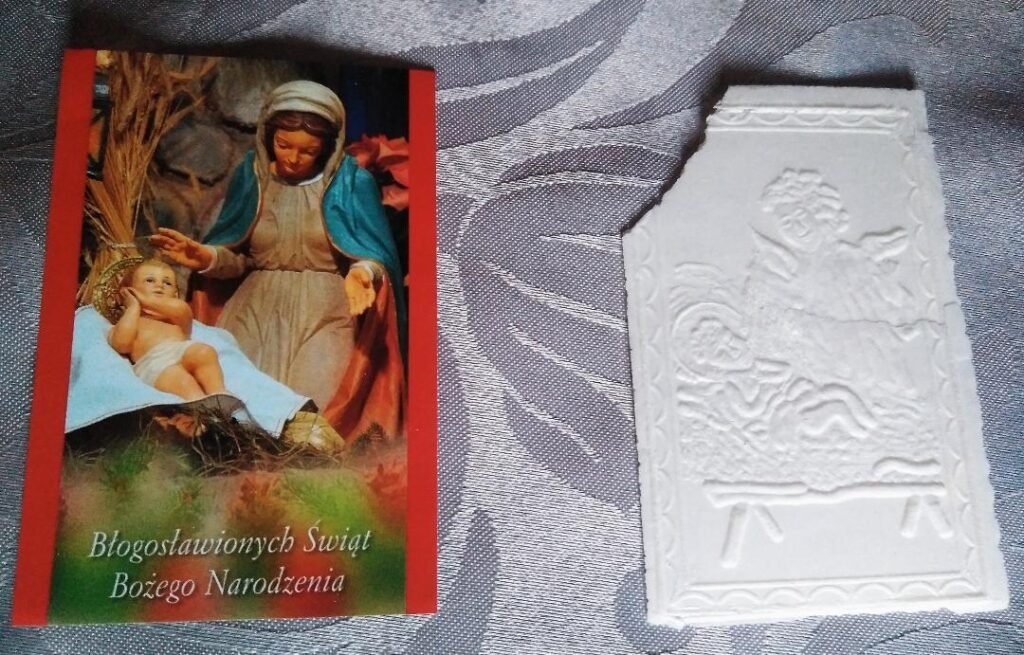
In Poland, Christmas Eve is the culminating moment of the feast day  The Christmas dinner begins as soon as it appears in the sky the first star which recalls the star of Bethlehem leading to the newborn Baby Jesus and it begins with a prayer and the reading about the birth of Jesus from the Gospel of Luke. Afterwards, everyone shares “oplatek” (it is a white bread, of fine consistency, prepared like a host), exchanging Christmas wishes. That is a symbol of reconciliation and forgiveness.

In all the houses, in Poland, it is very common to leave an empty place at the table; we set a chair, a plate and cutlery but nobody will take place there because it is reserved to welcome an unexpected person. We also put some hay under the tablecloth just to symbolize that the new born Jesus was laid in a manger.

The Christmas dinner menu consists of twelve dishes, including beetroot soup with “uszka” (small dumplings stuffed with mushrooms) and carp. After dinner, we enjoy the moment singing Christmas carols (in Poland there are more than fifty of them) and opening presents. At midnight, the families go to the Church to participate in a solemn Eucharist called “Pasterka” and to adore the Child Jesus.

Sr. GOSIA SKIBA, TC

In Germany also, the Advent season is full of traditions and symbols. The cities, streets  as well as many windows of the houses, are illuminated with decorations of lights. In the old quarters of the cities there are Christmas markets.

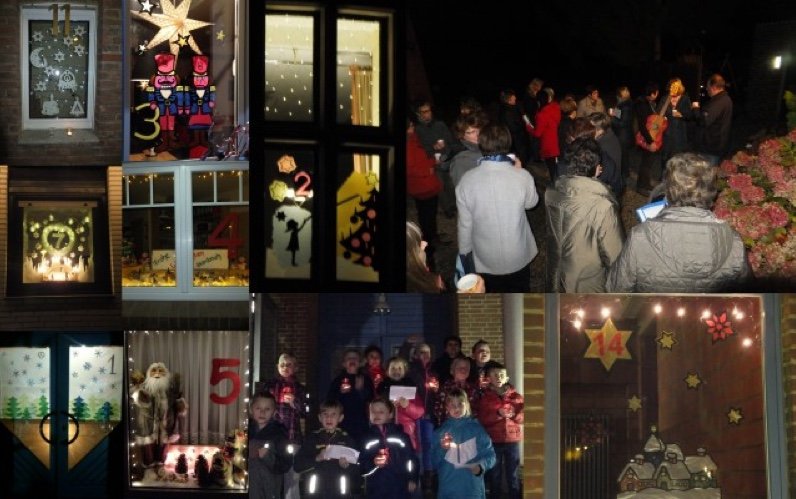
In the evenings, families often light the Advent wreath and around it, people sing, read stories, play games, paint, pray… The Advent calendar also helps, especially the children, to wait and prepare their hearts for Christmas. It is an illustration with 24 windows; every day one is opened, discovering a sweet, a story, a proposal to be made … Since 15 years, in many Christian parishes it is realized a «Living Advent Calendar»: 24 families, institutions or organizations adorn a window of their house. At night their neighbors, parishioners or other people gather in front of this house, whose window is illuminated, read a story, sing an Advent song and, at the end, they drink some wine or a hot juice and eat some sweets, cookies or «Christstollen», a typical Christmas cake, previously made at home.

Christmas Eve is also the most important feast day in Germany; it is the feast day of meeting and union; the family gets together, shares a special meal, exchanges gifts under the Christmas tree and sings Christmas carols … But at present, it doesn’t exist only a single tradition, but each family has its own «tradition». Notwithstanding, there is a German Christmas carol that cannot be omitted in the repertoire of all German families; it is a Christmas carol lifting up the heart, and expressing in a very deep way the Christmas Eve secret: Stille Nacht, Heilige Nacht… (Silent Night).

Sr. URSULA LEUFFEN, TC

Categorías
Artículos

«CHRISTMAS IN OUR HEARTS» – Christmas celebration in the Philippines

Filipinos love to have fun and celebration and Christmas in the Philippines is the world’s longest Christmas celebration. It starts from the 1st day of September, the start of the «ber» months until the Feast of the Santo Niño. «Ber Months» signifies that Christmas is coming. It can be perceived in the decorations and songs in the parks, streets, houses, malls, hospitals, schools, buses, jeepneys, taxis, and other public places.

The Philippines has a lot of customs and traditions, and the most meaningful and beautiful is that of Christmas, a time to be with family and loved ones. It’s a time of thanksgiving, reconciliation and celebration of life and love in the family. A time wherein family members who are out of the country go home to be with their loved ones. And those who cannot go home for some reason, always long and miss being home during Christmas in the Philippines.

As they say, «IT’S MORE FUN IN THE PHILIPPINES!».  It is not only the «fun» but the ambiance, the laughter, and the joy of the people being shared despite many negative situations, poverty, hunger, disasters or natural calamities, etc. If it’s Christmas time in the Philippines, there is a pandemic of sharing, loving, and caring for one another, and there is a lot of fun.

Lastly, one of the main highlights of Christmas is the «SIMBANG GABI», Tagalog word which means » Mass in the Night» or «MISA DE GALLO» («Mass at dawn»). It is a nine-day Eucharistic celebration before Christmas Eve. It is in honor of the Blessed Virgin Mary who carried Jesus in her womb for nine months. This celebration is mostly participated by people who believe that once they participate in the mass completely for nine days, their «wishes or heart’s desires» will be granted by God. Indeed, even the Covid-19 pandemic did not stop the people from attending this celebration. Despite the restrictions implemented, still many people filled with much hope and faith flooded the churches. This somehow shows the resilience of the Filipino people that no matter how difficult or hopeless the circumstances are, there is always that light that radiates in the hearts of every person, the light which is Christ Himself, the God made flesh, and who dwells among us, our «Star ng Pasko» or the «Light of Christmas» that shines in every home, every person, and every family or community even during times of suffering, pain, and poverty.

Despite, the reality of globalization and modernization, Christmas for Filipinos, here in the country and abroad is a «Christmas in our hearts» as the title of the song by Jose Mari Chan, a famous one usually played on the 1st day of September. Its lyrics have a deep meaning, and I would like to cite some of them here: «Let Him be the One to guide us, as another New Year starts, and may the spirit of Christmas, be always in our hearts…» I believe that most of the Filipinos have this plea in their hearts especially those who believe in God no matter what religion they have or whatever situation they are experiencing in their lives. I hope and pray that as we celebrate this Christmas, it is Jesus in the manger we remember and His presence in our hearts and lives we share with others especially with our loved ones, our sisters in the community, and with the people we encounter in the mission.

SR.FRANCES LARAINE ANDRADE, TC

Categorías
Artículos

Christmas in Colombia

Colombia is a South American country whose rich culture is the result of the mixture of Europeans, especially Spaniards, indigenous peoples and African slaves.

For this reason the celebration of Christmas is rooted in this cultural identity and makes it unique, keeping alive the solid inherited Catholic traditions. In Colombia, this is the best time of the year, it is an opportunity for meeting, celebration and family rejoicing. Since the month of October, we prepare the environment, decorating in each village, town and city, the houses and the common spaces. Christmas colors, lights and lighting of this period are worldwide famous for their creativity, showiness and beauty. All the preparation and festivities route towards December 24th, the day when we celebrate the great night of Child Jesus’ birth.

Officially festivals open on December 7th with the traditional “night of the candles” when candles, are lit in the streets, balconies and doors of houses, a gesture to honor the Immaculate Conception of Mary on the eve of her solemnity; the street lights are also turned on and families gather and walk through the glowing streets.

Then it is prepared the Nativity scene which recreates the birth of Jesus through images. Here Saint Joseph, the Virgin Mary, the Child Jesus, the mule and the ox play a leading role; that is a family shared work as well as the decoration of the Christmas tree with colored balls, bows and garlands. These Christmas activities are appreciated for originality and for the love and creativity they request.

From December 16th until the night of the 24th, families gather around the manger to pray the novena of Christmas gifts” and to sing Christmas carols. Here the children have their greatest participation, showing their great joy and letting their dreams and expectations flowing around the celebration of Christmas. It is a Catholic devotion that unites families and today is extended also to the social environment.

When «Christmas Eve» arrives, the last day of the novena is celebrated, preceded by sharing the Christmas dinner, prepared with the typical delicacies according to each regional custom; the common dishes are, among others, the “buñuelos” (fritters), custard and other desserts. Then all those who, with faith and hope, commemorate this beautiful and familiar Christmas eve, share the gifts “left by the Child Jesus”.

The festival lasts until December 25th, solemnity of the Nativity of the Lord. This is a day to enjoy the gifts and to continue singing carols, dancing and gatherings together to share the joy and Christmas spirit.

The Christmas celebrations in Colombia end on December 31st, with the farewell of the old year and the welcome of the new year. Family reunions, dinner, toasts, congratulations and festive celebrations resume until dawn. For a large number of Catholics, it is very important to participate in the celebration of the Eucharist at midnight, both on this day and on the night of the 24th, always according to the reality and family needs.

Liturgically, Christmas culminates with the celebration of the solemnity of the Epiphany of the Lord, or, as it is commonly called, the adoration of the Magi, whose festive relevance in Colombia  is not so important at a general level, although it is so for the Catholic Church.

HNA. BLANCA NIDIA BEDOYA SALAZAR, TC  

Categorías
Últimas Noticias

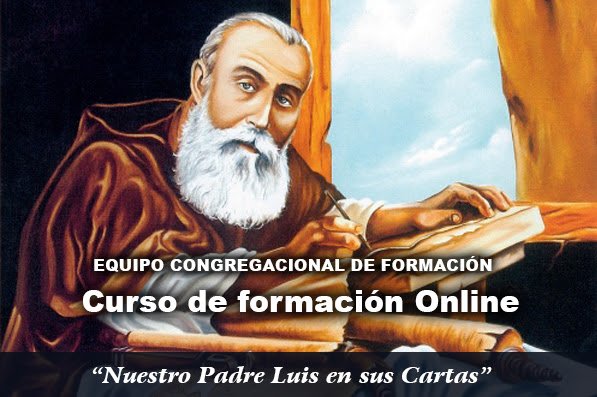
«Our Father Luis in his letters»

Accepting the request of many sisters of the Congregation that like to continue deepening in our Father Founder person of and in our charismatic sources, the Congregational Formation Team organized an online formation course in four sessions, that took place in the months of October (on the 9th and 23rd) and November 2021 (on the 6th and 20th). The presentation, in charge of our Sr. Isabel Valdizán Valledor, developed the theme: “Our Father Luis in his Letters”.

In the first session, Sr. Isabel helped us to consider the Letters within the Luis Amigó’s Complete Works (OCLA) and then she explained that, in the course we had not carry out a critical, historical and much less curious reading of the Letters, but, through them, we had rather got closer to the person of Father Luis listening especially to what he told us, the Capuchin Tertiary Sisters of the Holy Family. She then presented some general aspects, the theme and distribution, the letters  addressed to the Sisters and some important messages we can pick up in them and she concluded that, an increased knowledge of Father Luis leads us to deepen more and more in our own form of life and charisma.

In the session of October 23rd, Sr. Isabel presented Father Luis Amigó putting into evidence some nucleus that, since the beginning, attracted our attention: his dedicated life. He was a young friar loving his Capuchin vocation, an upright and transparent person, free and able to express  his reality; a man charged with troubles and responsibilities but sure that God is “before and above all else”; a person available and obedient, seeking out God’s will at all times; a Capuchin Provincial, brother of his brothers to the core.

Moving forward in the course, the third session began by underlining what «Our Father Luis» was demanding from us and which ones were his advice and clarifications and criteria about our life. Then Sr. Isabel reminded that among all the letters of Father Luis, only 33 are addressed to the Sisters and mainly to the Sisters that were in America, since he was never able to travel there. Father Luis is interested in each sister, in the good of all of them, in the fraternal and congregational communion, in the formation of the young women … and also in promoting that the Sisters seat themselves in settlements and places favorable for the Congregation growth … Other letters are addressed to various people, but their matters is referring to the Sisters. Sr. Isabel put into evidence also some important issues that Father Luis repeats over and over again, issues that worried him and that she took up again referring them to some  concrete situations of life. That is also a call to live in fidelity, in «growth and transformation», following the model that the Lord presents to us in Francis of Assisi.

The last session on November 20th, was about “The daily  life” and it was developed in two questions: «The good government of the communities» and «The resuscitating cross».  Sr. Isabel talked about that with an agile and motivating language: the strong threads through which Father Luis “weaves life”, the organization of his communities when he was Provincial Minister, the orientations and advices to the Sisters, orientating them to get out from complicated situations and to face difficulties; all that is something more than a good «psychology» or an «opportunity»: it helps to discover the meaning of suffering and of the cross, and to get sure that we are in God’s hands.

The course has been widely accepted and highly valued by all the sisters and has left a desire” to want something more”… That is why, in response again to the suggestions received, it has been decided to offer a second part of this charismatic course for the month of February 2022 and its topic will be: «Our Father Luis in his Pastoral Exhortations».