

Categorías
Artículos

Taking up the challenge to be silent in order to listen

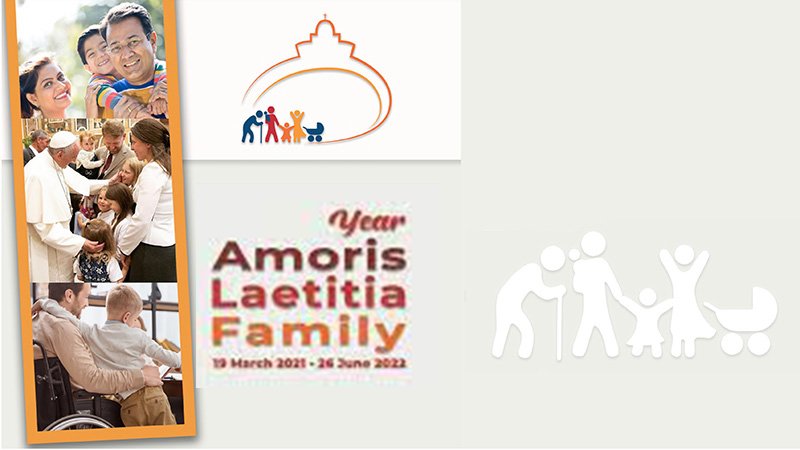
“Amoris Laetitia Family Year”

On March 19, 2016, the post-synodal Apostolic Exhortation «Amoris Laetitia» (The Joy of Love) on the family was signed. This document is a compendium of two synods on the family convened by Pope Francis in 2014, «The Family in the Context of Evangelization» and in 2015, «Vocation and Mission in the Family, in the Church and in the Contemporary World».

Amoris Laetitia marked the beginning of a path that prompted a new pastoral approach to the reality of the family.

Francis explains that the Exhortation «acquires a special meaning» for two reasons: «I understand it as a proposal for Christian families, which stimulates them to value the gifts of marriage and the family, and to sustain a strong love full of values such as generosity, commitment, fidelity and patience» and also «seeks to encourage everyone to be signs of mercy and closeness where family life is not perfectly realized or does not develop with peace and joy».

On the fifth anniversary of the Apostolic Exhortation, Pope Francis announced a year dedicated to families. This year was officially known as the «Amoris Laetitia Family Year» and invited Catholics to reflect on love in the family, enlightened by the Exhortation that captured the experience and challenges of today’s families and their vocation. This Amoris Laetitia Family Year began on March 19, 2021 and will conclude on June 26, 2022 with the 10th World Meeting of Families in Rome.

The Capuchin Tertiary Sister in communion with the Church

For the Capuchin Tertiary Sisters, it represented a pastoral challenge that led them to place themselves in the context of a mission exercised from the confinement, which made germinate in the bosom of the families other pandemics: intra-family abuse, abandonment, divorces, depression, loneliness, vices, senselessness and relativism…

From within the Amigonian Charism springs the concern to motivate the pastoral reflection of this Exhortation and to participate from the creativity of each work and community in the planning and living of this year. Pope Francis has dedicated the Family Year Amoris Laetitia to the Holy Family of Jesus, Mary and Joseph, patrons of the Congregation of the Capuchin Tertiary Sisters of the Holy Family and models close to our humanity, who in their availability to do the will of God, their obedience and listening continue illuminating and marking the way to build the domestic church.

St. Joseph, Custodian of the Year of the Family

To propose St. Joseph as the custodian of the Year of the Family is to affirm him as an example of paternal love and of the value and dignity of work. According to tradition, he worked as a humble carpenter in the town of Nazareth. Today, after three years marked by the pandemic (COVID 19), both paternal love and the dignity of work have become essential to the health and well-being of our families and communities. This paternal love given to Mary and Jesus gave them support and freedom; and today it teaches us to stop and let ourselves be accompanied by the spirituality of Nazareth, the spirituality of listening, dialogue and obedience.  

In the action of listening, it is necessary to be silent and empty ourselves of words. In the Holy Family of Nazareth this silence was available and generous, capable of making God’s dream come true: «You will be the mother of Emmanuel … be it done unto me» (cf. Lk 1:26-38). «He took Mary and the child and fled to Egypt … he set out while it was still dark» (Mt 2:13-14), thus bringing to life the words that Jesus would later say: «Blessed are those who hear the word of God and put it into practice» (Lk 11:27-28). It is in the bosom of the home that Jesus as a child learned that He was blessed and happy. It is in the family that we learn to listen in order to follow instructions and obey.

Proposal

It is necessary that the culmination of the Year of the Family becomes a new propositional stage, where we can continue writing the post Amoris Laetitia pages and that the emerging and hidden realities within the bosom of the family be accompanied and enlightened by this Post-Synodal Letter.

Let us practice the life of silence to listen to God, to listen to ourselves and to each other, because only in this way can what is creative, what is new, what God wants to awaken within the Church, within our domestic church, emerge.

To walk in synodality is the proposal that moves the heart of the Church today and it will be from the commitment of each member of the family that welcomes and lives its role, where it will be possible to listen, discern and build the necessary dialogue to rescue life and love in the family.

May Mary, Mother of the Church and Queen of families, intercede for us.

SR. MARIULIS GREHAN, TC

Categorías
Artículos

Approaching today’s youth and their choices

We want to begin this sharing, which more than an article is a reflection of our experiences, thanking the Capuchin Tertiary Sisters of the Holy Family for guiding and teaching us, but above all for giving us a voice in a world where silencing lives is easy.

We are Carolina and Santiago, two young Colombians, residents in the city of Medellin; we are 26 and 27 years old respectively and we want to tell you a little of our experience, with no other pretension than to bring you closer to the youth of today and our options. We have been involved in youth processes for more than ten years, starting in this beautiful story; thanks to the invitation of one of the sisters.

Belonging to a youth group, in particular to JUVAM (Amigonian Youth) was not seen for us as an option, considering that in our minds we had what the world offered us, empty experiences devoid of meaning and that filled us momentarily.

For many young people, going against the current could resemble a risk in terms of the social environment, being singled out, stigmatized and sometimes persecuted; approaching the message of Jesus at this time can be an act of rebellion, in a world where it is much easier to always put the cold and calculating mind in data, money and statistics, leaving the heart aside, without being empathetic with those who suffer, being indifferent; there Jesus invites us to move life.

In this way we began our JUVAM process, allowing us to be moved from within, learning to be docile to the project that Jesus showed us for our lives, awakening that sensitivity to the pain of our brothers, passionate about His message; there, each one and together gets as a team, we grew spiritually and approached what would be the mission entrusted by God, to be wife and husband, the best «team», with God at the center.

Nowadays, to talk about a project, for many young people can be overwhelming, tedious and old-fashioned, it is thought that one must plan on the way or simply go through each challenge that arises, but undoubtedly, through our youth process, from our Diocese in Caldas, Antioquia, we can say that there are young people who are passionate about life, sensitive to their brothers, critical of what happens in their environment, active in the areas and spaces where decisions are made that impact them.

In the youth, we find diversity, there are nature lovers, crazy about reading and other forms of art and expression, with whom we can have an excellent conversation; able to make their way and find in all these details and life options.

Approaching young people would not be possible if we see them through the stigma; we must see them in their integrity and what they represent for the world, a vital force capable of mobilizing and giving meaning to their projects. In this sense, Jesus is the example to follow, capable of clinging to and loving to the extreme the project that the Father designed for His earthly life.

We cannot end this article without inviting you to let yourself be moved by God’s strength, which invites us to take risks, to be courageous in moments where adversity can darken our path, but always with the faith and hope that, guided by the Spirit and motivated by the message of a young Jesus, we will find the best option.

Peace and Goodness!

With affection,

CAROLINA & SANTIAGO

Categorías
Últimas Noticias

UISG plenary session: How the synod changes religious life

The newspaper of the Holy See, «L’Osservatore Romano», has published a final report on the five-day Plenary Assembly of the International Union of Superiors General (UISG), held in Rome from May 2-6, 2022 on the theme: «Embracing Vulnerability on a Synodal Journey».

The Assembly concluded on the evening of May 6 in Rome. More than 700 women religious, heads of congregations from all over the world, gathered on the above-mentioned dates, giving life to a rich debate of which we have tried to give an account in the articles published in this newspaper during the week.

Embracing Vulnerability on a Synodal Journey

For the first time, the assembly was held in a mixed set-up: five hundred sisters in person and another two hundred online. Each day, a prayerful meditation opened the proceedings. Mary, Elisabeth and Ruth, icons of vulnerability and synodality, did not only accompany the sisters each day, but above all, they reminded that: «Through our vulnerability and synodality, God can work wonders».

Sister Jolanta Maria Kafka, President of the UISG, opened the assembly by expressing the hope that «in the light of Christ, our hope, our work can reach the greater assembly that is the Church.

Many speakers offered reflections on vulnerability and synodality. According to Ted Dunn, an expert in psychology, «embracing our vulnerability is part of an inner interpersonal transformation.» Although today «religious life faces tortuous crossroads, in grace it will rise again,» he stressed. Three religious shared their personal experience of dealing with vulnerable situations in the course of their vocation.

Sister Carmen Mora Sena (who spoke on «being a leader in times of pandemic») said she was convinced that «the model of leadership in communities that we need today must be nurtured by an awareness of vulnerability».

Sister Anne Falola («as a missionary») shared her discovery of being a minority in the place of her mission: «Living the kenosis of Christ places religious women in a situation of objective vulnerability».

And Sister Siham Zgheib («in conflict situations») recounted her experience of life in the Syrian civil war, specifically that of «living in permanent danger of being kidnapped, tortured, raped, forced to wear the hijab, but above all with the fear of being forced to deny our faith.» She resisted, thanks to the thought of the cross, the Eucharist and the words of the foundress of her congregation, the Franciscan Missionary Sisters of Mary: «In the time of darkness, decisions made in the time of light cannot be changed».

During the plenary assembly there was also space for reflection on religious life in the time of the pandemic, «a time among the worst but also among the best,» as defined by Sister Patricia Murray, Secretary of the International Union of Superior Generals, since the online report favored the establishment of new contacts among the different congregations, across different cultures and geographical borders.

Jessie Rogers, dean of Saint Patrick’s College, Maynooth, Ireland, recalled how the sisters can always make visible «the footprints of God», on the one hand by remembering the past and, on the other, by forgetting «just enough to open a space for the newness of God». This is possible through the wonder of contemplation, compassionate attention to others, a robust hope and an intimate conviction that: «The foolishness of God is wiser than human wisdom».

Sister Nathalie Becquart, Undersecretary of the Synod of Bishops, and Jesuit Father David McCallum, for their part, insisted on the contribution that religious women can make to the synodal process and also on how it can radically change religious life.

After the emotional meeting with Pope Francis on Thursday 5, the work concluded with the participation of the Superior Generals in working groups organized in continental groups. Sister Gemma Simmonds and Sister Maria Cimperman presented to the participants a summary of the indications that the various congregations have already communicated to the Synod Secretariat.

Before the closing Eucharist, presided over by Fr. Arturo Sosa Abascal, Superior General of the Society of Jesus, the President of the International Union of Superiors General, Sr. Jolanta Kafka, declared, «We conclude this assembly enlightened and strengthened: for this I thank all those who have contributed to its development.»

Source: L’Osservatore Romano

Categorías
Últimas Noticias

We walk together in communion, participation and mission with…

The Walk 2022, besides remembering the martyrdom of Alejandro and Inés, 35 years after their death (July 21, 1987), also encourages us to the current commitment to walk with/as people of God, with/as the simple people of the Amazon.

The 16th Walk 2022 will have three modalities: on foot, by bike and virtual, to facilitate the participation of the greatest number of people, according to their possibilities, but always from the same spirit: «We walk together in communion, participation and mission», that is, in tune with the invitation of Pope Francis to the whole Church.

Our fundamental motivations to carry out this walk are:

To know and make known the life, mission and dedication of Alejandro and Inés, as witnesses who encourage us in our present life and choices.

To assume the signs of the times and the challenges of the reality of this moment: health pandemics, poverty, violence, contamination, extractivism and corruption.

Encourage and strengthen the missionary option from inculturation and interculturality, with an ecological reality damaged by pollution, but that encourages our lives to build and announce the Kingdom of God «so that all may have life».

Let us allow ourselves to be enlightened and inspired by the Latin American and Caribbean Ecclesial Assembly and the Synod of Synodality, encouraged by Pope Francis.

 Source: website alejandroeines.org

Categorías
Últimas Noticias

Pope Francis will make an apostolic trip to Canada

Photo: Audience with the members of Métis National Council, March 28, 2022

«We are immensely grateful to the Holy Father for having accepted our invitation to continue the path of healing and reconciliation with the indigenous peoples of this land».

With these words, the Bishop of Saint-Jérome, Raymond Poisson, President of the Canadian Bishops’ Conference, welcomed, on behalf of the Catholic bishops of Canada, the official confirmation of the Pontiff’s visit.

In fact, on May 13, the Holy See Press Office issued a statement stating that after having accepted «the invitation of the civil and ecclesial authorities and of the indigenous communities, the Holy Father Francis will make an Apostolic Journey to Canada from July 24 to 30, visiting the cities of Edmonton, Quebec and Iqaluit».

Genuine desire for truth, justice and healing

As the statement of the Canadian Bishops’ Conference sent to Fides recalls, from March 28 to April 1 the Holy Father heard from the indigenous delegates, accompanied by some Canadian bishops, «the stories of those who have suffered at the hands of members of the Catholic Church and responded with compassion, sorrow and a genuine desire for truth, justice and healing».

The Issue of Residential Schools

The visit of the Canadian Native delegations is part of the process called «Indigenous Healing & Reconciliation», undertaken by the Canadian Conference of Catholic Bishops and the Canadian Indigenous Catholic Council (CICC), aimed above all at healing the painful issue of the residential schools, those institutes initiated at the end of the 19th century by the Canadian government and entrusted to the local Christian Churches, including the Catholic Church. In these schools, created with the aim of integrating the natives and active until the 1980’s, the children were often abused and mistreated, and ended up paying by their lives their diversity.

The words of the Pope

Pope Francis expressed his dismay and sorrow during the meeting after learning of the discovery of the remains of 215 children at the Kamloops Indian Residential School.

«I follow with sorrow the news from Canada about the gruesome discovery of the remains of 215 children, students of the Kamloops Indian Residential School, in the province of British Columbia. I join the Canadian Bishops and the entire Catholic Church in Canada in expressing my closeness to the Canadian people, traumatized by this shocking news. The sad discovery heightens our awareness of the pain and suffering of the past. The political and religious authorities of Canada continue to work with determination to shed light on this sad event and humbly commit themselves to a path of reconciliation and healing.»

In September, the Canadian Conference of Catholic Bishops issued a statement expressing its «remorse» for the mistreatment and death of thousands of Native children in schools that the government entrusted to Catholic communities as part of its Native Integration Policy.

Pope Francis was personally invited by Inuit delegates to visit the North during their March meetings.

«We continue to walk together on this important journey of healing and reconciliation.»

Source: Vatican News

Categorías
Artículos

The synodal way, the capitular way

The Synod of Bishops is in itself an Assembly of Bishops from the different regions of the world, although the Pope always invites religious and lay men and women, not only as listeners but also with the possibility of intervening and offering their point of view. The ordinary Assembly is usually held in October, every three or four years. The Synod of Bishops is an ancient ecclesial institution, which was revitalized by the Second Vatican Council (1965).  The First Assembly was held in October 1967, and the last one, the XV, in 2018. In addition, three extraordinary General Assemblies and ten special Assemblies of continents or regions have been held during this time.

Unlike the Councils, which have the capacity to define dogmas and legislate (always with the Pope’s permission), the Synods are only consultative and their primary mission is to advise the Pope on the proposed theme (diverse in each Assembly), sharing the vision of the different realities of the world and strengthening unity as a universal Church.

Now, since October 2021, we are already working at the level of all the Dioceses on the XVI Assembly of Bishops to be held in October 2023, with the theme of synodality. We are all called together for a synodal Church: communion, participation and mission. «Synodality» means «walking together» and is what best realizes the nature of the Church, a community of believers united as brothers and sisters around Jesus, the pilgrim People of God to bring the light of the Gospel, sowing love and hope to our world.

It is the Pope’s wish that all the People of God be able to participate, that is, all the baptized without exclusion: bishops, priests, consecrated and lay faithful, including those who are in the marginal situations. That a participatory and inclusive ecclesial process be lived, so that all can express themselves and be heard and take advantage of the richness and variety of gifts and charisms that the Spirit freely distributes for the good of the community and for the whole human family.

This journey together requires a spiritual process of truly listening to one another, to the tradition of faith and to the signs of the times, so as to discern together what God is saying to us. Communal discernment will help to build flourishing and resilient communities for the mission of the Church so that it can better walk together with the whole human family under the guidance of the Holy Spirit.

Well, a General Chapter, like the XXIII General Chapter that the Capuchin Tertiary Sisters of the Holy Family will celebrate in Rome from September 8 to October 4, 2022, is like a Synod at the level of the Congregation and, rather, it resembles a Council for its decision-making power that marks its future journey as a Congregation and where the Superior General and her Council are elected. Together, in synodality, our identity and mission at the service of the Church and the world are strengthened and expressed in the participation, communion and collaboration of all the members, this «walking together», with the same spiritual attitudes indicated when we speak of a Synod.

Here is the logo and motto of our Chapter, the theme of which is: «Strengthened in the Spirit, we embrace our reality and the suffering humanity, moving forward with hope on a synodal journey.  

The coincidence of both events is providential: walking together! it is our identity as a Congregation; we profess the same Constitutions, we are animated by the same spirit and charism and, living it as an authentic fraternity of love and mission, characterizes us as followers of Francis of Assisi, the humble universal brother, as well as the traits of openness to others, and apostolic passion, which our Father Founder, Luis Amigó, left to us.

All of us are already immersed in this synodal, ecclesial and Chapter process, trying to make room for the Spirit to guide us and make us instruments of salvation together with the other believers and, in particular, with our Sisters of the Congregation. We have already held the “conversations” with the General Council and we continue the other activities of evaluations and elections and, above all, our daily prayer asking for the action of the Spirit in the whole process of the Chapter.  

As commended by our General Superior, Sr. Ana Tulia Lopez, let us be synodal women, beginning in our own community, humble in listening with our hearts to God, to his Word, to one another and also to the suffering humanity that surrounds us and that we serve in particular in our apostolates.

Opening ourselves to the action of the Holy Spirit, we will be able to experience marvels; in the words of Pope Francis to the youth, «Dreams will sprout and hopes will blossom» and we will give the response of fidelity that corresponds to us.

Sr. Maria Elena Echavarren, TC

Categorías
Artículos

Accompaniment after the icon of Abad Menas

The desire and interest in icons aroused in me, some time ago, when I came close to the explanation and the profundity of the icon of San Damiano and discovered another way of approaching a biblical text, because of the theological meaning that they contain and I have liked the richness of this art and the implications it has on our spirituality.

When our sisters from the Communication Team asked me to share my experience of accompaniment after this icon, I felt happy and, with pleasure and simplicity, I share it because in some moments of this journey in formation it has been a motivation for my prayer and inspiration in the delicate task of accompanying.

THE WORK AS A WHOLE:

We are dealing with a Coptic icon (Egyptian Church) from the 4th-7th century, from an Egyptian monastery and which is currently in the Louvre Museum in Paris. The icon measures approximately 57x57cm and is 2cm thick.

When Coptic art got converted to Christianity (from the 5th century), it began to incorporate religious themes into its works. This is how the icon arose there. For the Orthodox Christian, the icon is a portable sacred image object of veneration and worship, in the same way as the relics of saints and martyrs.

In the 5th century, an innovative style was created based on the alteration of anthropophysical proportions and measurements, there came, the features of the square. The Friendship Icon (as it is known) incorporates that style. The work of Christ and Abbot Menas is framed in a square support of hardwood, which was the typical material of the time to make icons (pray with icons.com Granada).

I want to highlight four aspects of this work and its relationship with the accompaniment.

  1. FRAMED IN A CONCRETE ENVIRONMENT

Although it is not easy because they seem static, it could be said that they are in a natural area, on the way, because of the kind of golden color that resembles the dust of the feet; furthermore, the position in front indicates movement.

Formation is carried out from a specific context and environment, it is to accompany a person located historically and geographically in a society, a human group, a culture, a family.

The text of the disciples of Emmaus, which has become a paradigm of accompaniment, can be applied to this icon: «Jesus in person approached and began to walk by their side» (Lk 24:15). In addition, another text that expresses familiarity, affection and involvement is Jn 15:15: «I call you friends because I have made known to you everything I learned from my Father». There is a comment by Carlos Mesters that can help us deepen and act on his gestures and words in our formative processes and environments. This is how he describes it: “Jesus is the Friend who lives with and forms for life: he ate with them, walked with them, suffered with them. It was through this coexistence that they were formed” (3rd week of Catechesis Brazil X/2009).

It is the vital experience of someone who accompanies us always feeling on the way, discovering how the life of Jesus and his following transforms and fills our own life and that of the one accompanied with meaning. It also expresses the pedagogy of Jesus in accompaniment, closeness, proximity without attachments.

  1. THE FRIENDLY GESTURE OF JESUS ​​ WITH ABBOT MENAS

One of the most significant gestures of Jesus is the human warmth expressed in trust, welcome, kindness, acceptance, freedom, essential elements for accompaniment. The one who accompanies is an open person, available, willing to accompany whoever comes, with responsibility and awareness of their limits. It doesn’t matter if they are healthy people or with more complex biographies; the unconditional acceptance of the person and what they express, sincere openness without moralism or confusion, acceptance of their own rhythms – the basic qualities to walk together with others who have been entrusted to us.

  1. THE FACE, THE LOOK OF THE ABBOT IS OF A CERTAIN FEAR, AMAZEMENT, CONFLICT, SURPRISE OR ILLUSION

Attitudes that contrast and are manifested in many of whom we accompany, expressing humility, openness, strangeness or perhaps an «I love you» just as you are. Ways of being that we find and that invite us to cultivate minority and to put aside the superficial, appearances, prejudices. Always have an appreciative look in front of each sister and person that comes our way along the way.

It invites us to exercise in the art of learning to listen, to widen the heart so that proximity occurs and the true encounter that helps in on many occasions heals and restores.

The very experience of letting ourselves to be accompanied, the ability to express our life in front of those who accompany us, teaches us to be patient, understanding and compassionate with others and enables us to find the paths that make us grow and advance.

  1. JESUS ​​HOLDS “THE BOOK OF THE GOSPELS”, ABBOT MENAS THE PAPYRUS SCROLL

Like Abbot Menas who wrote down what he wants to learn from Christ, or what Christ teaches him. It expresses an attitude of receptivity and welcome towards the learning process, a process that occurs along the way in the events of life.

The gesture can also be applied at the recognition of the formandee, as a formation tool for the formator; we form ourselves, we grow, forming and accompanying others. It shows that in the dynamics of formation there is a mutual enrichment and encouragement of a lifestyle.

Let us allow ourselves to be gazed by this Good Friend who has called us to follow Him. That in our mission we feel the closeness, the affection, the dedication that Jesus offers with a certainty that despite the fact we give our best, we are weak instruments in his hands because….

Nobody went yesterday,
nor goes today,
nor will go
towards God
by this same path
that I am going.

The sun keeps
a new ray of light for each man… and God
a virgin path (León Felipe)

HERLINDA INÉS MAESTRE GÁMEZ, TC

Categorías
Últimas Noticias

137th Foundation anniversary of our Congregation Capuchin Tertiary Sisters of the Holy Family

On May 11, the Congregation of Capuchin Tertiary Sisters of the Holy Family celebrates the 137 years of its foundation.

To commemorate this event, is to remember with gratitude the cradle of the congregational origins since the year 1885 under the protection of «Our Lady of Montiel», whose Sanctuary is located in the town of Benaguacil, Valencia – Spain.

The foundation of this Congregation arose as a response to the action of the Holy Spirit who, at the time, inspired the young Capuchin Friar Luis Amigó y Ferrer to give birth to it, making it a gift for the Church and a response to the «signs of the times» which, at the time, translated into caring for the most needy brothers and sisters, particularly in hospitals, educational centers, orphanages and missions. The Gospel and the Franciscan-Capuchin spirituality were its reference points to.

Today, as in the past, the Congregation continues to give life and update the Charism received, in fidelity to the Spirit and purpose that saw its birth, open to the new poverty and reality of the people. It is present in four continents and 34 countries.


Categorías
Últimas Noticias

International day of families

The International Day of Families is celebrated every year on May 15, in order to raise awareness of the role of the family in the education and formation of children from early childhood, as well as to promote family ties and family unity.

The origin of this important date dates back to the eighties. However, in 1994 the United Nations General Assembly proclaimed this day official, taking into account that the family is the central nucleus of any society.

Since then, the International Day of Families has been an emblematic date to highlight the value of the family worldwide. Human beings depend on the family to achieve a healthy and complete integration in their environment and thus reach levels of coexistence, where the rules and norms that govern society are respected.

SOURCE: DIAINTERNACIONALDE.com

Categorías
Últimas Noticias

On may 15, The Church will have seven new saints

The Holy Father has set the date for the canonization of seven Blessed men and women, which could not be set because of the pandemic, as he had decreed in the Ordinary Public Consistory of May 3. This was reported by the Holy See Press Office in a communiqué recalling that they will be canonized:

Lazarus, called Devasahayam, layman, martyr; Cesare de Bus, priest, founder of the Congregation of the Fathers of Christian Doctrine; Luigi Maria Palazzolo, priest, founder of the Institute of the Sisters of the Poor – Palazzolo Institute; Giustino Maria Russolillo, priest, founder of the Society of Divine Vocations and of the Congregation of the Sisters of Divine Vocations; Charles de Foucauld, diocesan priest; Maria Francesca di Gesù (born Anna Maria Rubatto), foundress of the Capuchin Tertiary Sisters of Loano; Maria Domenica Mantovani, co-foundress and first Superior General of the Institute of the Little Sisters of the Holy Family.

The Pope highlights the «Christian life and exemplary holiness» of these seven new Blessed men and women.

Source: Vatican News