

Categorías
Últimas Noticias

The eruption of the volcano of La Palma island (Canaries – Spain)

On September 19th, the volcano on the island “La Palma” (Canaries – Spain), started erupting and causing around itself numerous earthquakes continuing to this day, throwing gases and ash into the air and emitting a large amount of lava that, once solidified, creates rocky structures that are modifying the landscape and, reaching the sea, forms new islands in this archipelago of the Atlantic Ocean, belonging to Spain.

Thanks to God, until now, the eruption has not caused victims but the damage suffered in the island’s agriculture (banana trees, vineyards, avocados and other crops), the air  salubrity that is increasingly becoming toxic, is incalculable as well as the suffering of the inhabitants of this wonderful land that, although they have promptly executed the evacuation order, have lost their homes, their memories … and their work activities that have been seriously affected as well as the infrastructures.

Once again, a natural calamity, this time not produced by environmental pollution, is affecting the lives of many people and leads man to wonder at the uncontrollable forces of nature and to question about the meaning of existence that suddenly may change et obliges us to a new organization of our life and future.

On the other hand, the solidarity movement generated around the emergency situation is worth to be mentioned. Not only the Government of the Nation and the Canarian community, but also several associations and groups of anonymous citizens from  different parts of the country or foreigner, have spontaneously organized themselves and joined to collect funds, send them to the victims and to think about the reconstruction of everything devastated by the volcano. Truly, human suffering and weakness are privileged spaces to move man to solidarity, to let come out the best of people’s hearts and to create bonds of brotherhood.

Categorías
Últimas Noticias

The chapters in Latin America

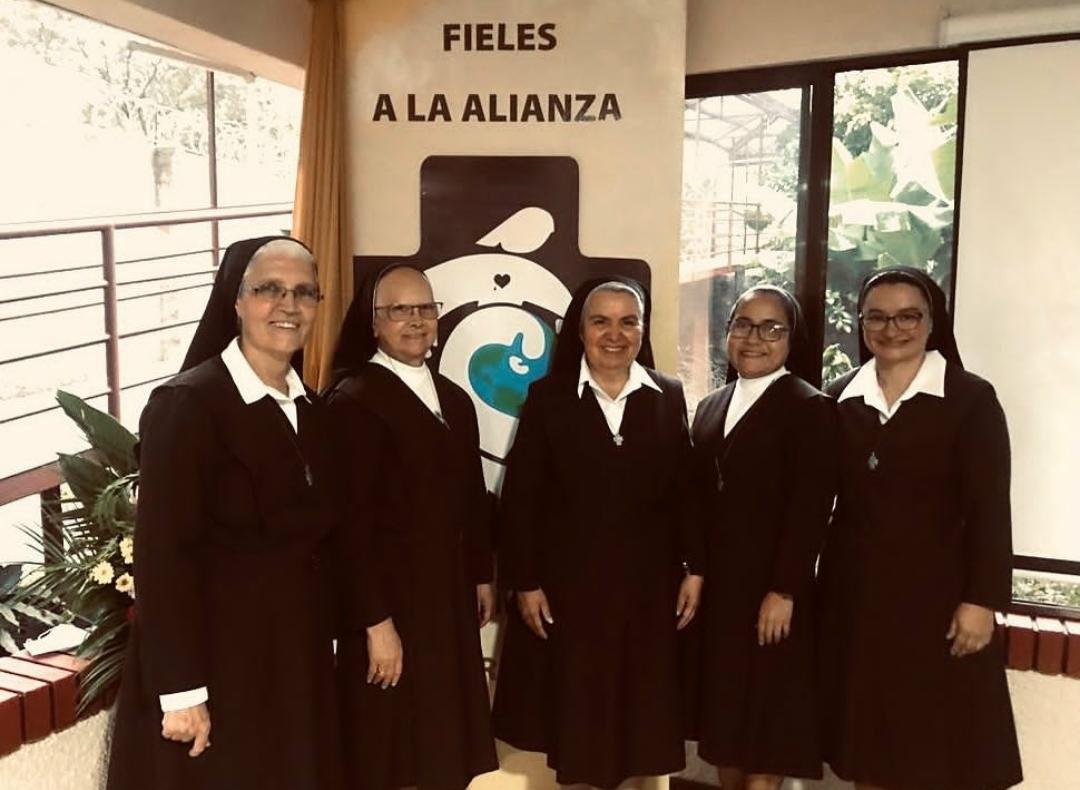
In the month of August 2021 the three Provinces of Latin America celebrated their Provincial Chapters whose aim, in accordance with the n. 139 of the Constitutions, is to evaluate the progress of the Province, to draw the way to undertake for the new triennium and to elect the Provincial Government, the team of Sisters that  will accompany the life of the Province in the years 2021 – 2024.

Each Chapter was celebrated in three phases and the first two ones, once granted the necessary authorizations of the Holy See through the Congregation for Institutes of Consecrated Life and Societies of Apostolic Life, were carried out virtually: in the first one, all the sisters of the Province were involved and in the second  one, only the Capitulars. Instead, in the third phase, participated face to face, the Sisters that are carrying on a special role within the Province or were elected as representatives of all the Sisters.

In the context of each Chapter, the election of the new Provincial Superior and her Council that will animate the life of the Province has a great importance.

Here below we give a short information about each Chapter of Latin America.

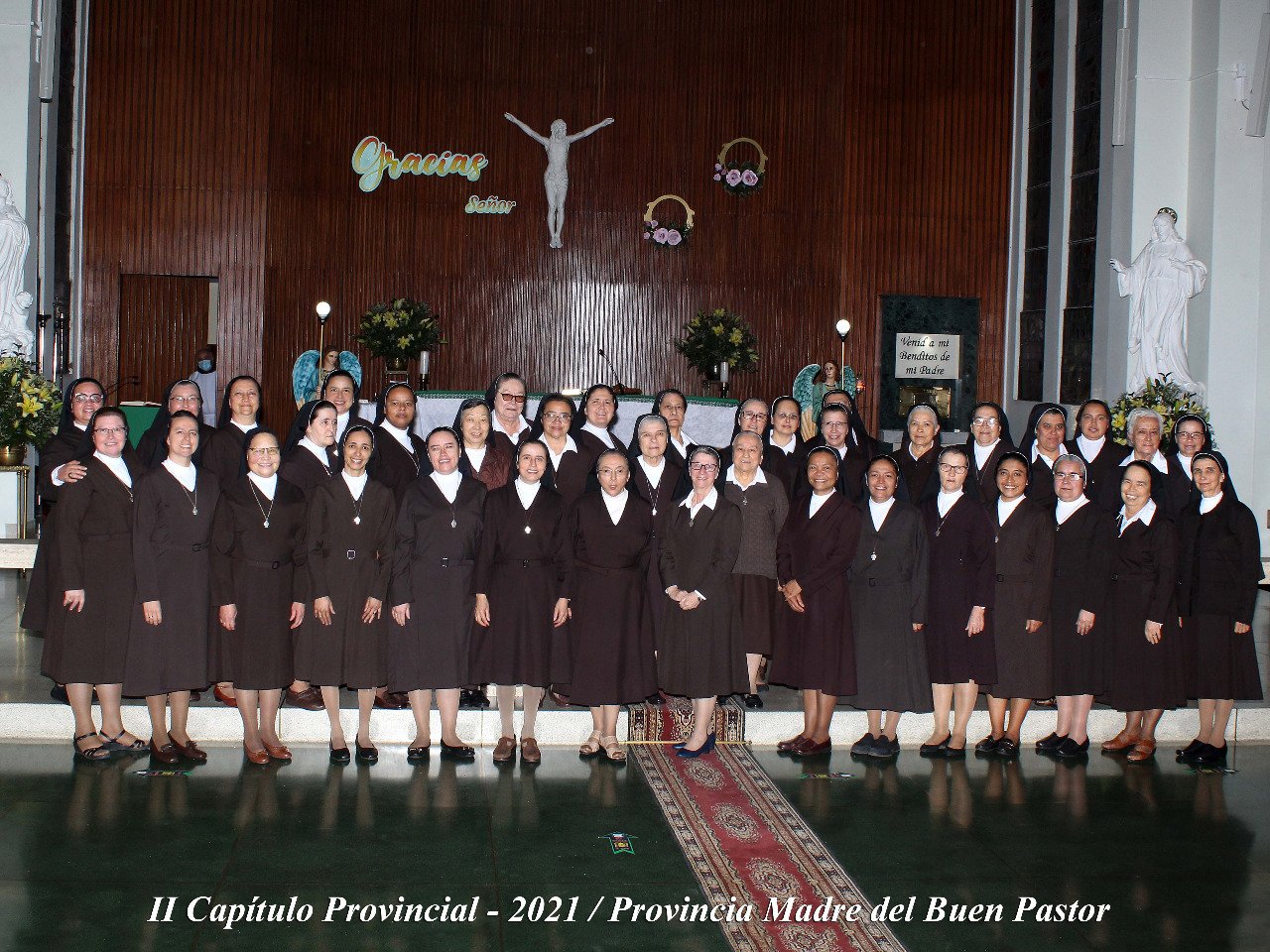
Province «Mother of the Good Shepherd»

-Bogotá (Colombia) from 12th to 16th August 2021; it was chaired by Sr. Ana Tulia López Bedoya, General Superior

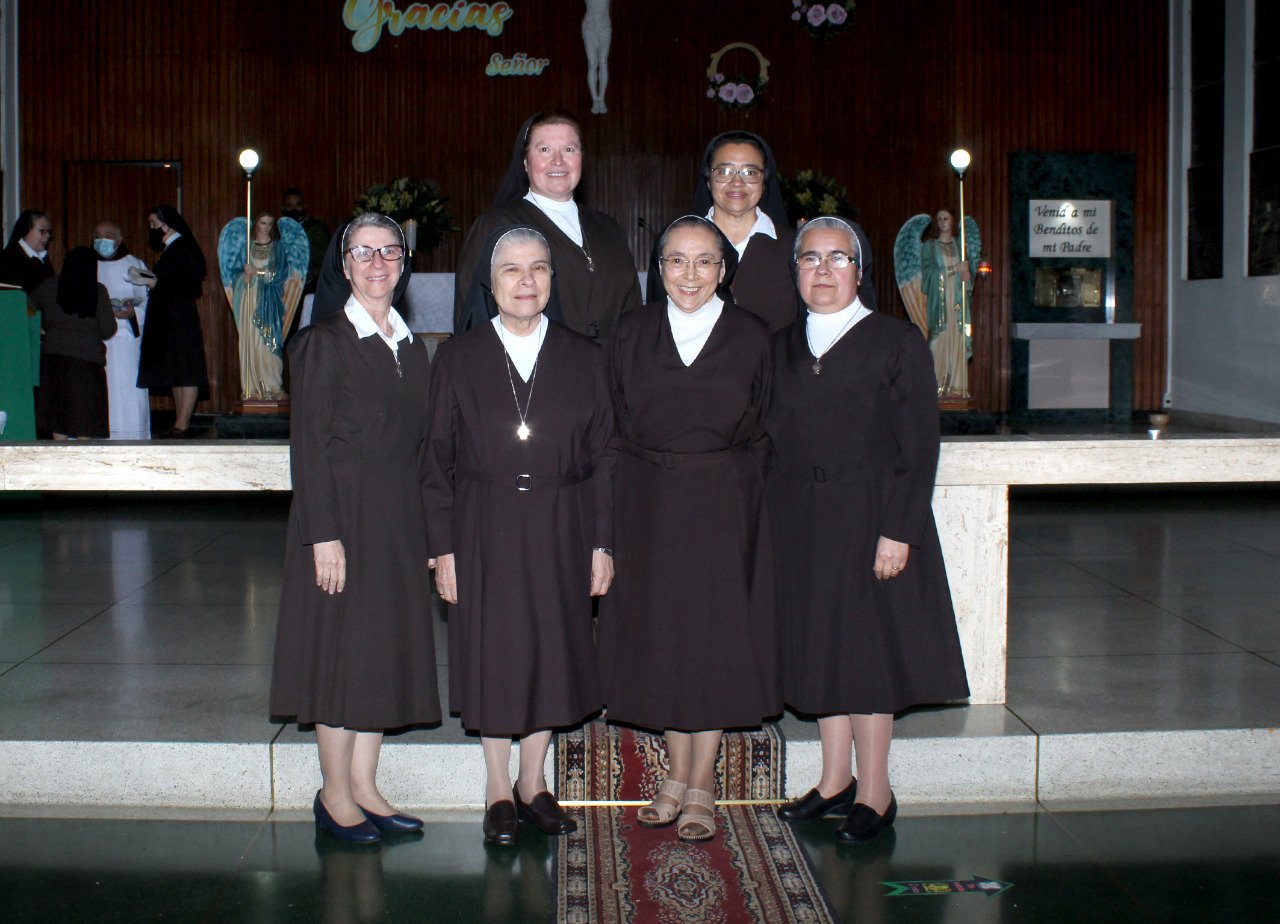
-New Government Team:

  • Provincial Superior: Herlinda Inés Maestre Gámez
  • Provincial Vicar: Sonia de Fatima Marani Lunardelli
  • 2nd Provincial Councilor: Rosa Alix Fajardo Gómez
  • 3rd Provincial Councilor: Marta Cecilia Ibáñez Valdebenito
  • 4th Provincial Councilor: Ana Dolores Mora Gantiva


Province «Our Lady of the Divine Providence»

-Medellín (Colombia) from 12th to 16th August 2021; it was chaired by Sr. María Luisa García Casamián, General Vicar

-New Government Team:

  • Provincial Superior: Aleyda del Socorro Garcés Fernández
  • Provincial Vicar: María Carmenza Ríos López
  • 2nd Provincial Councilor: Rosalba Gómez Duque
  • 3rd Provincial Councilor: Janeth Adriana Cadavid Meneses
  • 4th Provincial Councilor: Sylvia Yolanda Muñoz Muñoz


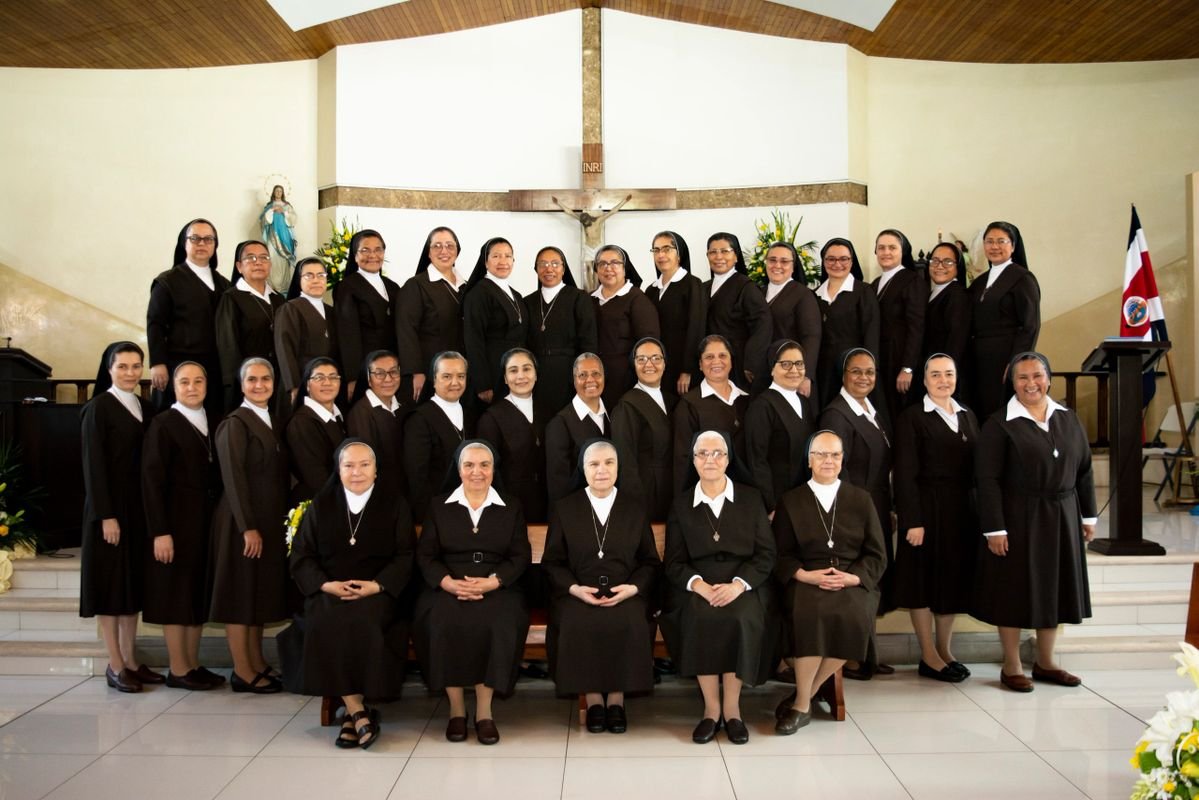
Province «Our Lady of Guadalupe»

-La Ribera de Belén (Costa Rica) from 19th to 23rd August 2021; it was chaired by Sr. Ana Tulia López Bedoya, General Superior

-New Government Team:

  • Provincial Superior: Yolanda de María Arriaga Ruballos
  • Provincial Vicar: María Eugenia Rodríguez Murillo
  • 2nd Provincial Councilor: María Dolores de Sousa Carneiro
  • 3rd Provincial Councilor: Isabel María Meléndez Pineda
  • 4th Provincial Councilor: Maribelle María Umaña Machado


************************************************************************************************************************************************


II Capítulo provincial 2021 / Provincia “Nuestra Señora de la Divina Providencia”


II Capítulo provincial 2021 / Provincia “Nuestra Señora de Guadalupe”

Categorías
Últimas Noticias

The Pope’s visit to the heart of Europe

In September, Hungary and Slovakia welcomed the visit of Pope Francis. In Budapest, on September 12th, the Holy Father concluded the International Eucharistic Congress, concelebrating the Eucharist in Heroes’ Square, an emblematic place in the history of Hungary and, in the afternoon of the same day, he travelled to Slovakia that has been the scenario of important and significant events, through which the Pope came into contact with various realities of this country and, in each of them, he left a trail of light.

Among the messages that Pope Francis left in every meeting of his visit in the heart of Europe, we like to highlight two: the ecumenism and the reaffirmation of the Christian ethical values that he made ​​in front of so many young people.

It has been unforgettable, for those who participated in it, the Divine Liturgy of St. Chrysostom, celebrated in the city of Prešov and characterized by a deep devotional feeling aroused by the beauty of the Byzantine and Eastern rites, and it was a beautiful expression of the universality of the Church. For the first time in the young history of Slovakia, bishops and archbishops, metropolitans and Latin confreres celebrated the Eucharist together chaired by the Pastor of the universal Church and that was a beautiful testimony that the church, Christ’s community, breathes with two lungs.

In his meeting with young people in Koŝice Pope Francis touched delicate topics especially for young people: preparation for marriage, premarital chastity and the difficulties of living the sacrament of Reconciliation. Addressing the young people and creating a dialogue with the crowd, he reminded everyone that it is possible to front difficulties only with courage, putting all trust in God’s Providence, not being afraid in taking decisions, not living provisionally and following a true ideal and leaving aside the dreams and illusions offered by the worldly way of living one’s life.

The trip ended with the Mass in the shrine of Our Lady of the Seven Sorrows in Šastin, on the day of the liturgical feast of Our Lady of Sorrows, Patroness of Slovakia. This is a very important sanctuary for Slovaks, where every year,  on September 15th, takes place a great national pilgrimage, a tradition that Slovak Christians have courageously carried out even during communism, despite the totalitarian regime was doing all that it could to prevent it. Here, during the years of the communist regime, catholic people were born at a new life joining and rooting themselves in prayer and faith, with the intention to free the country from communism and to encourage the younger generation to create the community unified through the Word of God.

As well as every visit of the Pope, also his journey to Hungary and Slovakia has left a deep mark in the hearts of those who have been involved, but his messages have their echo even in other contexts and it will be useful to profit God’s grace poured into the universal Christian and human community through Pope Francis’ gestures and words.


Categorías
Últimas Noticias

Olympiad: a sign of hope and universal brotherhood In the name of a honest competition

Shortly after the opening of the Tokyo Olympic Games, the Pope expressed his hope that, in this time of pandemic, the Olympiad would be «a sign of hope and universal brotherhood in the name of a honest competition».

And indeed, this event has provoked strong emotions and has told many stories of men and women of distant countries making gestures whose value goes far beyond the sporting performance and, as well, of countries witnessing the hope and universal brotherhood desired by the Pope. We like to mention some of them.

The athletes from South Sudan (a poor country with serious internal conflicts), due to the health emergency, have remained in Japan for another year, thanks to a money collected by the citizens of Maebashi. The South African Dallas Oberholzer, competing in skateboarding, began training during the apartheid years and, in his country, he still uses the skate to gather and train children in difficult neighborhoods and keep them away from drugs and gangs. Several athletes won medals in the name of countries that welcomed them as refugees or immigrants showing their great integration and identification with the country and a great willpower; among them, we remember the Italian sprinter Fausto Desalu, son of a Nigerian woman who raised him alone working as a caregiver in Italy; the family where she works, shared the joy of her son’s victory.

In the Tokyo Olympics, even small states such as Bermuda, Puerto Rico and San Marino, showed their value winning medals for the first time and therefore, in a certain sense, the Games, redesigned the geography of the world sport competition

And for the first time, as a sign of hope, in the Games participated a national team that does not represent a country but the over 82 million people, forced to leave their homes because of the discrimination or wars: the national team of the refugees that, in the real life, often ‘had to run an obstacle marathon’ persecuted by wars and dictatorships and they brought a living sign of hope for the world.

Categorías
Últimas Noticias

Celebration of the Provincial Chapters in Latin America

Our Congregation, as an organic body, holds several internal structures that facilitate the organization of the sisters in the different countries of the world where they are present. We use the general term “demarcation” when we refer to Provinces, Viceprovince and Delegation, into whom the Congregation is divided.  “The Provincial Chapter is a collegial organism expressing the participation of all the sisters of the Province, responsible for taking appropriate measures and assuming commitments for their spiritual and apostolic growth, in communion with the Church and the Congregation” (cf. Const. 139) and it is celebrated every three years (cf. Const. 141).

The Coronavirus pandemic has affected the life of the whole humanity with very serious consequences for all people, that let and are still letting us to experience uncertainty, illness and death. In the same way, it has upset the agendas and programs of each institution or group, from the smallest to the biggest one and we have to think again about everything in order to give valid answers to the occurring reality.

In our Congregation, the Provinces to which belong the 19 Latin American countries where we are present, were supposed to celebrate their Provincial Chapters in the months of November / December 2020, but, due to the above mentioned situation, it has been necessary to postpone these ecclesial and congregational and very important events. Finally, it has been possible to summon them adapting their celebration to the present circumstances and adopting a methodology different from the one used on other occasions.

The Chapters will be held in three phases:

  • 1st phase: it has already started and all the sisters of the Province participate in it.
  • 2nd phase: it will be celebrated with the virtual participation of the elected capitulary sisters.
  • 3rd phase: it will be held with the physical presence of the elected capitulary sisters and it will take place in the coming month of August.

The Provincial Chapter is responsible, among other things, to analyze the situation, problems and aspirations of the Province, with a projection for the future, to seek the appropriate means to promote the religious and apostolic life, the formation in its different stages, etc., to study and to orient the administrative and economic questions, to redact appropriate agreements according to the reality and the needs of the moment… and to elect the Provincial Superior and her Councilors for a new triennium (cf. Const. 140).

It is up to the capitulary sisters who will attend the Provincial Chapter in its 3rd phase, the election of the new Government Team and also to deal with some of the above mentioned aspects. It is a time to redouble prayer and trust in the Lord, a time to search, to discern and to make important decisions for the life of the Province, sisters, communities, apostolic deeds, the members of the Amigonian Lay Movement and  persons sharing the mission with us or that we are serving in different places.

We like to inform about the dates of the celebration of each Provincial Chapter with the physical presence of the capitulary sisters, the place where it will take place and its theme, so that we the sisters may join together in a cenacle of prayer asking God for the light of the Spirit.

  • Province «Mother of the Good Shepherd». From August 12th to 16th in Bogotá – Colombia. Theme: «The nowadays history challenges our charismatic identity as Capuchin Tertiary … It is urgent to give an evangelical response generating life and hope».
  • Province «Our Lady of Divine Providence». From August 12th to 16th in Medellín – Colombia. Theme: «The Capuchin Tertiary Sisters of the Holy Family in a changing and different world: we are called to recreate our consecrated life in fraternity and mission in the light of the charism».
  • Province «Our Lady of Guadalupe». From August 19th to 23rd in San José – Costa Rica. Theme: «The Tertiary Capuchin adhering to Christ, compassionate and merciful, promptly responding to a wounded world».
Categorías
Últimas Noticias

G7 leaders look to post pandemic recovery promising to learn from past mistakes

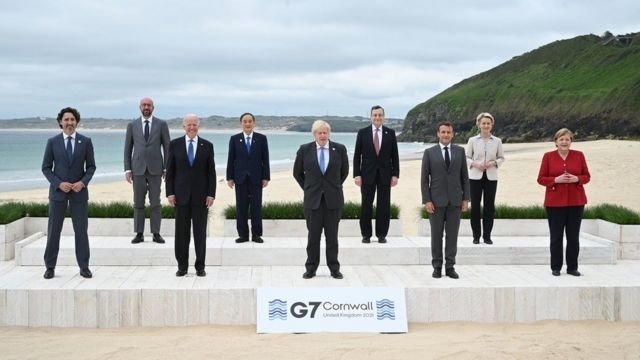
The G7 is an international organization formed by the seven countries economically most advanced and was founded in 1975, primarily  to facilitate shared macroeconomic initiatives in response to contemporary economic problems. The representatives of the countries meet every year and this year the summit took place in Cornwall (England – UK).

The main topic of conversation for the 2021 meeting, the first face-to-face summit since the pandemic began in early 2020, was Covid recovery, including «a stronger global health system that can protect us all from future pandemics».

It is significant that British Prime Minister Boris Johnson said the G7 summit is a chance to learn lessons from the Covid-19 pandemic and wished do not repeat the errors made during it.

In his opening remarks to the G-7 leaders, Johnson said as the world recovered from the pandemic it was important to “level up across our societies” and build back better. He remarked that the G7 nations are expected to commit to sharing at least one billion coronavirus vaccines; Britain pledged to donate more than 100 million Covid vaccines to poorer countries and U.S. promised 500 million doses of vaccines to low and middle income countries and the African Union.

On its part, Caritas International appealed to the Group of Seven rich nations of the world, declaring that it is impossible to “build back better” without cancelling the debt of poor countries and reinvesting these funds in Covid-19 response and recovery and to combat the climate crisis. 

As we can see, international organizations are striving to search out the solution for the most serious problems and challenges of the present moment, sharing creative ideas and initiatives that we hope will bear fruit of goodness for the whole humanity.

Categorías
Últimas Noticias

Iran expels italian nun who has spent her life for the poor of the country

Seventy-five-year-old Sister Giuseppina Berti, who has worked for 26 years in the leprosarium of Tabriz and now lives in Isfahan in the house of the Congregation of the Daughters of Charity of St. Vincent de Paul, will have to leave Iran in the coming days because  her visa has not been renewed and she has received a travel order. Her departure will make it difficult for her fellow nun, Sister Fabiola Weiss, who has dedicated 38 years to the poor and the sick in the leprosy hospital, and whose residence permit has been renewed for another year.

She and her fellow sister Fabiola, a 77-year years old Austrian, they have dedicated their lives to the country’s sick without distinction of religious or ethnic affiliation, to the education and training of young people, children, refugees and war orphans but in recent years, the two sisters did not carry out any outside activities, to avoid being accused of proselytizing. Their house is currently the only reality of the Latin Catholic Church in Isfahan and their chapel, built in 1939, serves as the parish of the «Powerful Virgin», which is occasionally made available to visitors for the celebration of Mass.

In Iran the Catholic Church is integrated by two Assyrian-Chaldean archdioceses (Tehran-Ahwaz and Urmia-Salmas) which have one bishop and four priests (in 2019, the patriarchal administrator of Tehran of the Chaldeans, was also denied a visa renewal and could no longer return to the country), an Armenian diocese in which there is only a bishop and the Latin archdiocese which currently has no priest and is awaiting the arrival of its newly appointed pastor, Archbishop Dominique Mathieu.  As for the religious presence, the Daughters of Charity operate in the country, with three sisters in Tehran and two sisters in Isfahan. There are also two consecrated laywomen. The faithful number about 3,000. With the departure of the nuns, the presence of the Latin Catholic Church in Isfahan would be permanently lost.

This news puts us in contacts with a quite unknown reality of several countries where Christianism is a very little presence and religious intolerance continues limiting and sometimes suffocating the life and mission of the Church. On the other side we know that the humble and often unseen presence of the Christians, is always a seed of God’s kingdom that sprouts up its fruit of compassion and mercy for the poorest and weakest ones and their silenced voice continues announcing to the people, messages of peace and hope.

By VATICAN NEWS

Categorías
Últimas Noticias

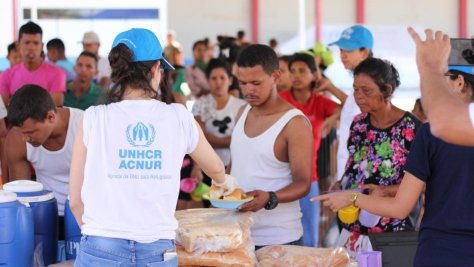
World Refugee Day 2021

The World Refugee Day of this year 2021, that we’ll  celebrate on June 20th, and it has been organized by the UN Refugee Agency (UNHCR), focuses on the power of inclusion and has as its general theme: “Together we care, we learn and we shine ”.

We transcribe some points of the information brochure that they have prepared for this celebration:

“The shared experience of COVID-19 has showed us that we only succeed if we stand together. We have all had to do our part to keep each other safe and despite the challenges, refugees and displaced people have stepped up.

Given the chance, refugees will continue to contribute to a stronger, safer and more vibrant world. This year, we call for greater inclusion of refugees in health systems, schools and sport. Only by working together can we recover from the pandemic.

Together we heal. We heal together when we all get the care we need. The world can’t overcome COVID-19 if it overlooks refugees, because no one is safe until everyone is safe. We need to ensure that people forced to flee have access to vaccines, care, medicine and psychological support, like everyone else.

Together we learn. When we learn together we build a stronger community. We all benefit when everyone has access to education. We are calling for the creation of scholarships and education opportunities for displaced youth. We also call for greater access to digital education for refugee students.

Together we shine. We shine when we play together as a team. Sport is a great way to heal, develop and grow, especially for people fleeing conflict or persecution. We call for greater support to refugee sport programmes. We also encourage all sport fans to support the Refugee Olympic and Paralympic Teams that will compete in the Tokyo games

Categorías
Últimas Noticias

July the 3rd : Capuchin Family day

On July 3rd 1528, Pope Clement VII, through the bull “Religionis zelus”, approved the Capuchin Order, one of the reform sprout within the Family of the Friars Minor, on initiative of some brothers that desired to live more radically according to the origins of the Franciscan Fraternity, strengthening the life of contemplation, recuperating more austerity in the life of poverty and reaffirming the evangelizing mission through popular preaching and being present in frontier places. The origin of the Capuchin Order, as well as that of other orders and congregations, is undoubtedly related to the reform movement occurred in the Catholic Church in response to the provocation created by Christian communities that, under different but at the same time quite similar motivations, were separating from the Church of Rome and breaking their communion with the Pope.

Over the course of time, the Capuchins have become a numerous and significant Order in the Church and, since their origins in the 16th century, they have offered to the Church, significant models of holiness in the common and unpretentious life. Their presence in the midst of people through the ministry of preaching, confession and previously also as “beggars brothers”, chaplains in places of pain – hospitals, cemeteries, prisons – and their commitment in the accompaniment and spiritual formation of groups of lay people of the Third Franciscan Order (today Secular Franciscan Order), has contributed to the growth of the faith in many people and also to the foundation of some religious families inspired in the Franciscan-Capuchin spirituality, and, among them, the Capuchin Tertiary Sisters of the Holy Family.

Father Luis Amigó was an authentic Capuchin brother that kept his bond to his Order even as a Founder and Bishop and he liked that the two religious families he founded never lose the Franciscan-Capuchin spirit (cf. OCLA 1920) and be aggregated to the Capuchin Order (cf. Iriarte L., Historia de la Congregación,  pag. 53).

The Congregation of Capuchin Tertiary Sisters of the Holy Family was aggregated to the Order in 1905 by Father Luis Amigó’s expressed will and through this act, he liked to make it participate in the spiritual patrimony of his original religious Family and, at the same time, to enrich the Order with its specific charisma. We have to acknowledge that the Capuchin Brothers have played and do play an important role in the history of the Capuchin Tertiary Sisters, accompanying them in the Franciscan formation and opening and partaking with them the mission; at the same time, wherever this sharing is most cultivated, the beauty of the Capuchin charisma lived with its feminine and masculine features, is better perceived.

On July 3rd, the anniversary day of the canonical approval of the Capuchin Order, the entire Capuchin Family is called to celebrate with gratitude its presence in the Church, reaffirming its commitment of fidelity to the initial charisma enriched by the peculiarity of each congregation sprouted from an authentically capuchin heart.

In other years, on this date, took place meetings of members of Capuchin families that really strengthened the bonds of fraternity. This year, because of the pandemic, it will not be possible but nothing and no one can prevent us from living this Day with a special memory in our prayer, feeling that we are members of a larger family with whom we share spiritual gifts and fraternal affection.

Categorías
Últimas Noticias

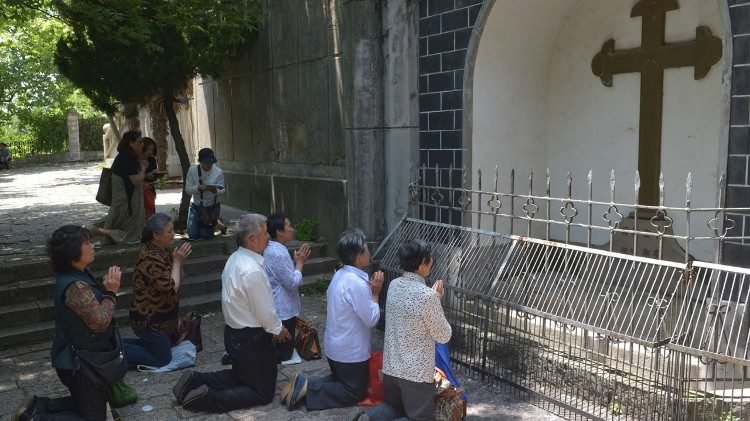
Mary, help of christians, day of prayer for the Church in China

Pope Francis, during the prayer of Regina coeli, recalled that on May 24th, «the Catholic faithful in China will celebrate the feast of the Blessed Virgin Mary, Help of Christians and heavenly Patron of their great country».

This feast, established in 2007 by Benedict XVI, celebrates that  “The Mother of the Lord and of the Church is venerated with particular devotion in the Sheshan Shrine in Shanghai, and is invoked assiduously by Christian families, in the trials and hopes of daily life. How good and how necessary it is that the members of a family and of a Christian community are ever more united in love and in faith!” said Pope Francis. […] Therefore, I invite you to accompany with fervid prayer the Christian faithful in China, our dearest brothers and sisters, whom I hold in the depth of my heart. May the Holy Spirit, protagonist of the Church’s mission in the world, guide them and help them to be bearers of the happy message, witnesses of goodness and charity, and builders of justice and peace in their country”.

Since the Communists took power in China in 1949, the country has not maintained official diplomatic relations with the Holy See. Among the points of contention is the Chinese  demand that the Vatican must cut its contacts with Taiwan and, above all, the question of the appointment of bishops. In September 2018, the Holy See concluded a provisional agreement with Beijing, and through which Pope Francis lifted the excommunication of several bishops consecrated without his consent but recognized by the Chinese authorities. On its part, Beijing has recognized only a few of the so-called bishops of the underground Church. Of the current 101 Chinese bishops, 36 are underground bishops.

According to various reports, in China, in recent weeks, police arrested several members of the clergy and among them the Apostolic Prefect of Xinxiang, Archbishop Joseph Zhang Weizhu, 63 years old, seven priests and ten seminarians. Xinxiang Prefecture is not recognized by the Chinese authorities, so the activities of priests and laity related to it are considered criminal activities.

Mons.  Ludwig Schick, bishop of Bamberg, Germany, denounced that, on the part of the Chinese authorities, there is a determined effort to impede children and young people to approach religion: “In more and more places, the authorities systematically prohibit that the minors come into contact with religion. The prohibitions existing during a long time are now being applied at all levels in China». All religious symbols have been removed from Catholic orphanages, and more measures of the same kind have been taken in a leadership struggle

against religions, especially against Christian churches, but also against Muslims».

Translated from: OMPRESS-ROMA (24-05-21)